The ideas below run from a morning’s work with a used pallet to a full weekend stacking dry stone, with most falling between a box kit and cedar and soil.
What settles the choice is whether you own the ground you plant on, rent and need to lift away your garden later, or have no ground at all and must grow on a wall or railing.
The vertical garden, slanted to catch sun on a north-facing wall, is the one designed for renters who cannot drill into siding and still need to move their garden with the seasons.
[link-whisper-related-posts]1. Raised Bed Herb Garden
A raised bed gives you full control over what your herbs grow in, which matters more than I expected when I started out.
Two people make the lining and filling go faster, but one person can manage a 4 x 8 ft frame in a morning. Cedar or redwood lasts longest against damp soil, though pine works if you accept replacing it sooner.
Fill with a mix of topsoil and compost rather than garden soil alone; herbs in dense clay or pure sand struggle no matter how often you water.
Stone paths between beds keep your shoes clean and compress the soil less than walking directly on the planting area.
Lavender and sage planted at the borders handle the drier edge conditions and give you something to brush past on your way to cut basil.

MOBILE GARDEN ON WHEELS — Two all-terrain wheels and an ergonomic handle let you roll a 200+ lb planted bed wherever sunlight goes. Move your garden across patio, balcony, or backyard in minutes.
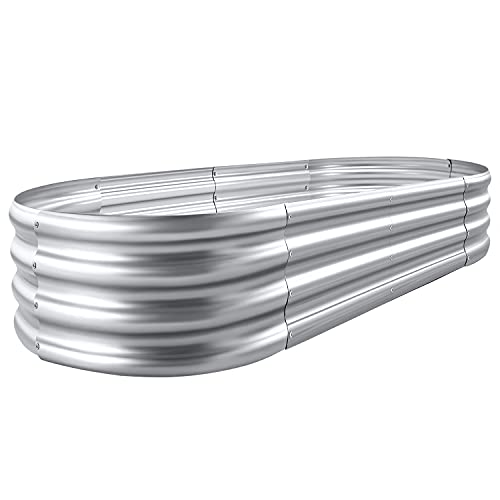
Each raised metal garden bed size: 4×2×1ft ,7.14Cu

2. Compact Outdoor Herb Garden
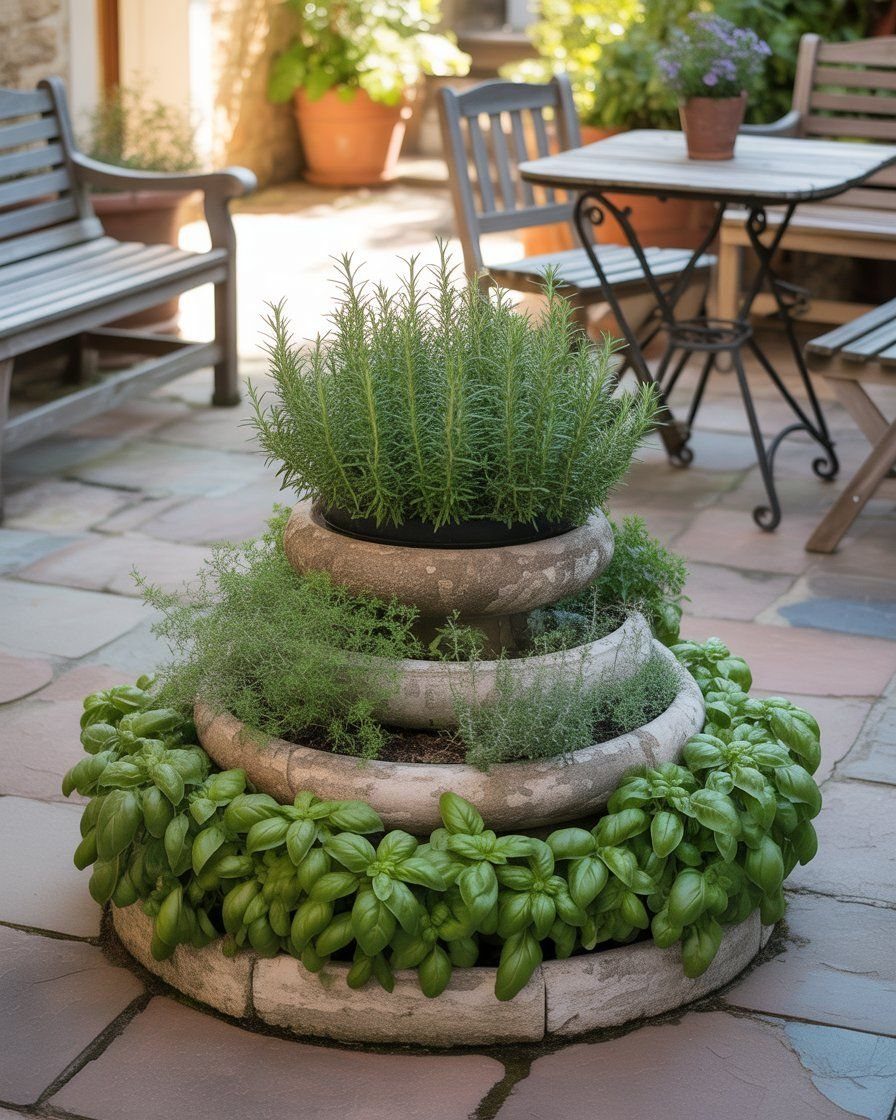
Stone tiers buy you planting depth in a footprint small enough for a patio corner.
The thyme and rosemary sit higher and drier than the basil tucked below them, which is not decorative accident; it is how you manage herbs that want different moisture levels in one structure.
A three-tier setup like this needs roughly 18 inches of soil depth at the base and can step down to 8 or 10 inches for the top ring.
That is enough for most culinary herbs, though parsley and dill want the deeper pockets. Set the whole thing on existing pavers or flagstone rather than bare ground if you are renting; it lifts away clean when you move.
Metal planters mounted in a grid, like the chalkboard-labeled version I have seen, work on apartment balconies where stone would weigh too much. The planting logic stays the same: thirsty herbs low, drought-tolerant ones high.

Elevate Your Garden - Opt for a brilliantly engineered raised garden bed to revolutionize your gardening. Its spacious design, measuring 48x24x30 inches, allows for the cultivation of multiple vegetable varieties alongside a plethora of herbs, optimizing your gardening space for ease and diversity.
3. Vertical Herb Garden
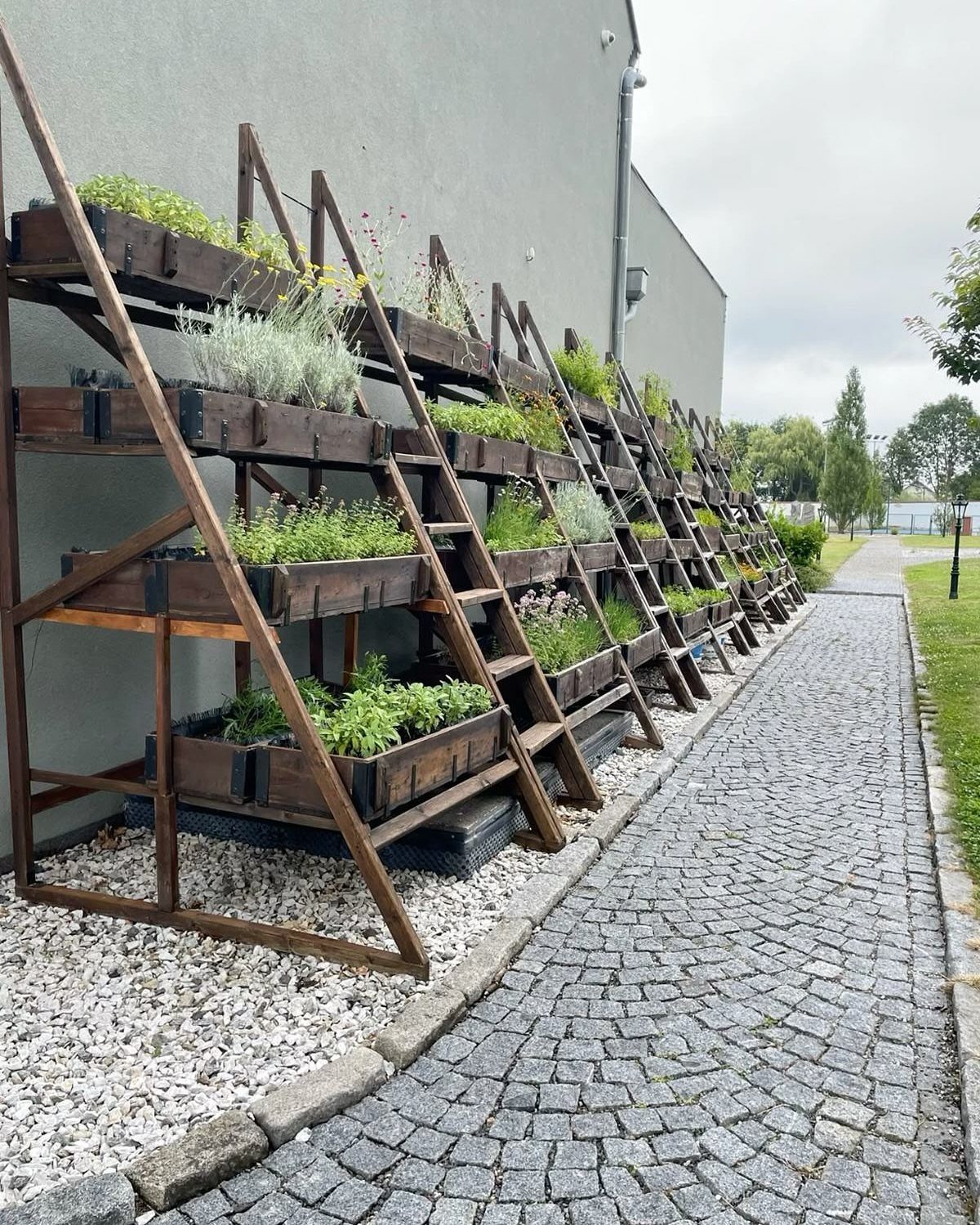
An A-frame against a wall turns vertical space into growing area without drilling into siding or brick. The slanted boxes catch more sun than flat vertical panels, which matters on north-facing walls or narrow passages between buildings.
Build from cedar or a rot-resistant hardwood if you want it to last outdoors; standard pine will soften and split in two or three wet seasons.
Each tier needs drainage holes, and the soil itself handles drainage better than any layer you might be tempted to add at the bottom.
The total weight when wet is significant, so the feet need to sit on something solid, not bare soil that turns to mud.
A leaning frame like this moves. That is the feature and the limitation: you can shift it to follow sun patterns through the year, but it also needs checking after hard wind.
Against a fence or wall it is stable enough; freestanding in an open yard, I would anchor the feet with tent stakes or screw it to a plywood base.

Vertical Wall Planter: Mounts on a fence, a deck rail or an exterior wall and stacks 3 planting shelves into the footprint of a single pot, so a balcony or small patio gains a plant wall without losing floor space
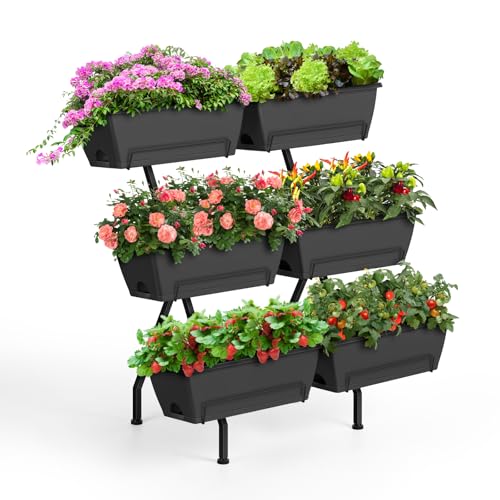
【Space-Saving Vertical Garden System】 Six stackable planters transform tight spaces into lush gardens – perfect for urban balconies, small patios, or indoor greenery. Strategically alternate herbs, flowers and vegetables across tiers to create your perfect mini ecosystem.
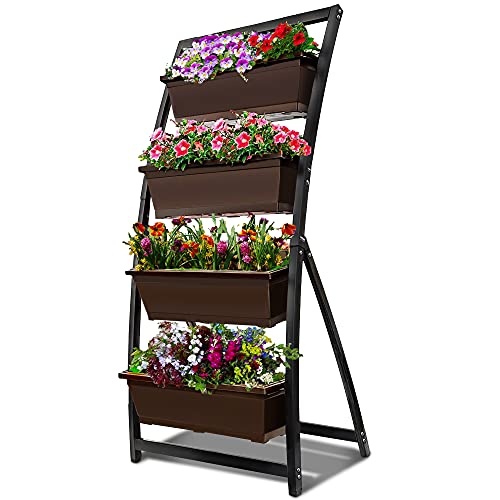
✓ EASY TO ASSEMBLE w/ PERFECT TIGHT SPACE SOLUTION - with easy to follow instructions included, the assembly of your garden planters will be quick and simple. Each hanging plastic box container is 27"; provides adequate room for your plants without wasting precious space in a small apartment, balcony, or any outside area. Grow a variety of herbs, seeds, flowers, succulents, or vegetables in just a single area at home.
4. Raised Herb Spiral
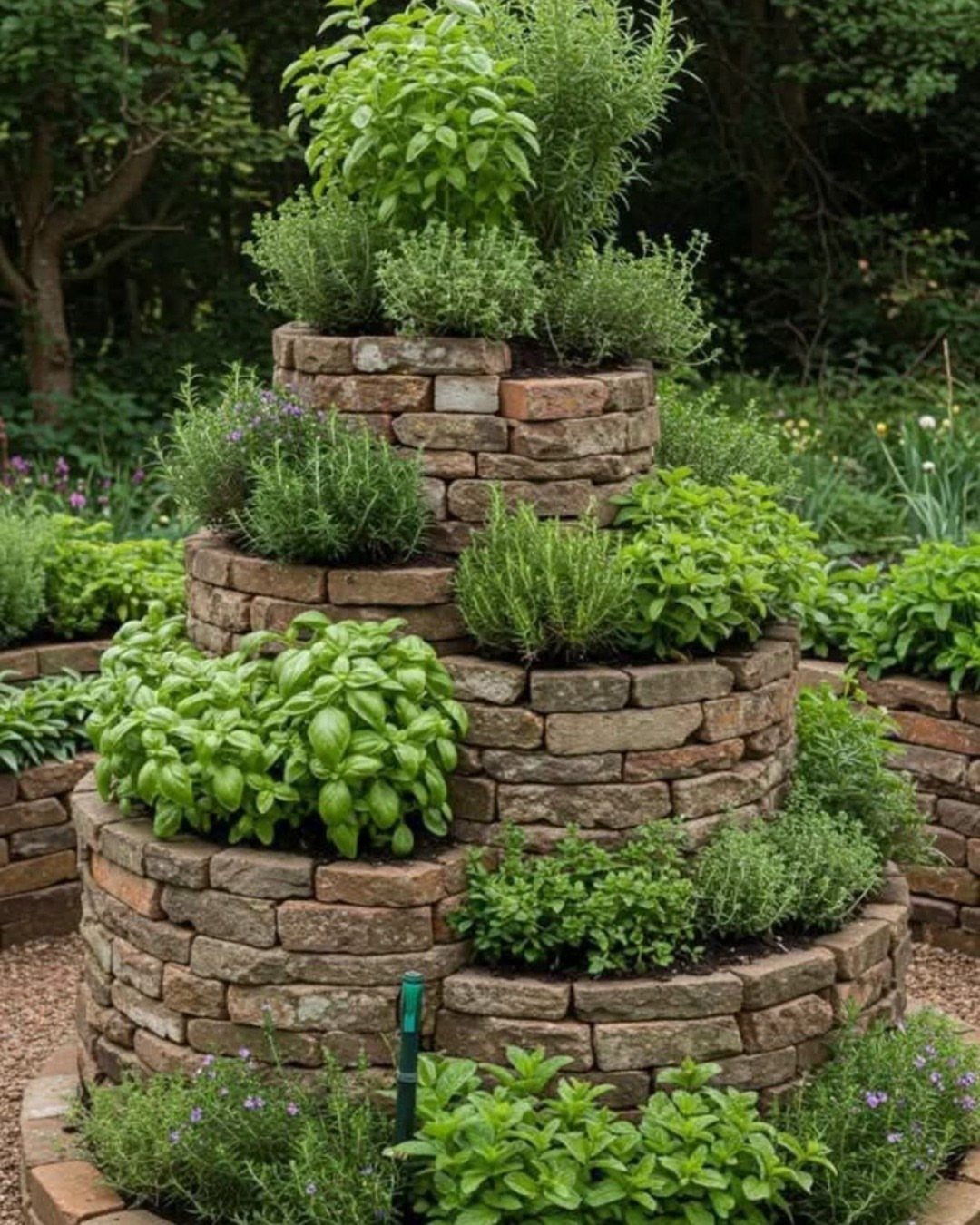
A spiral packs more edge, more microclimates, and more visual interest into a small circle than any rectangular bed manages.
The stone construction traps heat on its south face and creates drier pockets at the top while the base stays cooler and holds moisture longer; plant rosemary and thyme high, mint and parsley low.
Dry-stacked stone without mortar drains well and lets you adjust as the soil settles, though it takes patience to build stable walls that lean slightly inward.
The spiral path is not just for looks; it puts every plant within arm’s reach from the outside, so you never compress the soil by stepping into the bed.
This shape suits cooks who want a wide range of herbs in a small yard and do not mind the extra construction time over a simple box.
It is less practical if you need to move your garden in a year or two; the stones are heavy and the shape does not transplant.

MADE IN THE USA – SUPPORTS 3 SMALL BUSINESSES Proudly manufactured in the United States. Every Smart Spring planter purchased directly supports three small U.S. businesses, helping keep jobs and production local.

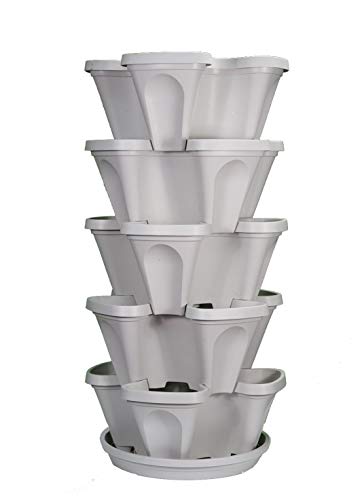
Create a waterfall of flowers or herbs with our charming outdoor stacking planter
5. Wooden Planter Box
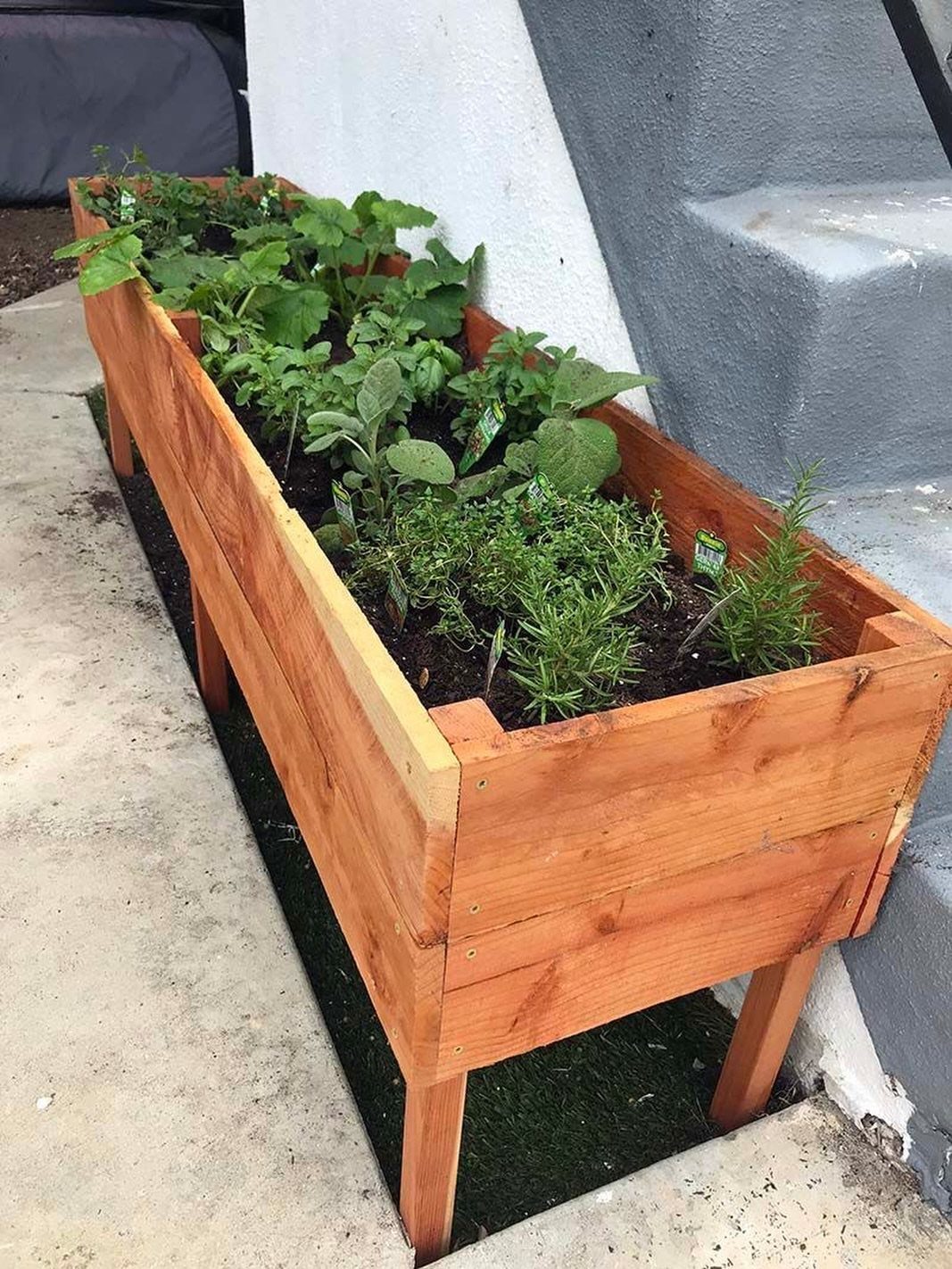
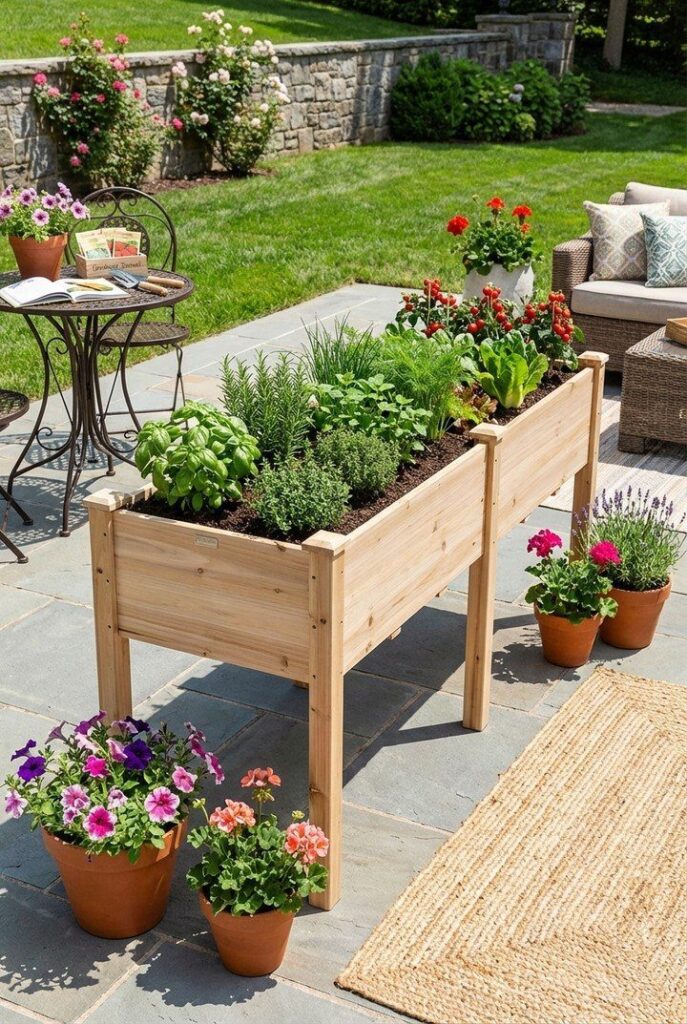
Legs lift the box to a height that saves your back and puts herbs within easy reach from a chair or wheelchair.
The artificial grass underneath tells me this sits on a patio or rooftop where soil contact is not an option; the legs keep the wood from rotting against damp surfaces and let air circulate below.
A box this length, roughly 4 to 5 feet, needs cross-bracing between the legs or it will rack sideways when you lean on it to cut herbs.
Cedar 2 x 4s for the frame and 1 x 6s for the box walls handle the load without splitting; pocket screws from the inside keep the exterior clean-looking.
Line with landscape fabric if the gaps between boards are wide enough for soil to wash through, or build with tight-fitting tongue-and-groove boards and skip the liner.
Fill with potting mix rather than garden soil; in a contained box, drainage and root room matter more than the mineral content you would get from your yard.

【Indoor Herb Garden】Experience the joy of gardening with our specialized indoor herb planter. This set includes a planter with a tray but does not come with plants and seeds. Designed specifically for herb cultivation, these planters can be used both indoors and outdoors. Crafted from durable metal with a sleek, glossy white finish, they blend functionality with a farmhouse style to enhance your living space.
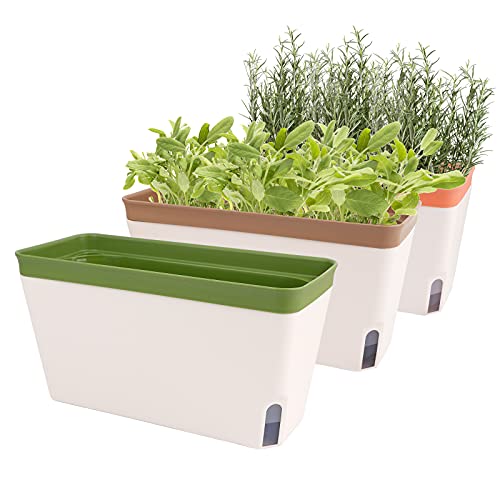
SELF-WATERING PRINCIPLE: Through two absorbent cotton ropes, the self watering pots provide water to the soil and keep the soil moist through the principle of osmosis, without having to water the plants regularly. Even if you leave home for a few days, it can help you take care of the plants and avoid plants die from water shortage.

WINDOWSILL HERB GARDEN: Set of 3 steel herb pots on a matching tray with a leather carry handle, sized for a kitchen windowsill, shelf or countertop. Move all your herbs to the sun in one go. Herbs and seeds not included
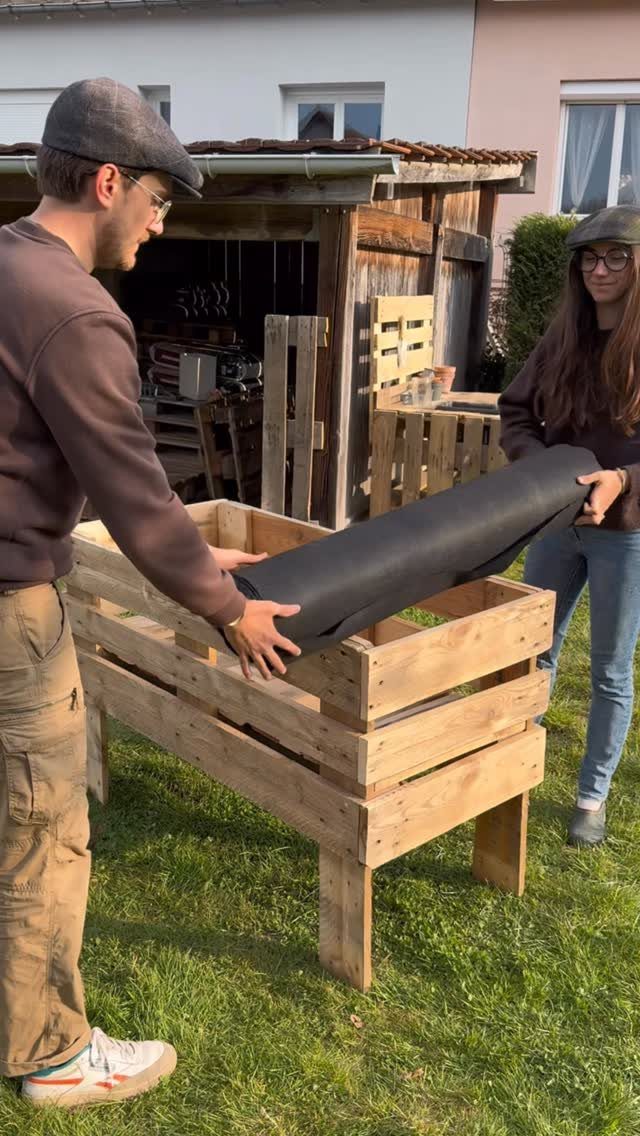
6. Pallet Herb Garden
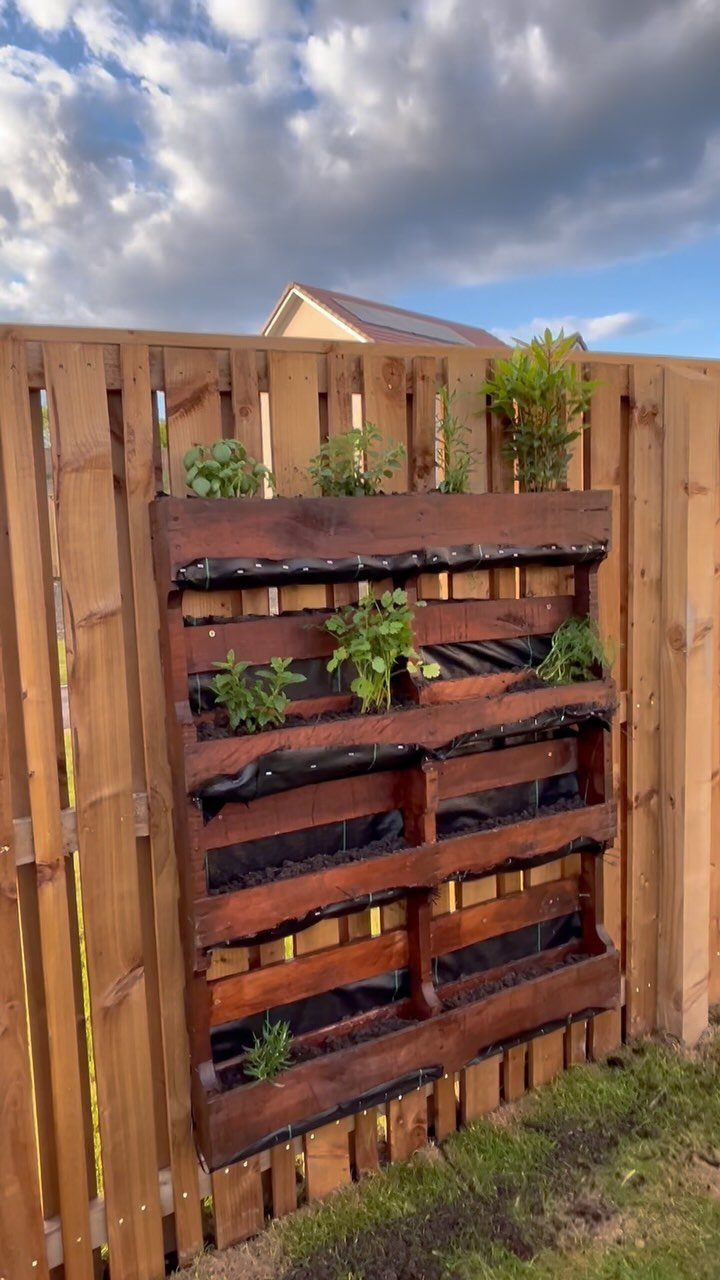
A pallet mounted on a fence turns vertical structure that already exists into growing space without taking up floor area.
The black landscape fabric lining each compartment holds soil against the slats; without it, you lose planting mix every time you water.
Choose a heat-treated pallet marked HT rather than one chemically treated for shipping; the stamp is usually on a center block.
Knock loose any boards that are splintered or rotted, then staple fabric across the back and up the sides of each opening before filling.
The slats are shallow, with only a few inches of soil, so this suits shallow-rooted herbs: thyme, oregano, chives, parsley. Basil and cilantro will grow but need more frequent watering and feeding than they would in deeper soil.
A horizontal mount like this needs a fence or wall that gets half a day of sun minimum.
If your only vertical space faces north, the pallet version will not fix that; look instead at the freestanding A-frame in entry 3 that you can angle toward the light.

More suitable raised garden bed size and Volume:67"L x 20"W x10"H, 7 Cu. Ft. You can cultivate plants, like vegetables, flowers, herbs in your patio, yard, garden, and greenhouse.

Raised Garden Bed - Add a new level of convenience to your gardening experience with the Galvanized Raised Garden Bed. Enjoy expanded yield and a more assembled garden layout with this garden accessory, each sized at 120 cm X 60 cm x 30 cm.
Frequently Asked Questions
Do herbs do well in raised beds?
Herbs grow better in raised beds than in most ground soil because you control the mix. A raised bed lets you fill with topsoil and compost instead, and the improved drainage keeps roots from rotting in wet weather.
What should you not plant in a raised bed?
Keep mint out of shared raised beds unless you want it to take over.
Mint spreads fast enough to choke neighbors, which is why spiral beds work for it; the contained shape keeps the roots in check. In a standard rectangular bed, mint roots will colonize every inch of soil and choke slower-growing herbs.