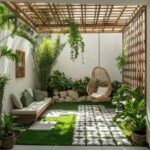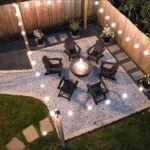
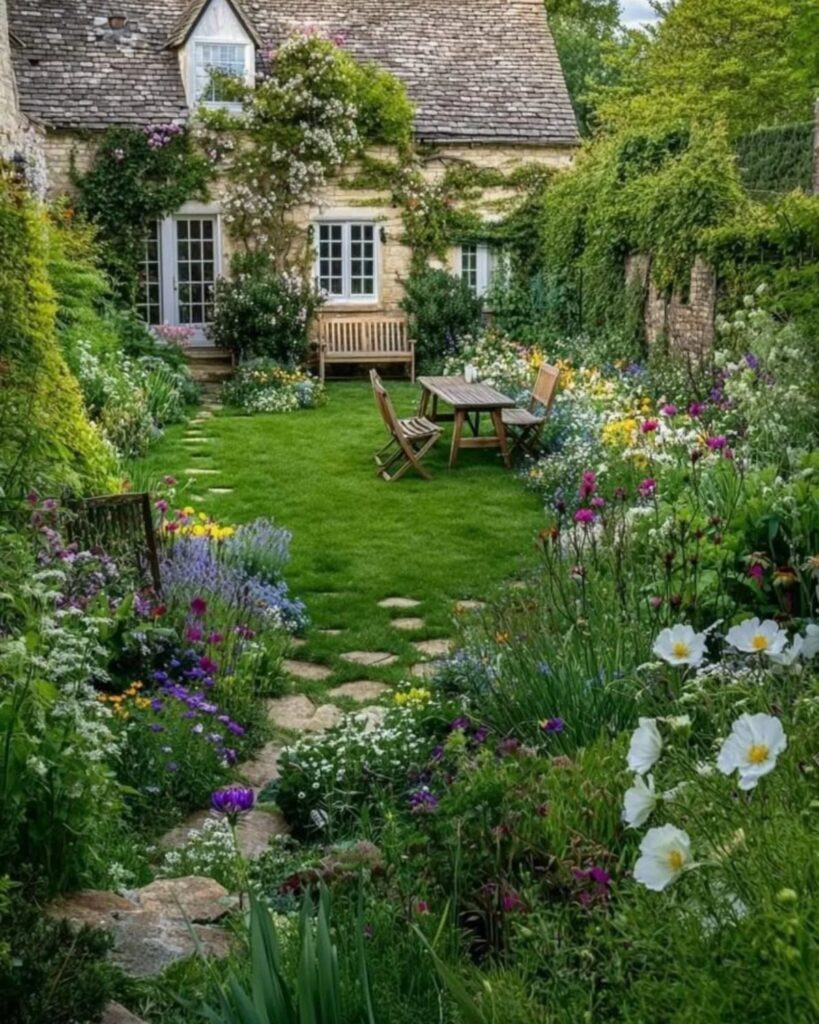
These ideas run from a weekend of work with your own hands to projects that need a designer, a permit, and a crew.
The one that belongs in your yard depends on whether you are solving for a single weekend or building a structure that will need footings, hardware, and possibly a permit.
Banken’s guardrail, the overall plan that keeps work from wandering, applies either way; even a string light job goes better after you have sketched where people actually sit.
[link-whisper-related-posts]1. Drought-Tolerant Plants
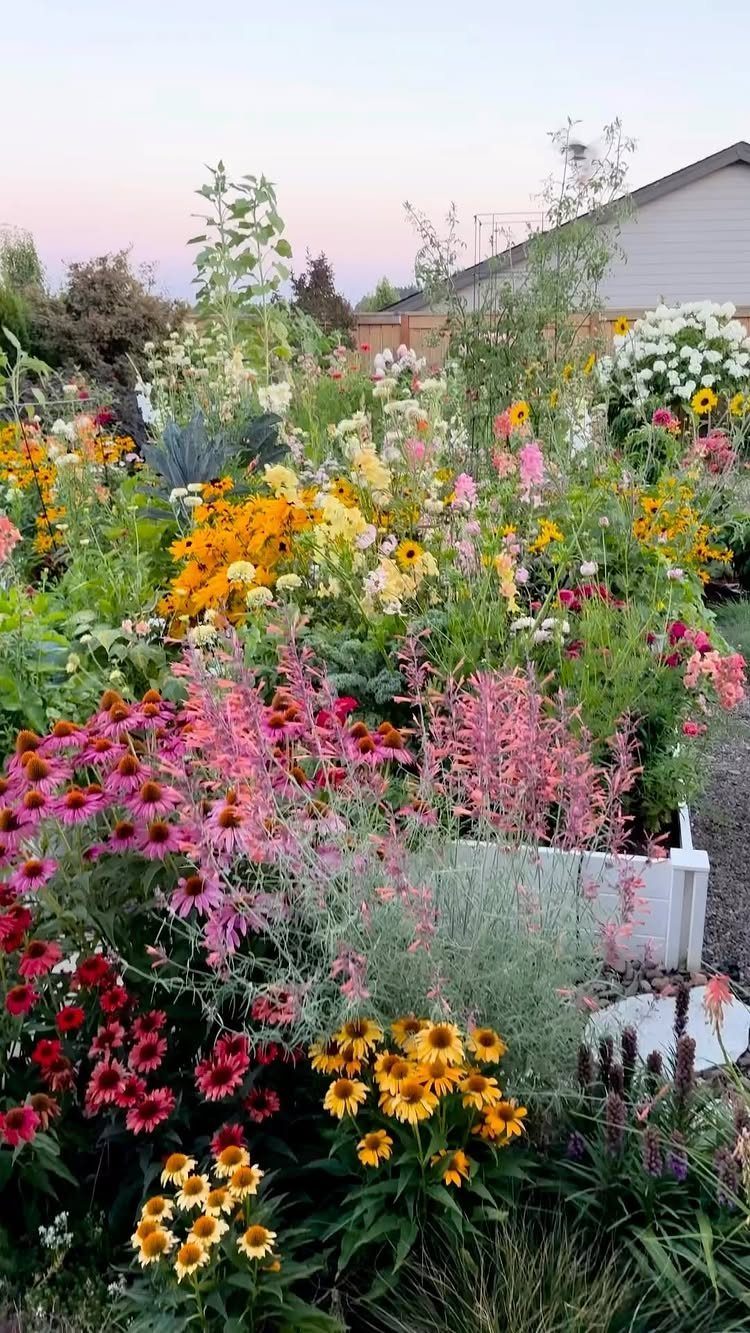
A garden that still looks full in late August without running the hose every evening starts with the right plants in the right soil.
Drought-tolerant varieties like coneflower and black-eyed Susan handle dry spells once their roots are established, and many of them also discourage deer from treating your beds like a buffet.
The soil matters more than the plant tag. Turf lawns leave ground compacted and hungry, so I test pH and nutrients before I dig.
I amend new beds with compost or a quarter-inch gravel mix to keep water moving, and I plant high so crowns stay dry. Gravel mulch suits these plants better than bark pushed against their stems.
First summer, they need regular water.
After that, a deep soak every few weeks is plenty. Overwatering rots them faster than drought.

High-Value Wildflower: 10,000 Black eyed susan seeds perennial (tender) deliver masses of yellow daisy blooms for pollinator gardens. Great wildflower seeds for beds, borders, containers, and meadows, USDA 1-12.

[Three Distinct Wildflowers] Includes Tricolor Chrysanthemum with ringed patterns, Purple Coneflower with raised cone centers, and Black-eyed Susan with golden petals and dark centers. Diverse shapes and colors.

High-Value Wildflower: 10,000 Black eyed susan seeds perennial (tender) deliver masses of yellow daisy blooms for pollinator gardens. Great wildflower seeds for beds, borders, containers, and meadows, USDA 1-12.
2. Outdoor Kitchen
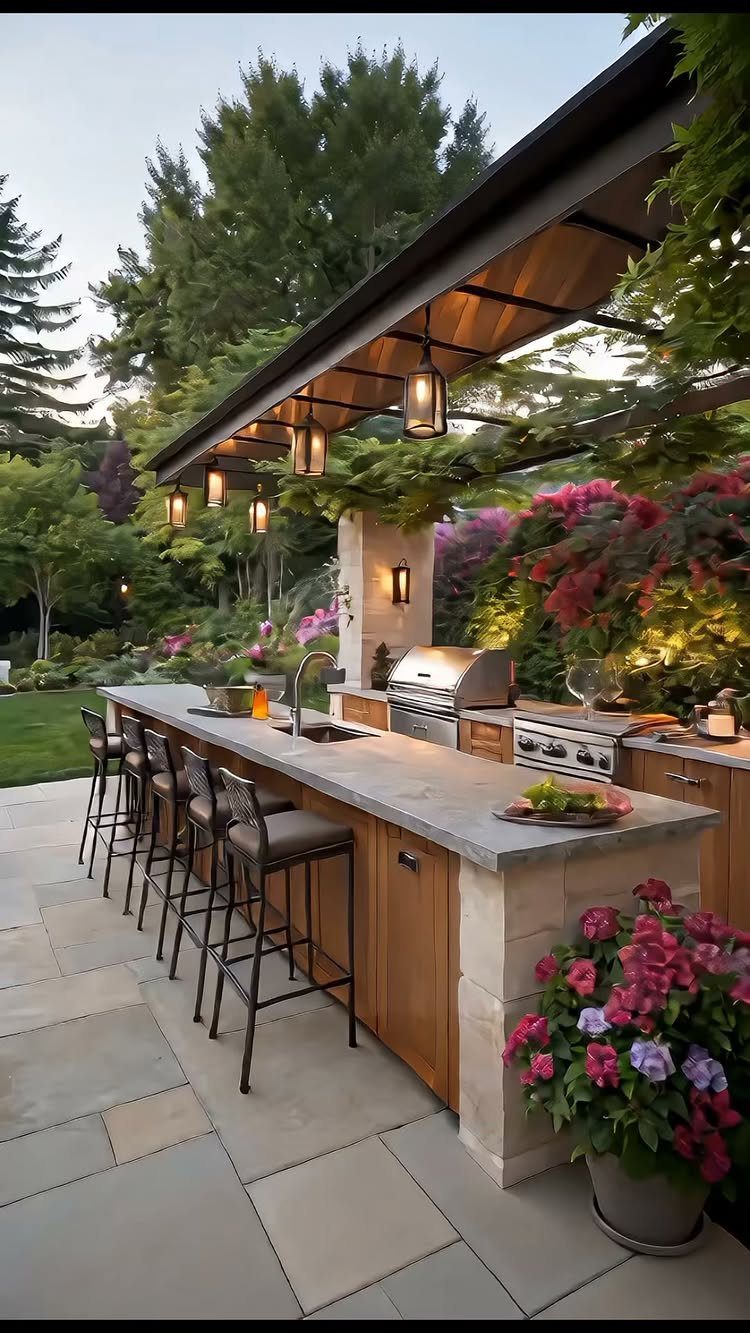
Cooking outside saves me from heating up the kitchen in July, and it keeps me with my guests instead of ducking in and out through a screen door.
A built-in grill with counter space on both sides is the core; I want room for a cutting board and a plate without stacking them on the step.
Stone or concrete countertops hold up to weather better than wood, and cabinets below keep tools dry and close.
I have seen people skip storage and regret it when the spatula rusts in the garage. A bar overhang on one side lets people sit with a drink while I flip burgers, which matters more than I expected.
A full outdoor kitchen fits under a pergola with hanging lanterns overhead. If that scope is too much, start with the grill and counter, then add piece by piece as budget allows.

KoolMore Reserve Series – Designed as a premium outdoor kitchen solution with integrated components and upgraded materials for durability and long-term outdoor use.

🔥 NATURAL GAS CONVERTIBLE GRILL: Size: 42.34" W x 26.46" D x 20.24" H. This 30-inch 5-burner propane grill includes a free LPG regulator and hose. Easily convert to natural gas with a conversion kit (sold separately) for cost savings and convenience. Enjoy the flexibility to choose your fuel type!

【Professional Grade】Made of 304 stainless steel construction in the body, burners, and grates, ensuring they can resist rust and warping at high temperatures.
3. Cozy Fire Pits
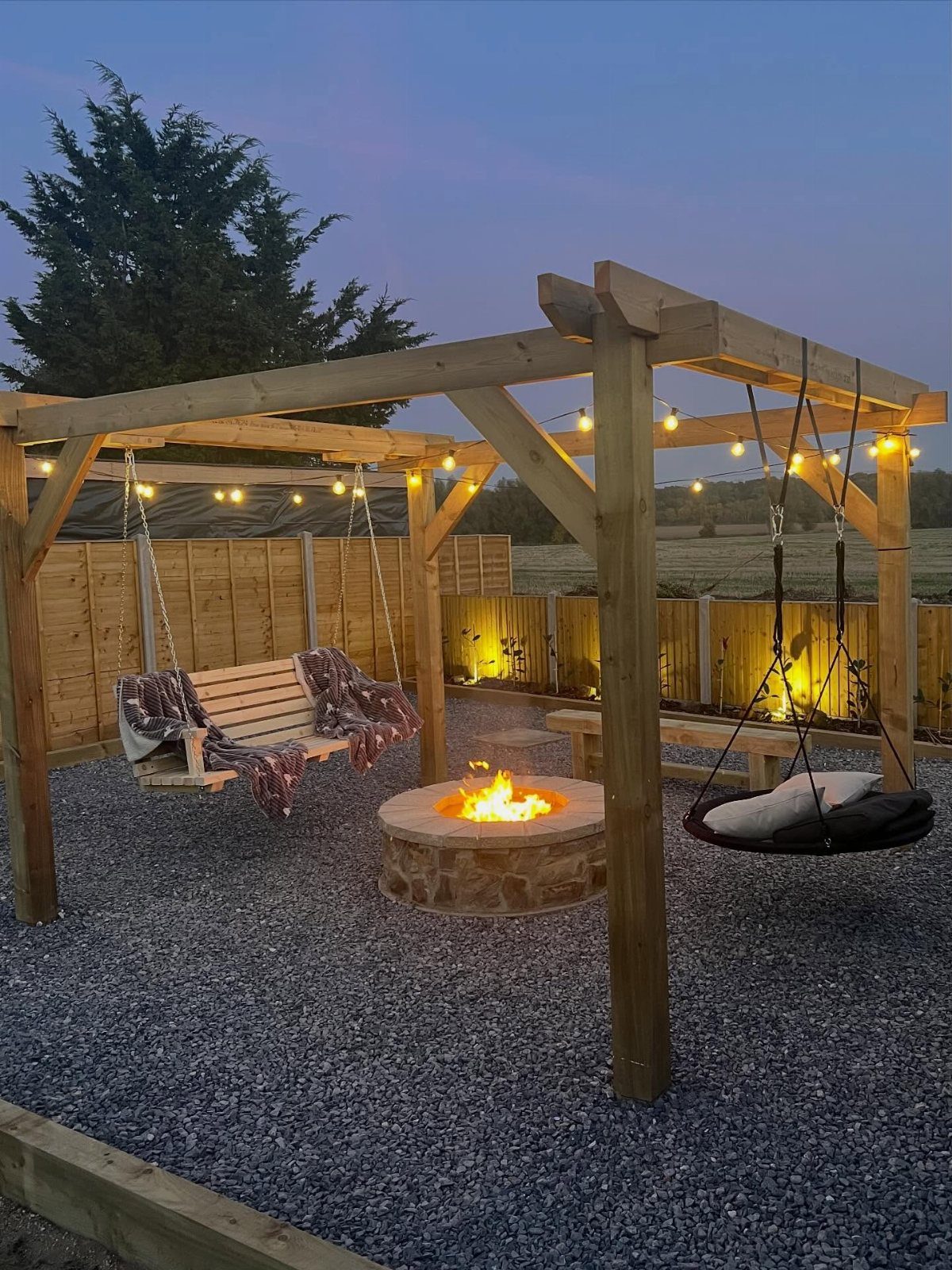
Stone or metal around the fire lasts longer than boxed kits that rust out fast. I like a boulder ring or a cast bowl that weighs enough to stay put; lightweight models tip or cook the grass brown underneath.
Placement is the decision that matters.
Center the pit where people naturally gather, with seating clear of the smoke path and enough distance from low branches or fence lines. I use pea gravel for the surround; it drains, it is cheap, and it crunches pleasantly underfoot.
A pergola over a fire pit area is optional but effective; without it, string lights between posts or trees do most of the same work after dark.
Built-in benches save space in a small yard. Portable chairs let you reconfigure for crowd size.

Professional Durability: Heavy-duty 18-gauge 430 stainless steel prep table supports up to 350 lbs. Commercial-grade kitchen work table resists corrosion. Industrial spaces food carts sleek design enhances restaurant equipment & restaurant supplies

【Smart Functional Design】This outdoor BBQ cart includes multiple thoughtful design details: a towel rack on the left side, a spice rack on the right, and a foldable hanging trash bin for easy cleanup. Outdoor kitchen cabinet features 2 pipe holes and you can cut the pipe holes as needed to allow the gas pipe to pass through. Equipped with four 360° swivel wheels, including two lockable casters, it is easy to move and securely position

OUTDOOR PREP TABLE FOR GRILL - Explore culinary possibilities with this outdoor kitchen island featuring a stainless steel top and a spacious iron storage rack. The 20" x 42" tabletop serves as a versatile grill prep station, pizza oven table, or BBQ cart, all while ensuring easy cleaning on its smooth surface.
4. Pergola or Gazebo
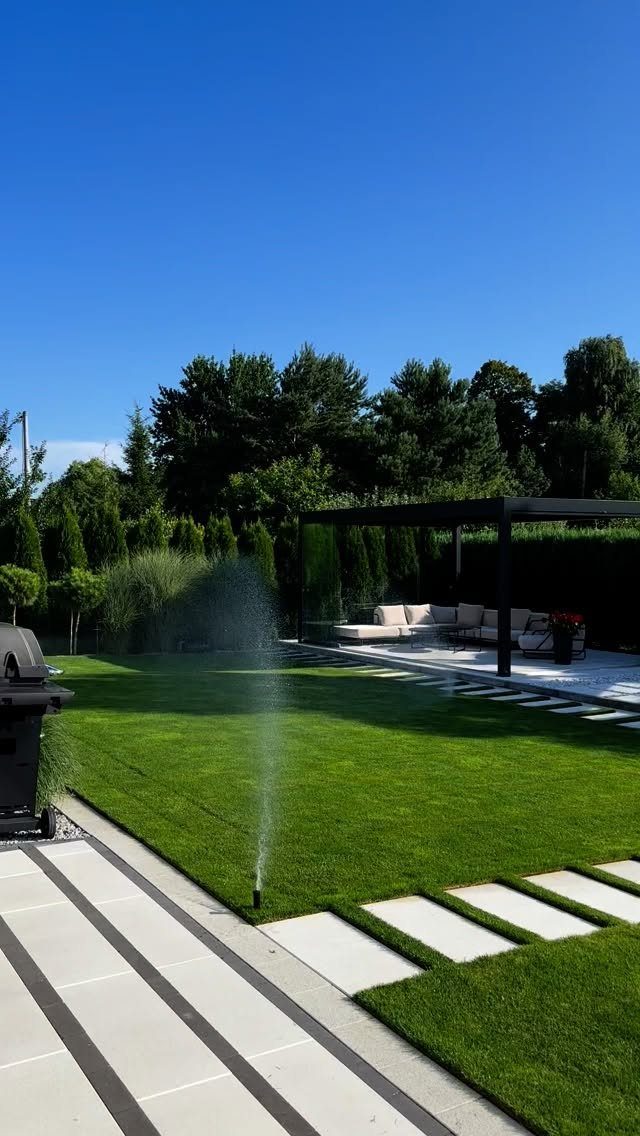
A pergola turns a hot patio into a room you can use through the afternoon in July.
A black frame over a paved area with a sofa set beneath it reads as designed rather than assembled when the dark structure plays against light cushions.
Wood needs staining or sealing every couple of years.
Vinyl skips that but can look like plastic up close. Metal gets hot to the touch in direct sun, so I would not use it where children brush against posts.
String lights across the beams are the obvious add-on. Less obvious: outdoor curtains on one or two sides for late-day sun, or a climbing vine trained up the posts to soften the lines.
Start with the structure and live with it a season before you decide which extras earn their keep.
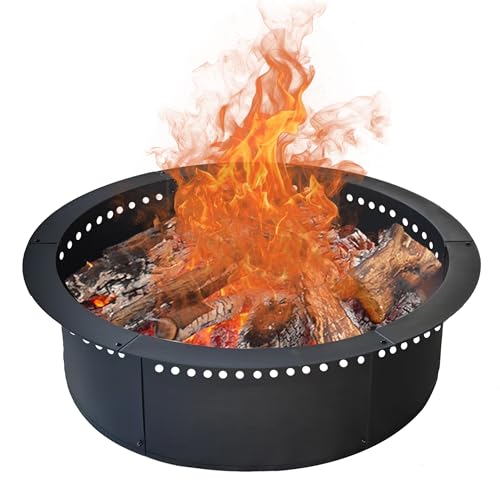
Easy Installation: The 7-piece fire pit ring insertion kit is easy to assemble and can be assembled in just a few minutes.Seamless design allows for easy installation and integration into your DIY fire pit project.Fixed with screws, it will not easily fall off during use. Let you have more time to enjoy the joy brought by flames.

Easy Installation: The 8-piece fire pit ring insertion kit is easy to assemble and can be assembled in just a few minutes.Seamless design allows for easy installation and integration into your DIY fire pit project.Fixed with screws, it will not easily fall off during use. Let you have more time to enjoy the joy brought by flames.

Open Bottom Design – Perfect for DIY Stone/Brick Fire Pits: This is a fire pit liner / insert only, not a complete fire pit. It has no bottom, allowing direct ground contact or placement over sand/gravel. Designed to be surrounded by stones, bricks, or pavers for a custom, professional-looking outdoor fire pit. Ideal for above-ground or in-ground DIY projects.
5. String Lights
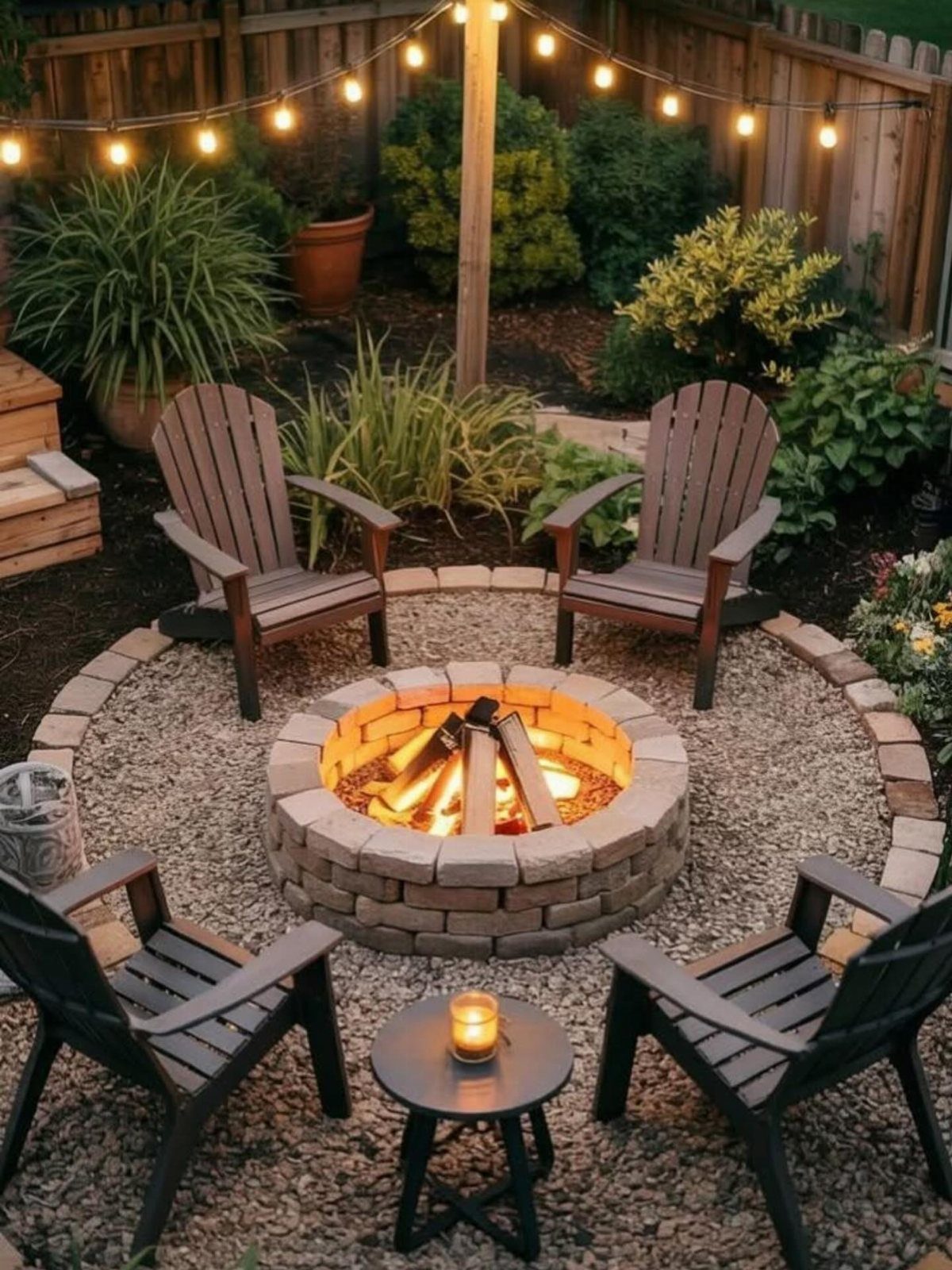
Run lights between posts around a gravel fire pit area, not draped loose but strung taut enough to stay put in wind. That tension matters; sagging lines tangle and look careless by the second summer.
I use a mix. String lights overhead for atmosphere, solar path lights along walkways so guests do not stumble with a plate, and one or two lanterns where I want a dimmer glow than LEDs give.
Uplighting on a tree or large shrub adds depth, though I skip it if the budget is tight.
Smart dimming from a phone sounds like a gimmick until you have used it. The real value is not the phone control; it is being able to drop brightness low enough for stargazing without walking out to unplug anything.

Premium Pit-Proven Performance: We source our genuine volcanic rocks from the Far East, so they'll bring a touch of exotic authenticity to your fire pit; And our fire pit rocks are made with extreme heat resistance
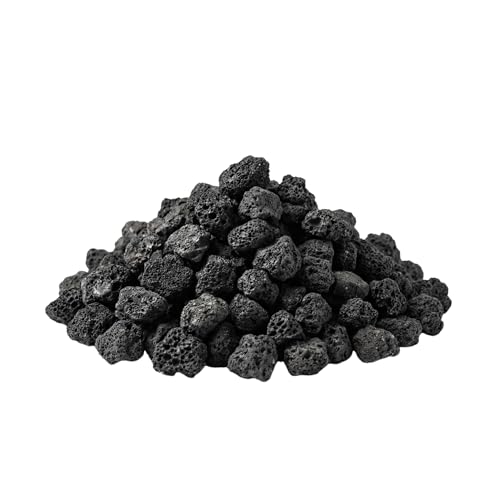
Natural: Formed volcanic rock that has been crushed and screened. The surface of the granules is covered with fine pores, resulting in a deep gray black color that showcases the rough texture of the earth and the unique texture of mineral crystals. It can inject a natural and peaceful wilderness atmosphere into any space.

Premium Pit-Proven Performance: We source our genuine volcanic rocks from the Far East, so they'll bring a touch of exotic authenticity to your fire pit; And our fire pit rocks are made with extreme heat resistance
6. Outdoor Dining Spaces
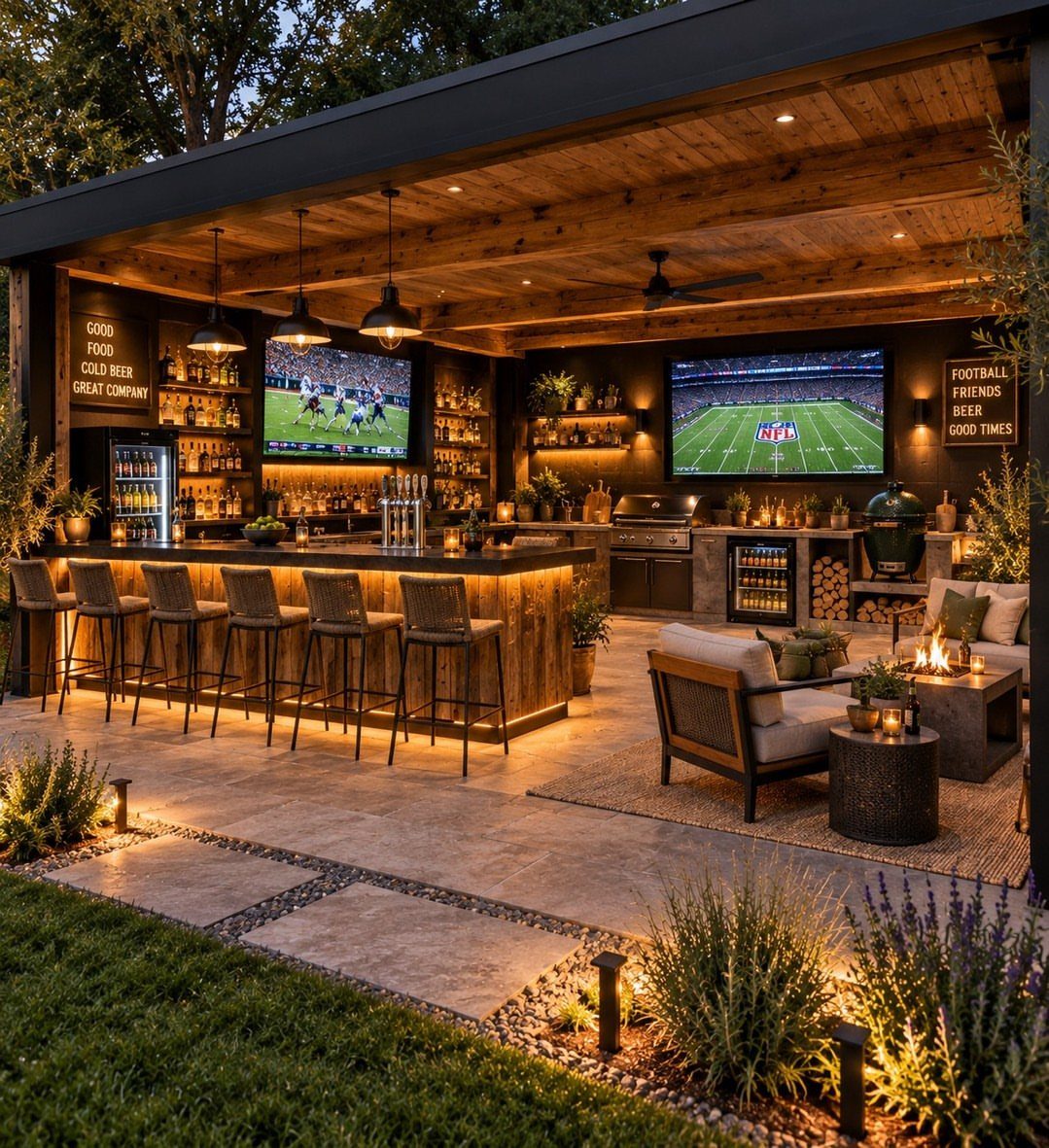
A dining area works only if people can talk across it without shouting over a grill or a waterfall.
I arrange seating in a rough circle or square, close enough for conversation, and I put the table where the cook can still join without leaving the food unattended.
Weather-resistant furniture is non-negotiable. Teak, aluminum, or resin wicker survive outside; softwoods and indoor upholstery do not.
I have replaced one set of cedar chairs and learned. A pergola or umbrella extends the usable hours, and string lights or lanterns overhead make dinner after dark feel intentional rather than improvised.
A long farmhouse table that seats 12 is aspirational. A table with an umbrella and a planter of herbs nearby gets you most of the daily use at a fraction of the cost.

EXTRA LARGE PACKET contains over 1 full ounce of pure live seeds (100,000+ seeds!) - Enough to cover 600 square feet.

The black-eyed Susan vine is a tropical perennial that is often grown as an annual flowering vine.

NATIVE PERENNIAL WILDFLOWER SEEDS - Black-eyed Susan (Rudbeckia hirta) produces classic golden blooms with dark centers, a beloved flower that returns year after year and thrives across diverse North American climates
7. Inviting Patios
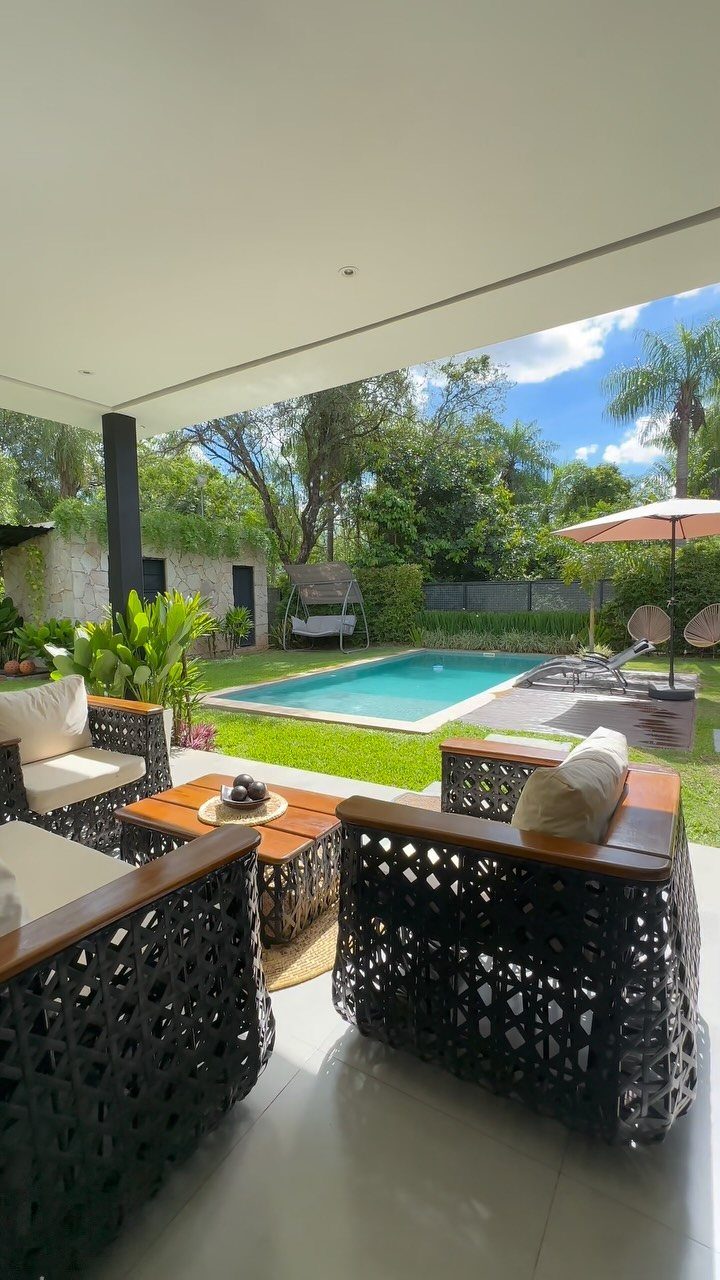
A patio lives or dies by whether people actually sit on it. Zones do the work: one end for eating, another for sprawling, separated by nothing more than a rug or a change in furniture height.
Black woven chairs read as a room when they face each other across a low table, not because the space is large.
I use outdoor rugs to anchor seating and keep chairs from sliding on stone.
Cushions in a light color against dark frames stay cleaner than I expect if the fabric is solution-dyed acrylic. Shade matters more than the view; a pergola or umbrella extends the hours you will stay out there.
Start with 2 chairs and a table. Add pieces after you know where people actually want to sit.

ARCHITECTURAL STACKED-STONE & 40MM MARBLE COUNTERTOP : Wrapped in genuine natural culture stone cladding on front and sides, accented with an ultra-thick 40 mm solid polished marble counter, Engineer, ext, corecoal a permanent built-in resort aesthetic without expensive masonry labor.

STOP RUNNING INSIDE. HOST EVERYTHING IN ONE PLACE: Turn your patio into the space everyone gathers around. Grill, prep, serve, and entertain without leaving the conversation. No more back-and-forth. Just effortless hosting.

Powder-Coated Galvanized Steel Construction: Built from fully powder-coated, high-quality galvanized steel for corrosion resistance and durability that handles the elements year-round without rusting, fading, or breaking down
8. Vertical Gardening
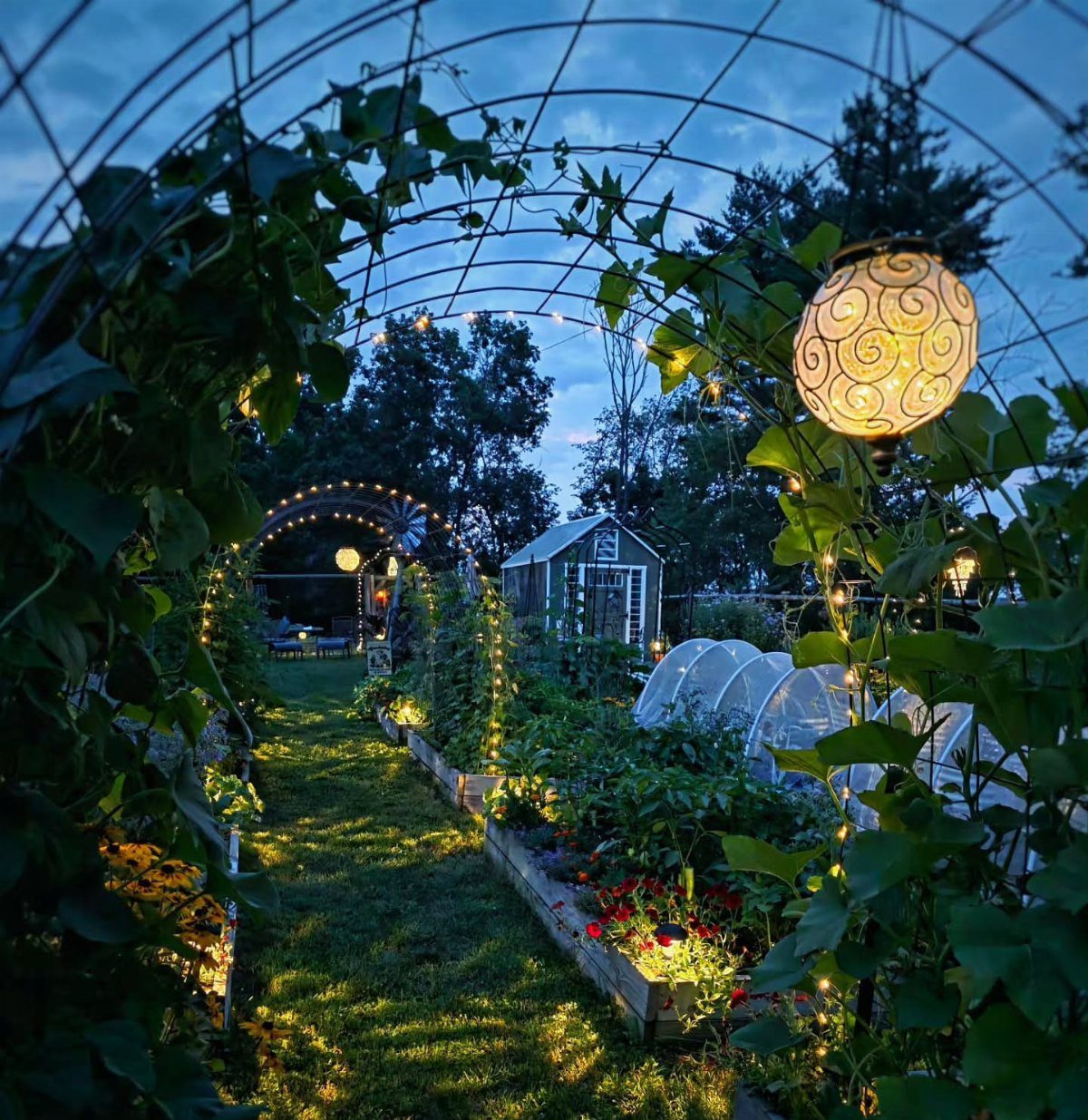
Metal arches covered in climbing plants turn a flat wall or narrow bed into something that reads as depth and privacy.
Vines need something to climb; the structure does that work, not the plants alone. I use galvanized steel or powder-coated iron for arches that last, and I set posts in concrete if the vine is a heavy one like wisteria.
Trellises against a fence gain you green where ground space is none.
Arbors over a path make a doorway. Patience matters: clematis or jasmine covers fast, but most climbers need two or three seasons to look like anything.
I plant at the base, train the stems while they are young and pliable, and tie with soft twine that rots away rather than cutting in.
A vertical garden suits renters too; many trellis systems bolt to a wall and unbolt when you leave.
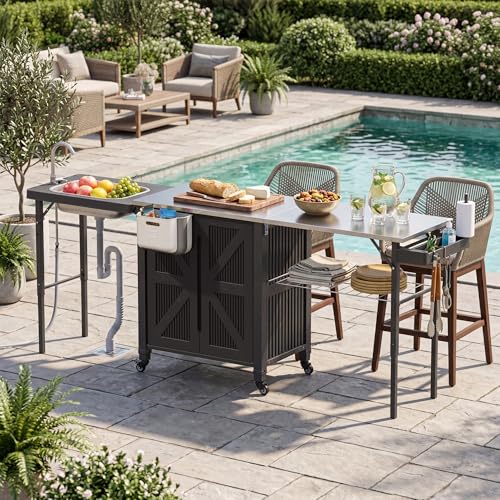
【3-in-1 Outdoor Grill Station with Sink】This innovative outdoor grill cart combines an outdoor cooking station, outdoor kitchen island, and outdoor storage table in one. Features a foldable sink with a built-in faucet, making it easy to wash food, fruits, and utensils while cooking outdoors. Perfect for upgrading your outdoor cooking station
9. Water Features
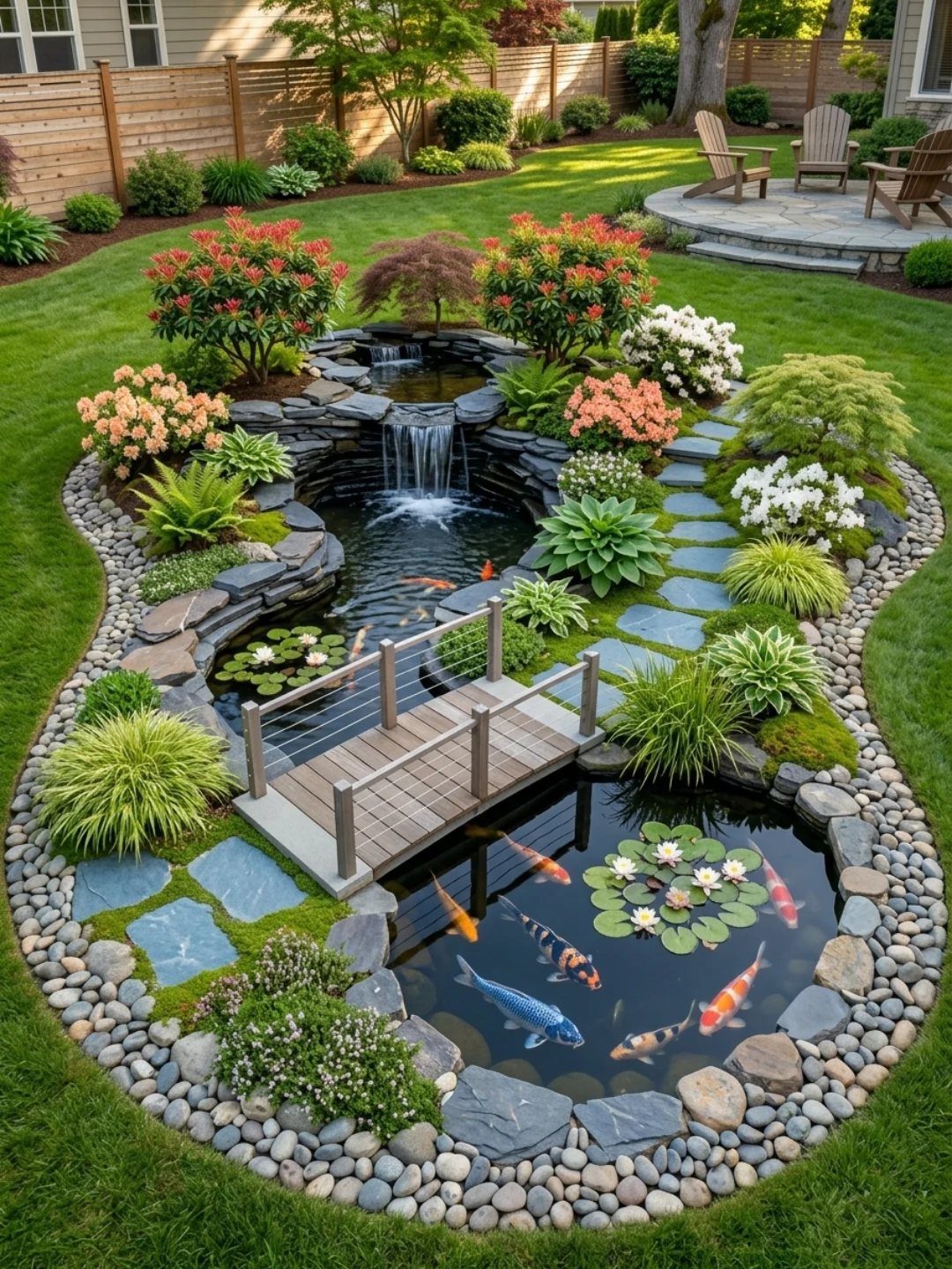
Moving water covers traffic noise and draws birds faster than any feeder.
Koi ponds with falls between them are the high end; a simple recirculating fountain in a ceramic pot gets most of the sound for a fraction of the work.
Ponds need level ground, a liner, and a pump filter you clean monthly. Skipping the filter means fighting algae all summer.
Standing water breeds mosquitoes, so I run the pump continuously or use a larvicide labeled for garden use. Fountains are simpler: one outlet, one basin, no fish to overfeed.
A waterfall is built with a hidden reservoir and stacked stone; the pump sits in the basin below.
The sound changes with drop height, and a moderate fall works best for conversation nearby. Drainage has to carry overflow away from the house foundation, not toward it.
Easy Installation: The 7-piece fire pit ring insertion kit is easy to assemble and can be assembled in just a few minutes.Seamless design allows for easy installation and integration into your DIY fire pit project.Fixed with screws, it will not easily fall off during use. Let you have more time to enjoy the joy brought by flames.

High Quality Material: Our outdoor fire pit rings are made of thick steel material that can withstand high temperatures, with a matte black high temperature powder coating on the surface. The combination of these two features ensures that it is durable, not easily worn out, and built to last. With this fire ring for outside fire pit, you can create a bright and even flame in your backyard, allowing for safe and controlled fires that can continue for years
10. Outdoor Decks
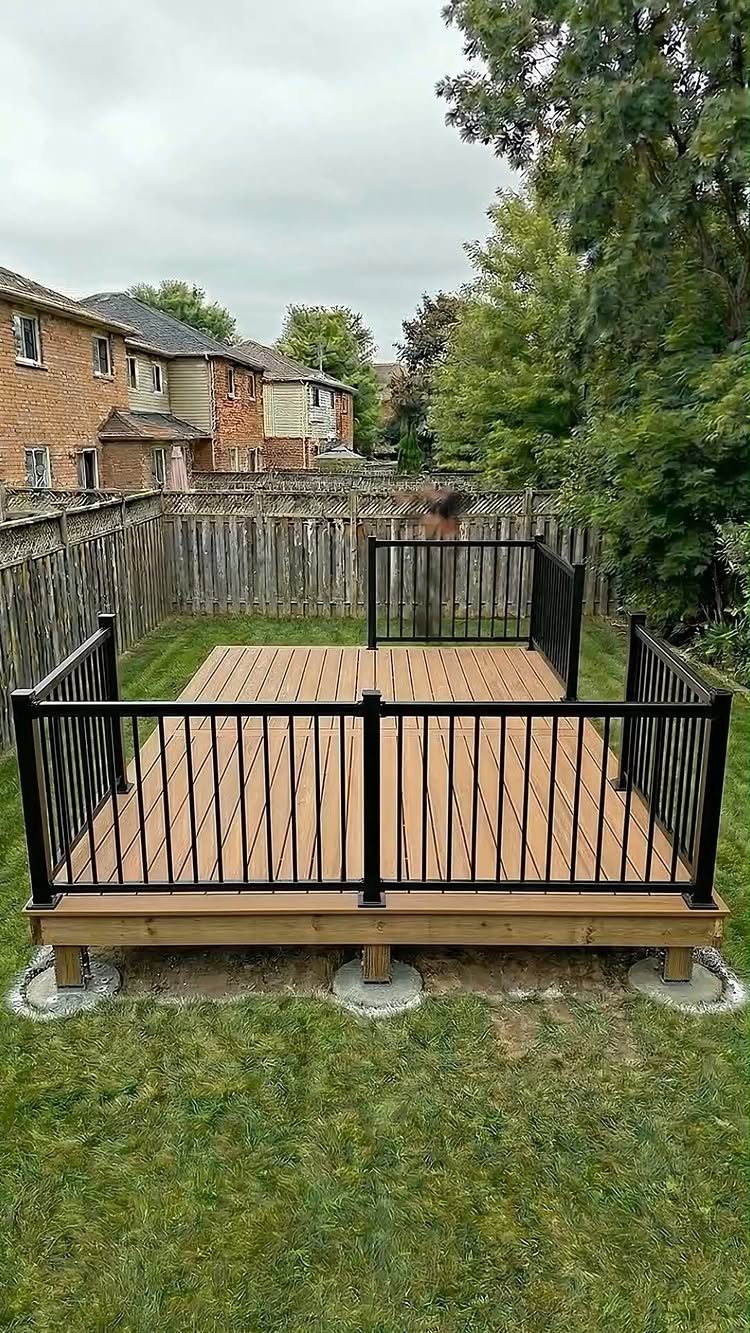
A deck extends the house floor into the yard, and the height change matters. One step down reads as connected; three steps reads as separate.
A single-level deck at grade is cheaper to build and easier to access than multi-level, though split levels suit sloped lots where a flat platform would mean a retaining wall.
I frame with pressure-treated lumber and face with composite or hardwood; black metal railings are steel or aluminum, powder-coated, and they last without painting.
Built-in benches save the cost of furniture and do not blow around. Integrated planters, set between bench sections, need liners and drainage holes or the wood rots.
Check local code for railing height and permit requirements before you dig footings. That step costs a weekend but saves tearing it out later.
11. Luxurious Hot Tubs
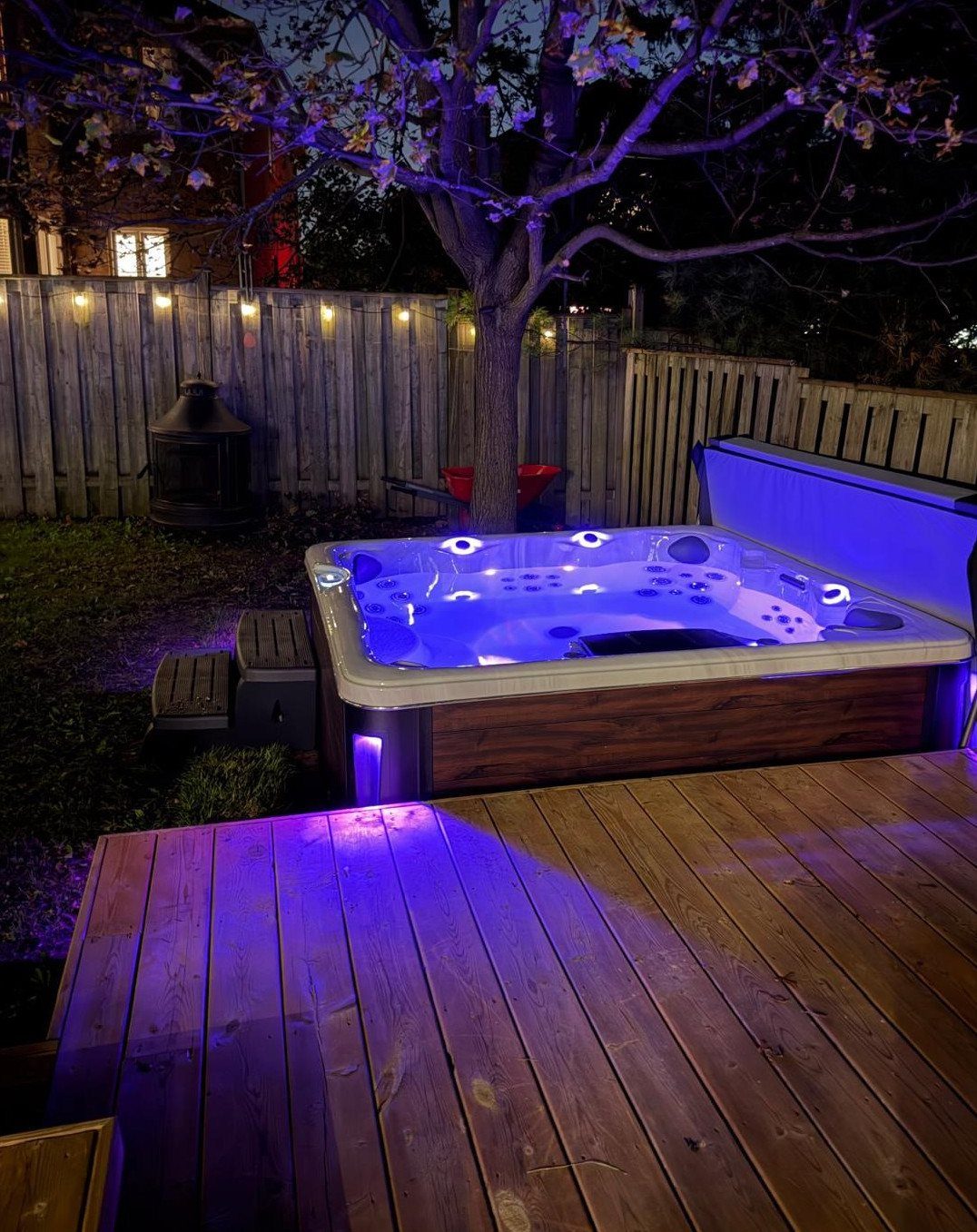
A hot tub at night, lit from within, turns a deck into a destination. A hot tub on wood decking needs to carry the filled weight; I check span ratings with an engineer or build on a concrete pad instead.
The blue glow comes from LED lights inside the shell, standard on most models now.
Placement near a fence or garden blocks wind and gives some privacy without a full enclosure.
I leave access on all sides for service; a tub pushed against a wall is a nightmare to repair. Ambient lighting nearby, string lights or a post lantern, lets you move safely with wet feet.
Running costs run higher than people expect. A well-insulated cover cuts heating bills, and I replace mine once the seal degrades.
12. Outdoor Sofas
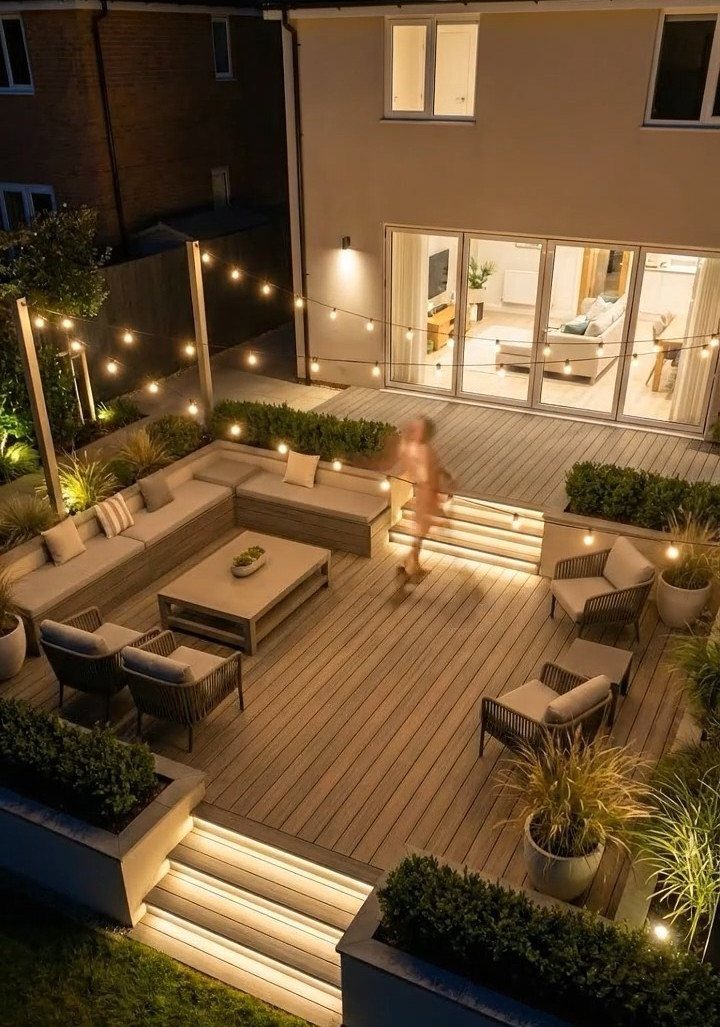
Built-in seating around a deck perimeter uses space that freestanding furniture wastes.
An L-shaped sofa in wood is cedar or a hardwood, sealed against rain. Cushions live in a deck box when weather turns; even outdoor foam molds if it sits wet.
Seat depth and back angle matter for hours of sitting without slouching. Hammocks suit trees or stands, not decks; benches without backs suit fire pit circles where you turn to talk.
String lights overhead are the finishing layer. Install the structure first, live with it a season, then decide if the seating wants a back, a cushion, or nothing at all.
13. Garden Rooms
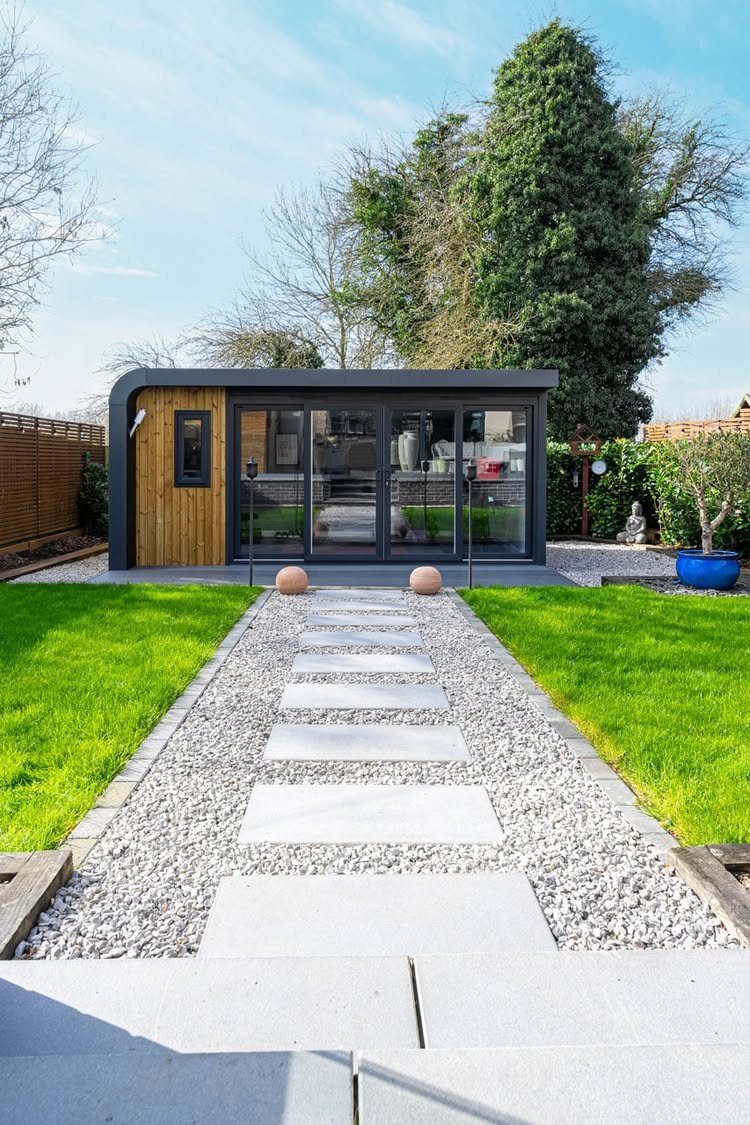
A garden room can mean an actual structure you step into, or it can mean carving one open space into several without a single wall.
A gravel path with stone pavers leads the eye and the foot from a lawn into a seating area, a fire pit circle, or a raised bed for vegetables; each zone holds a different activity and the yard feels larger for it.
Hedges or tall grasses do the dividing where fences would block light.
Containers on casters let you redraw the lines by season. I like a wooden bench or a pair of chairs at the end of a path to mark the destination; without that pause point, the path reads as leftover space.
Start with two zones: one for sitting, one for whatever you do most. Add a third only after the first two earn their keep.
14. Natural Pools
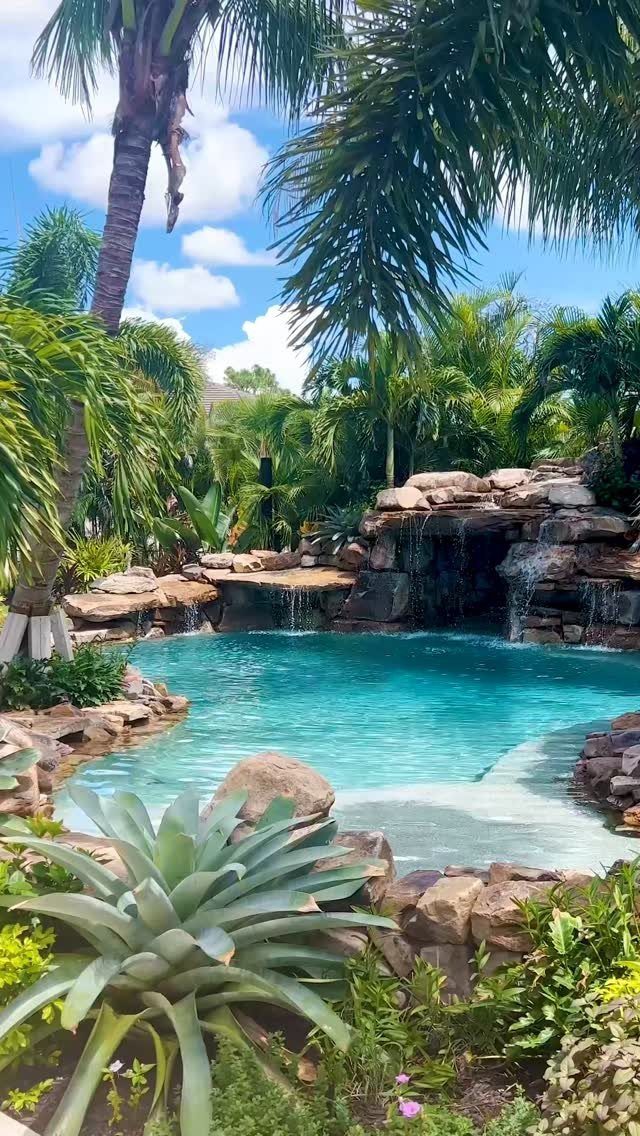
A natural pool swaps chlorine for plants and a biological filter, and the water stays clear without the chemical smell that lingers on skin.
Construction means a liner, a pump, and a planted area roughly equal in size to the swimming area.
The plants take up nutrients that algae would feed on, so the system works only if the balance holds. Skipping the planted filter turns it into a stagnant pond.
It costs more upfront than a standard pool and needs a designer who has built one before. The trade is long-term: less daily maintenance, no chemical budget, and a pool that looks like it grew there.
Planning Your Backyard
Start with what you actually do outside, not what you wish you did. A space for grilling twice a week needs a different layout than one for reading alone on Sunday mornings.
Banken, the landscape architect, treats the overall plan as the guardrail that keeps work from wandering.
I follow that by sketching zones before I buy anything: cooking, sitting, moving through. The house style sets the tone; a modern addition grafted onto an older bungalow reads as a mistake, not a contrast.
Elevation and adjacencies matter more than square footage.
A flat quarter-acre is simpler to divide than a steep slope with a drainage easement. I walk the yard at different hours to catch where afternoon sun bakes the patio or where the neighbor’s garage wall stares back.
Style comes after function. Pick the activities, fit them to the constraints, then choose materials that match the house.
But before you can create the outdoor oasis of your dreams, you have to define what that dream is.
Choosing Plants
Match the plant to the light that actually hits the spot, not the light you think should be there. Morning sun reads as shade to a rose, and afternoon glare will crisp a hosta in July.
Soil tests cost little and save replacement plants. Native varieties need less intervention once established because they evolved with the rainfall and the pests already present.
Bitterbrush, penstemon, desert marigold, and sagebrush work well in Reno; your region has its own equivalents at any local nursery that stocks indigenous stock.
Non-native plants are not forbidden.
They simply cost more in water, fertilizer, and attention. I limit them to spots where nothing native thrives, and I group them by water need so I am not soaking a drought-tolerant bed to keep a hydrangea alive.
Creating Ambiance
Light layers do more than one bright source ever could. Smart dimming lets you lower brightness without crossing wet grass to unplug anything.
Water sound covers traffic and creates a center of attention.
Seating arrangement matters as much as the seats themselves. Cushions and throws in weather-resistant fabric make the difference between a space people pass through and one they settle into.
Budgeting for Upgrades
Know the full cost before you start, not the cost of the first item. A pergola needs footings, hardware, and possibly a permit; the lumber is rarely the biggest line.
I stage work across seasons when money is tight.
The structure goes in first: deck, patio, or pergola frame. Utilities come next if they are needed: gas for the grill, electric for lights, water for the fountain.
Furnishings and plants last, and they benefit from the wait; I learn where people actually sit before I buy chairs for spots that go unused.
Leave part of the budget unallocated for the surprises that always show up once you start digging. Something always costs more than quoted, and the buffer keeps the project from stalling over a single surprise.
Frequently Asked Questions
What are some new backyard ideas for 2026?
Sustainable, low-maintenance designs are where things are headed in 2026. Drought-tolerant plantings, gravel mulches, and structures like pergolas and fire pits built to last with stone or metal all reduce upkeep while keeping the space usable.
The emphasis is on materials and plants that survive real budgets and weekend timelines, not designer showcases.
How to design your dream garden?
Sketch zones before buying anything: cooking, sitting, moving through.
Match the style to your house, check elevation and adjacencies, and walk the yard at different hours to catch where sun bakes the patio or where sightlines fall flat. Function first, then style.