These 19 Christmas crafts for preschoolers run from a printed coloring page to Christmas mason jars that need paint, faux snow, and battery lights.
The one that fits your Saturday depends on how long your child will sit, because some need only the time it takes a thumb to press green ink while others wait through salt dough baking or paper strip gluing.
I like that the dough only needs pantry staples and comes together in about 5 minutes.
[link-whisper-related-posts]1. Popsicle Stick Reindeer
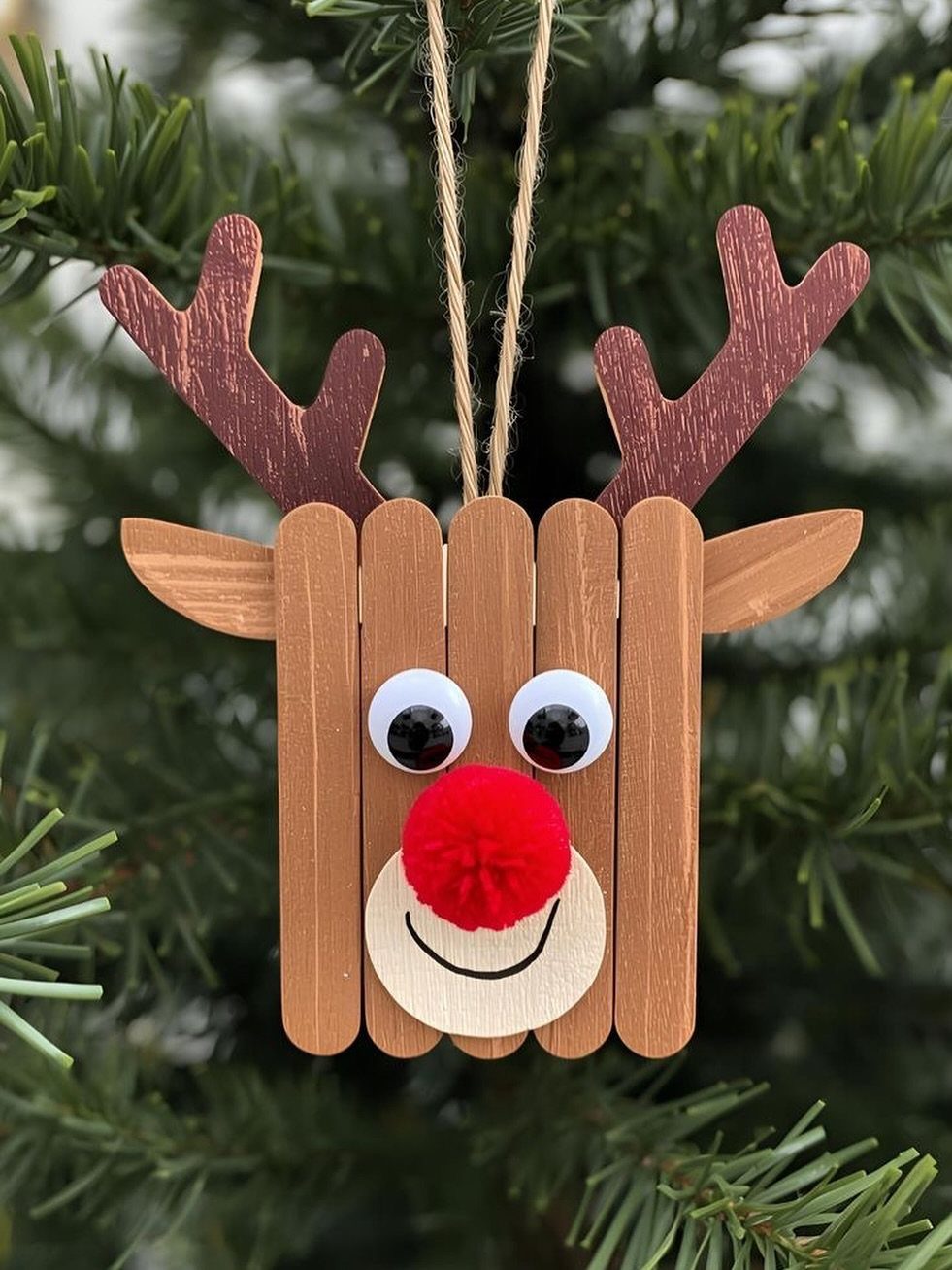
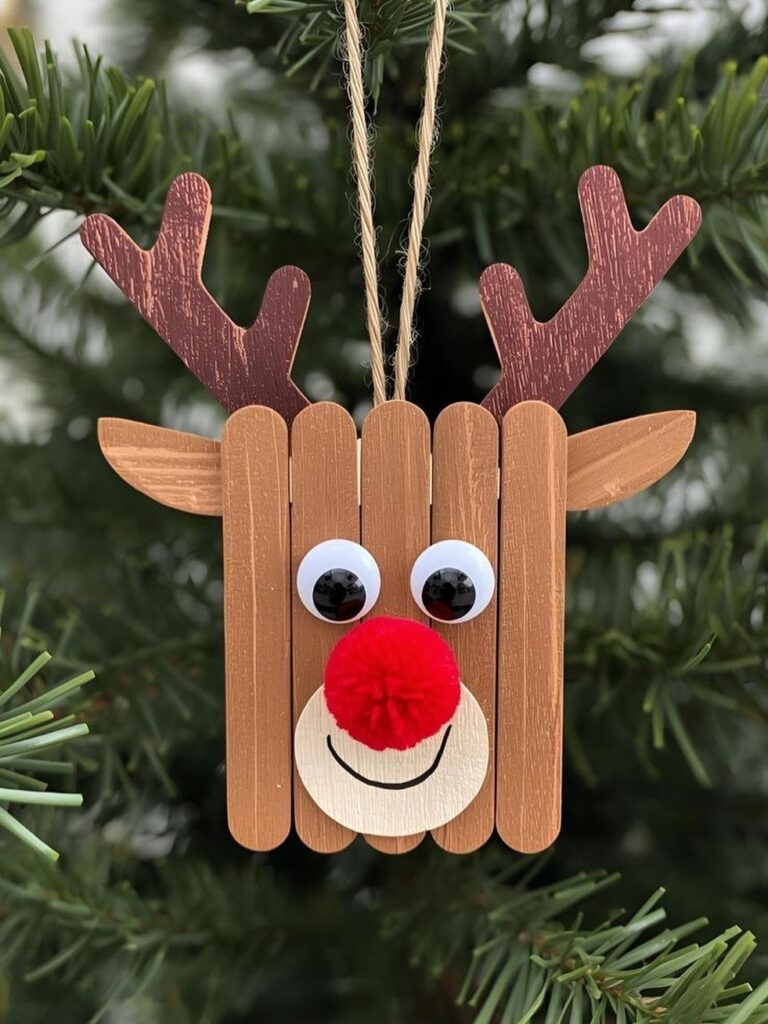
Brown craft sticks, a red pom-pom, and two googly eyes turn into a reindeer face faster than most preschoolers can name one.
I like this version because the sticks glue flat, so little hands can press them together without the pieces sliding apart.
Paint the sticks first if you want the farmhouse look; leave them bare for something closer to wood.
Antlers can be smaller sticks, pipe cleaners, or paper cut into points. A loop of twine at the top makes it hangable, or glue a magnet strip to the back for the refrigerator.
Glitter paper for the nose cuts down on the shedding that regular glitter leaves through March.

REINDEER ORNAMENT - 4e’s Novelty Reindeer Christmas crafts for kids Bulk 12 Pack is fun creative activity to get your kids in a festive spirit. Comes in 4 designs, you get 3pcs of each. They have red noses just like the Rudolph Reindeer movie

Complete christmas craft kit for kids: Create 12 adorable cork reindeer ornaments with all materials pre-packaged for individual use, perfect for christmas activities, classroom parties, and family holiday crafts

Diverse Package: each package includes 36 Christmas decorations in 12 styles, 3 of each attractive style, and 36 ropes, ensuring you have more than enough to dress up your home for the holidays and enabling you to create a harmonious theme or mix and match to your liking
2. Christmas Card Making
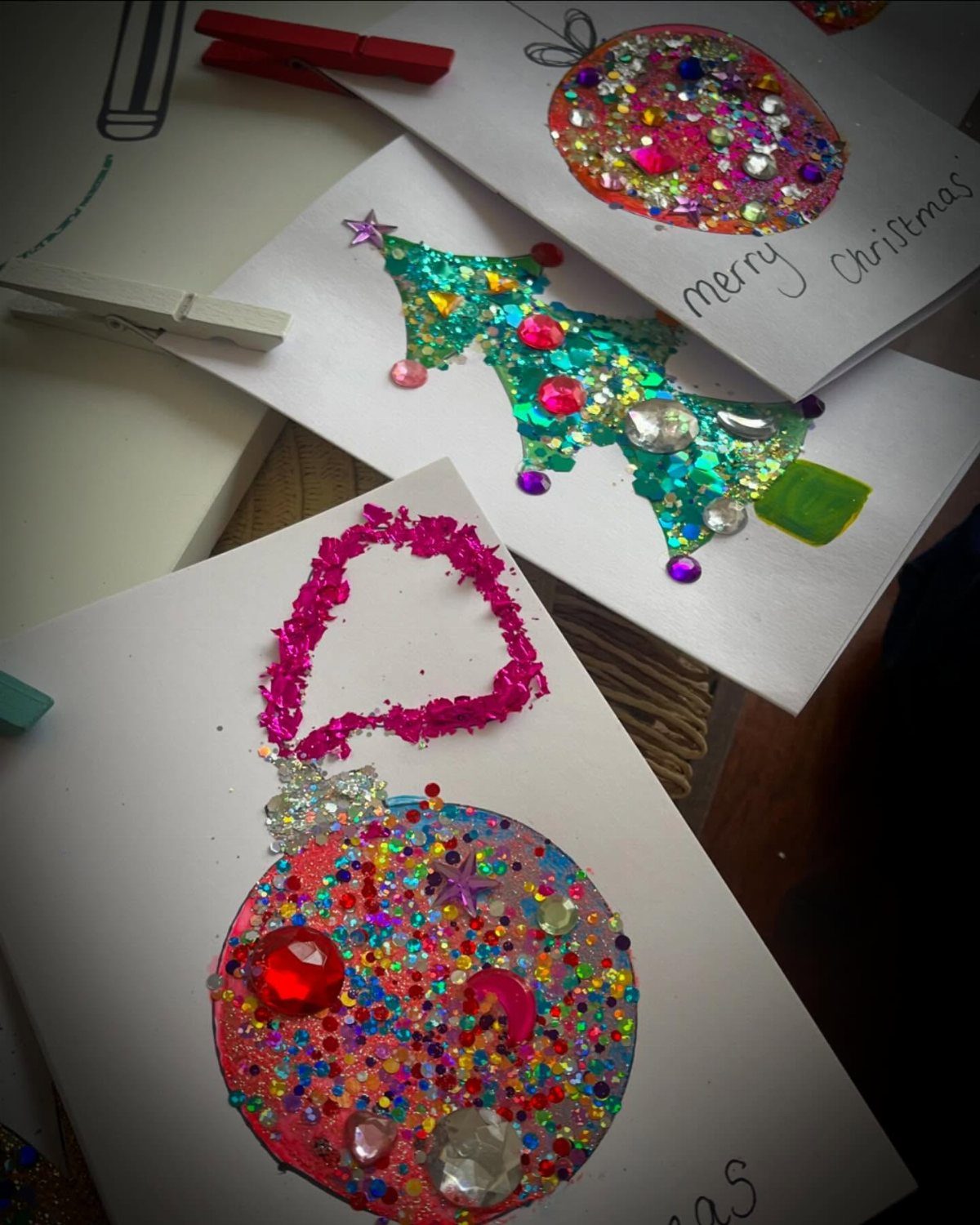
A card a child made carries more weight than anything bought in a pack of 12.
This idea needs no template to start: fold a sheet of paper in half, hand over the crayons or the glue stick, and let the marks be what they are.
For younger kids, I cut the tree or ornament shape myself and let them fill it in.
Fingerprints dabbed green become branches; sequins pressed on while the glue is wet become bulbs. Bubble wrap printing makes a good snow texture, but fingerprints work too if that is what you have on hand.
The finished card mails flat, costs only what supplies you already own, and survives as a keepsake.

Bountiful Styles: the Christmas thumbprint card comes with 8 different styles, with 6 of each, making a total of 48 cards, along with 4 ink pads for DIY projects; They allow you to express a range of emotions and blessings

Christmas Wishes Clear Stamps: Our Christmas verses and phrase silicone stamps contain various Christmas blessing words, which helps to convey your holiday wishes to your family or friends.

Package Includes: This Christmas card making craft kits for kids comes with 24pcs Christmas tree cards in 6 styles, 24pcs Christmas greeting cards, 24pcs Christmas theme stickers in 4 styles and 24pcs self-adhesive envelope. This set of DIY handmade greeting cards includes everything you need for festive fun, create your own handmade Christmas greeting card or Christmas invitation.
3. Salt Dough Ornaments
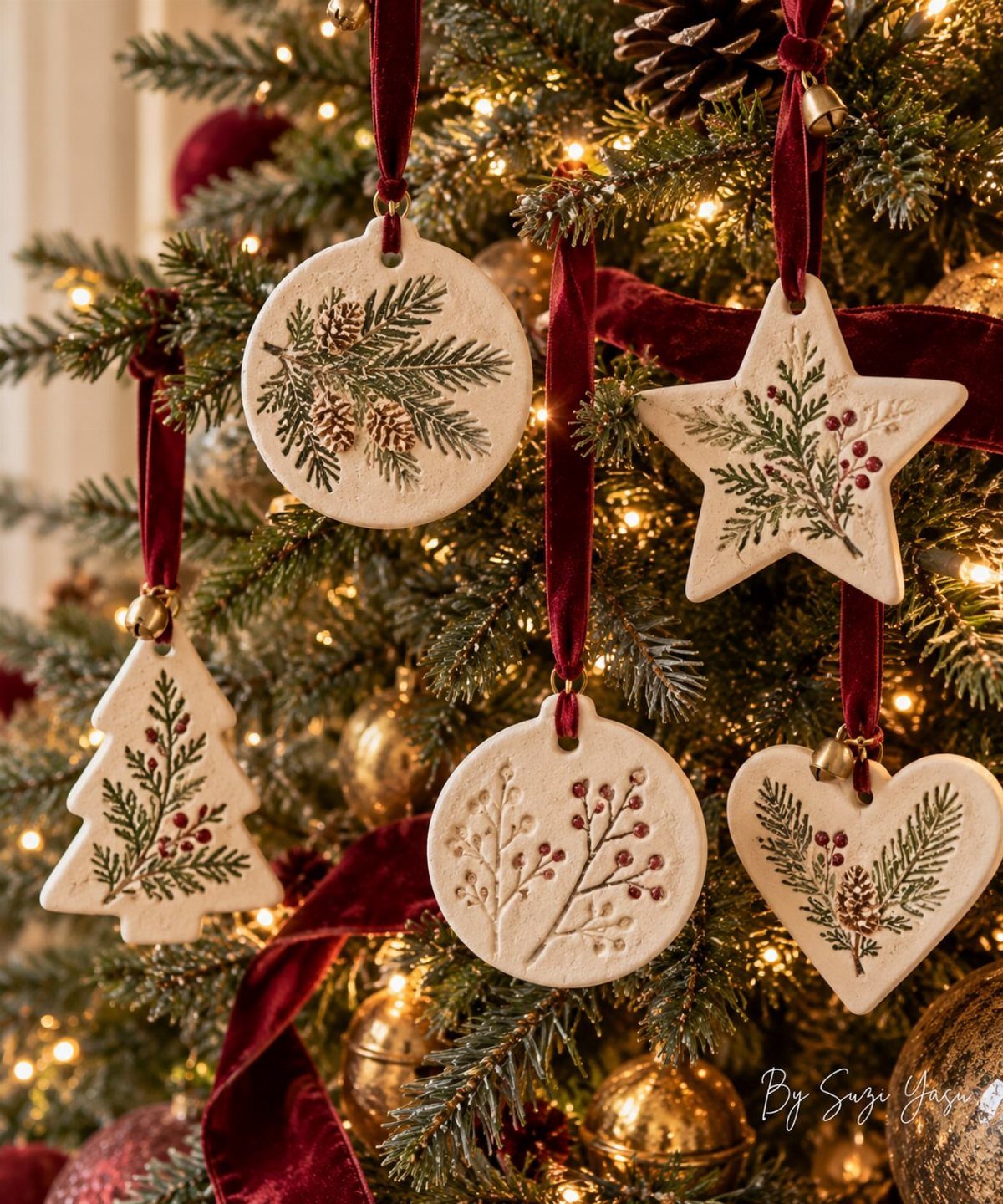
Salt dough ornaments harden in the oven into something that lasts years, not weeks.
The standard recipe is two parts flour to one part each salt and water by volume; mix until it feels like playdough, roll it flat, and cut shapes with cookie cutters or a drinking glass.
A preschooler’s hand pressed into the soft dough before baking becomes a print you will want later.
Pressing greenery into the surface before baking gives a clean leaf impression that lasts. Paint after they cool, or leave them plain for a stone-like look.
Rushed baking leaves the center soft.

Christmas Cookie Molds Set: you will get 6 pieces of wooden baking cookie molds in 6 styles, including Santa Claus, Christmas tree, elk, deer, Christmas bell tree and snowman, exquisite and lovely, enough quantity and cute design to meet your holiday baking needs

Great Material & Durable:Our wooden cookie molds are made of high quality.Made of beech wood, flax oil.The mold has been handled with food safe mix of bee wax and flax oil. and natural bamboo material, safe and durable in use.

Safe Materials: Our wooden cookie molds have been treated with a food-safe mixture of beeswax and linseed oil. Carved from high-quality beech wood, the surface is smooth, durable and reusable.
4. Handprint Christmas Tree
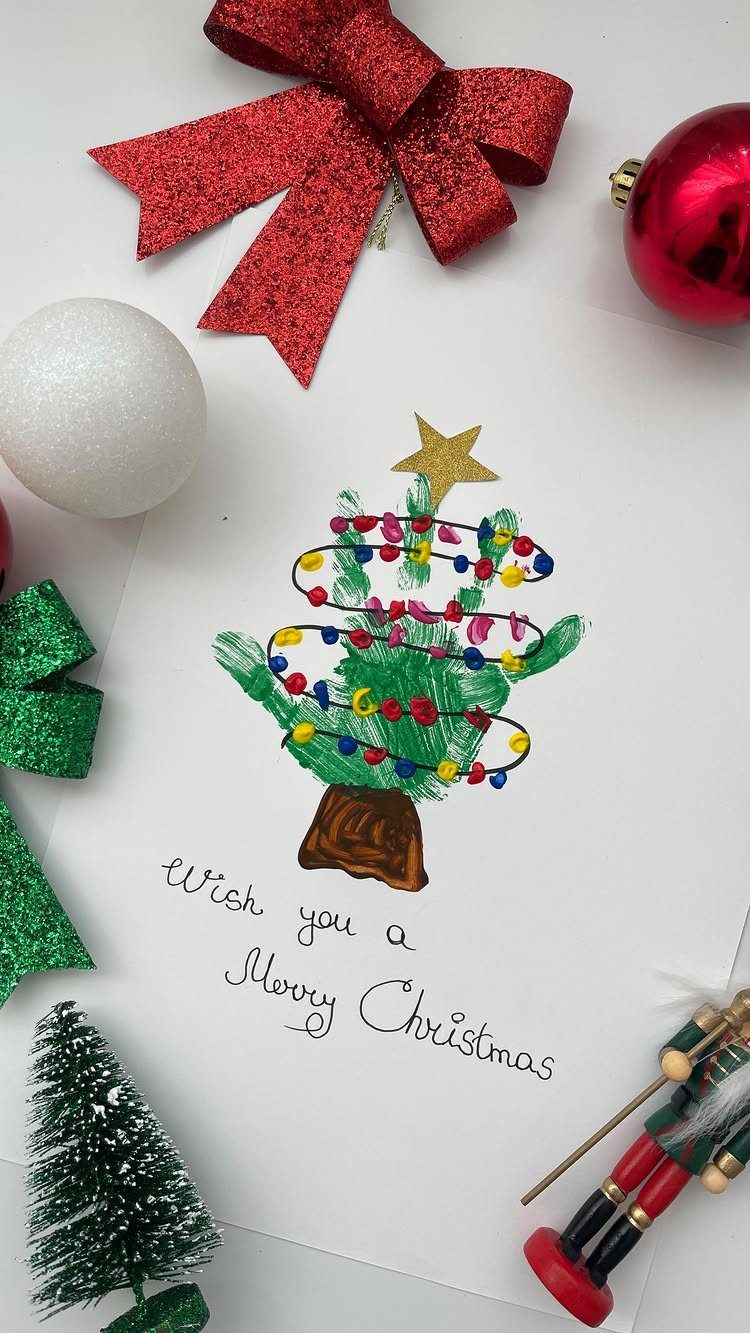
Green paint on a palm, pressed once at the bottom and again above it, builds a Christmas tree in 2 handprints.
Fingerprint dots for ornaments and a gold star at the top keep the decoration simple enough to finish before the paint dries.
I have seen this done on cards, on canvas, and on fabric for tablecloths.
The card format works best for mailing; the fabric version needs fabric paint and a day to cure. A brown trunk drawn at the bottom grounds the whole thing.
The paint washes off skin with soap and warm water. It does not always wash out of sleeves.

🌲Tree Design: these reusable drawing stencils are designed with pine tree theme pattern, vivid and delicate, full of happy Christmas atmosphere, not only improving hand-on ability, but also enjoying happy DIY painting time with families and friends.

Vivid Set: you will receive 20 pieces christmas tree stencils for painting, a variety of different matching shape give you endless possibilities to create various DIY art projects, bringing vivid decor to your home in minutes

Product Details: the package contains 8 pieces pine tree stencils, enough for you to apply, each stencil measures approx. 6 x 6 inches, ideal for scrapbooking drawing tracing, house embellishment, making a pretty addition to your home or a nice decoration
5. Paper Plate Christmas Trees
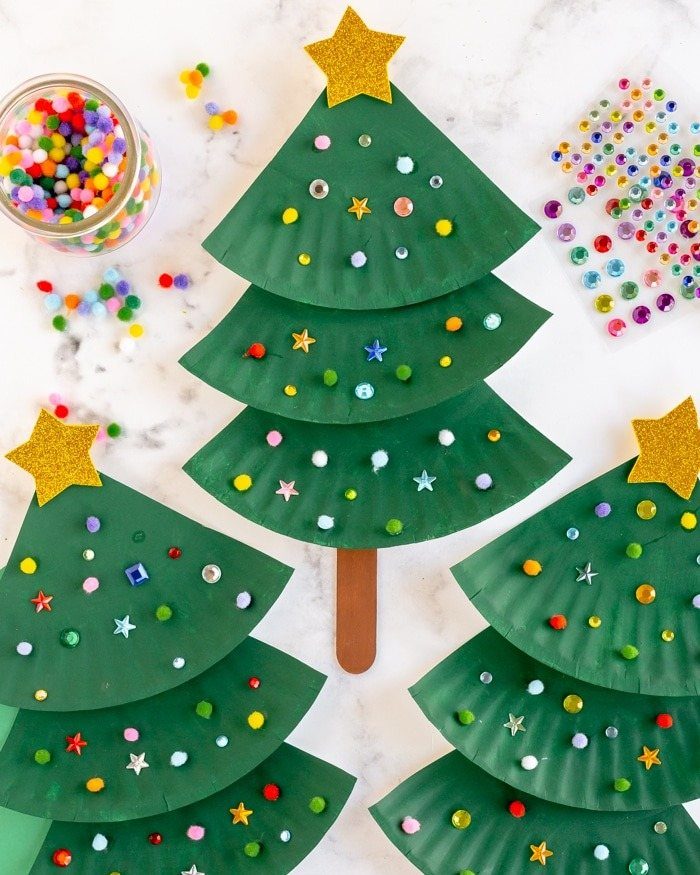
A paper plate cut into wedges and layered smallest to largest becomes a tree that stands on its own.
3 tiers, each painted green and studded with pom-poms with a gold star on top, is the version I would copy for a group.
Preschoolers can do the painting and the gluing; an adult handles the scissors and the stapling or bradding that holds the layers together. This works on any table and stores flat afterward, so the background does not matter.
Pom-poms stay put with regular school glue if you give them time to dry. Sequins work too, but they scatter.

PERFECT MATCH - Fit for most regular mouth mason jar,regular mouth, Lid 2.76""(70mm)/Insert 2.17""(55mm). Auto on and off with light sensor. Slid the switch to “ON”, the lights will automatically turn on when light low, and turn off in daytime


Powered 3AA batteries with low voltage,no overheat after many hours of usage,and safe to touch
6. Paper Plate Wreath
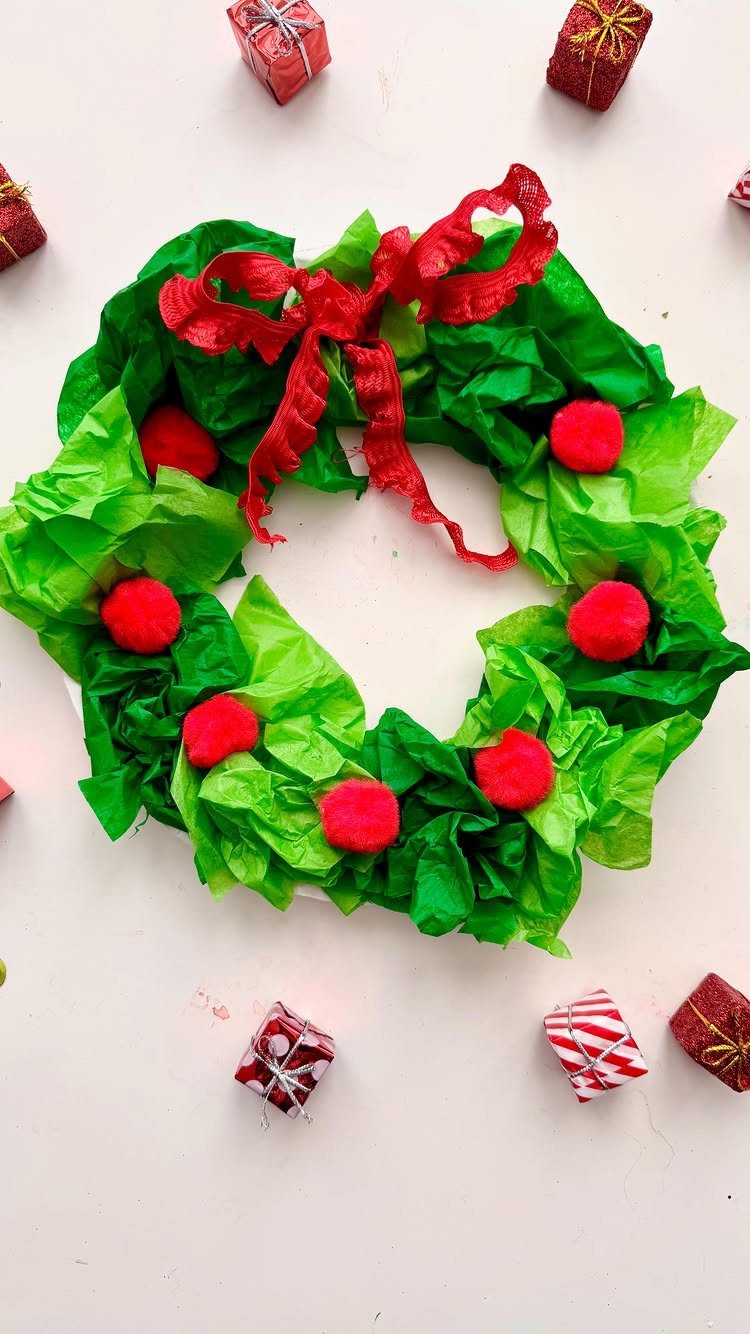
Cutting the center from a paper plate leaves a ring that is already wreath-shaped, which saves a step most crafts demand.
Crumpled green tissue paper glued around the rim, with red pom-poms spaced like berries and a bow at the bottom, gives a full wreath look without much cutting.
Crumpling the tissue is the part preschoolers handle best: it builds the texture and fills the surface without requiring precision. I have seen this done with torn construction paper strips too, which lie flatter but take longer to cover.
The bow can be ribbon, a pipe cleaner, or a paper shape. Hang it with a loop of yarn, or tape it flat to a door.


Fun Holiday Crafting: The Fun Express Reindeer Craft Stick Ornament Kit includes everything needed to create 12 adorable reindeer ornaments, perfect for kids to make during Christmas parties, classroom activities, or family holiday crafts.

Enough to Use: you will receive 48 pieces of Christmas reindeer paperboard in 8 styles, 48 pieces of self adhesive sticker sheets and 48 pieces of ropes, abundant in quantity and rich in style, enough to choose and replace, which can meet your daily DIY needs
7. Christmas Tree Pom-Pom Craft
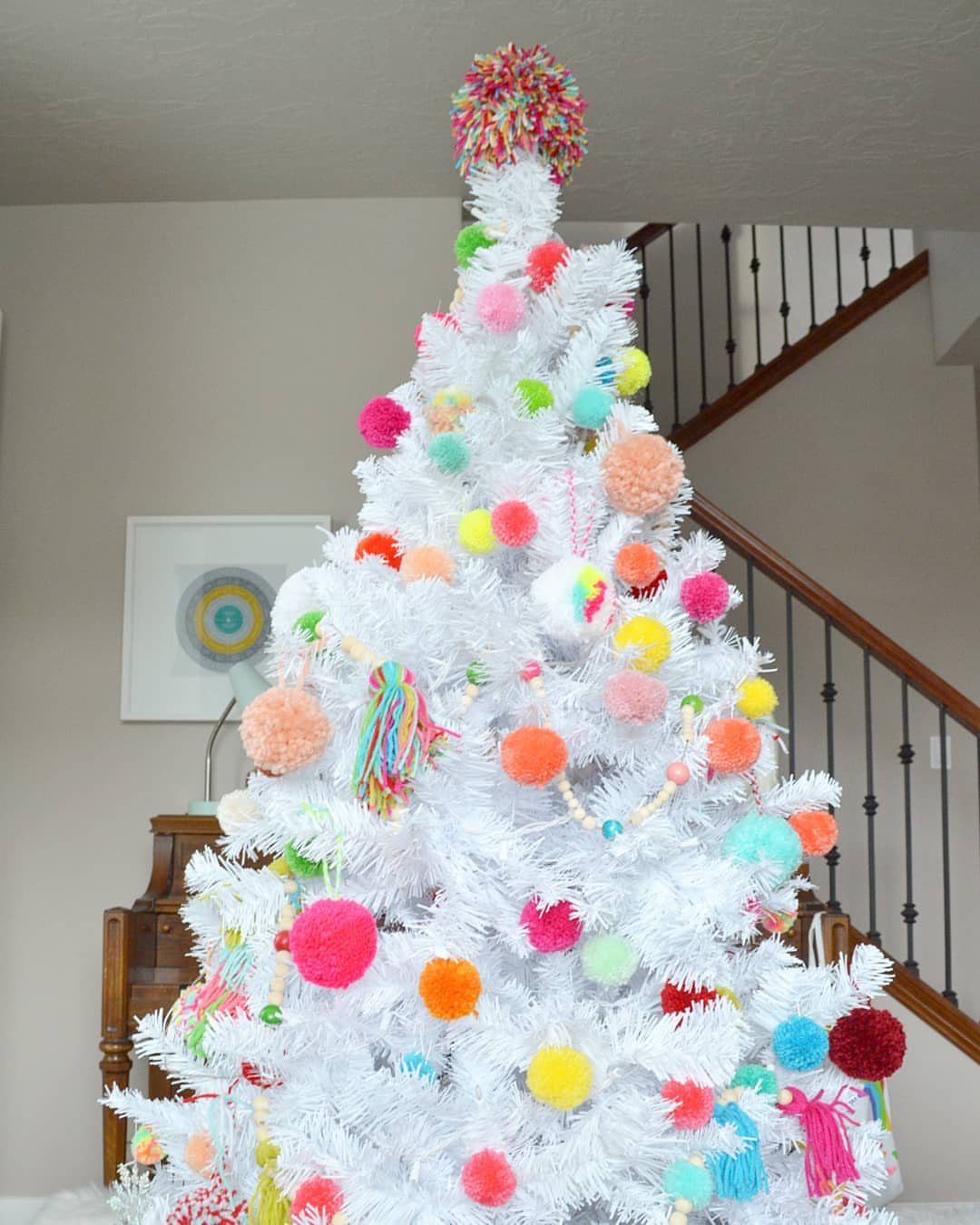
Pom-poms press onto any tree shape, and the result survives longer than most preschool art because the pieces have weight. A cardboard cutout works best for flat display; a cone of poster board stands on a table.
Preschoolers handle the gluing themselves if the dots are small.
Large pom-poms need more glue and more patience than most preschoolers have. Beaded garland is optional; the pom-poms alone read as ornaments from across a room.
This suits kids who collect on walks. Pine cones from the yard, painted green and dotted with the same pom-poms, make a matching ornament that hangs.
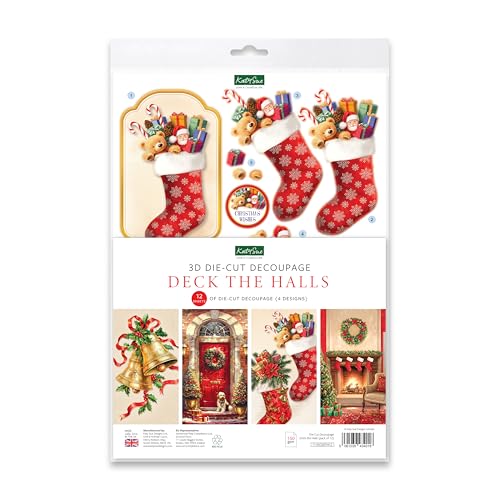
Celebrate the joy of the season with the Katy Sue Deck the Halls 3D Die-Cut Decoupage pack, featuring 4 beautifully festive designs that capture the warmth and wonder of a traditionally decorated Christmas. This 12-sheet collection is perfect for adding classic Christmas and holiday charm to your handmade cards, gift tags, and seasonal crafts and would also make a brilliant Christmas card kit gift for the paper and card crafter in your life.

Create your own hand made and unique Christmas Flower Pot cards with the new and delightful Christmas Flower Pot Christmas card making collection from Katy Sue. The collection features stunning Christmas-themed floral die-cut decoupage and flower pot-shaped cards.

[Design of Patterns] Clear Stamps designed with various Christmas greeting words, and the tree composed with blessings.
8. Christmas Tree Thumbprint Art
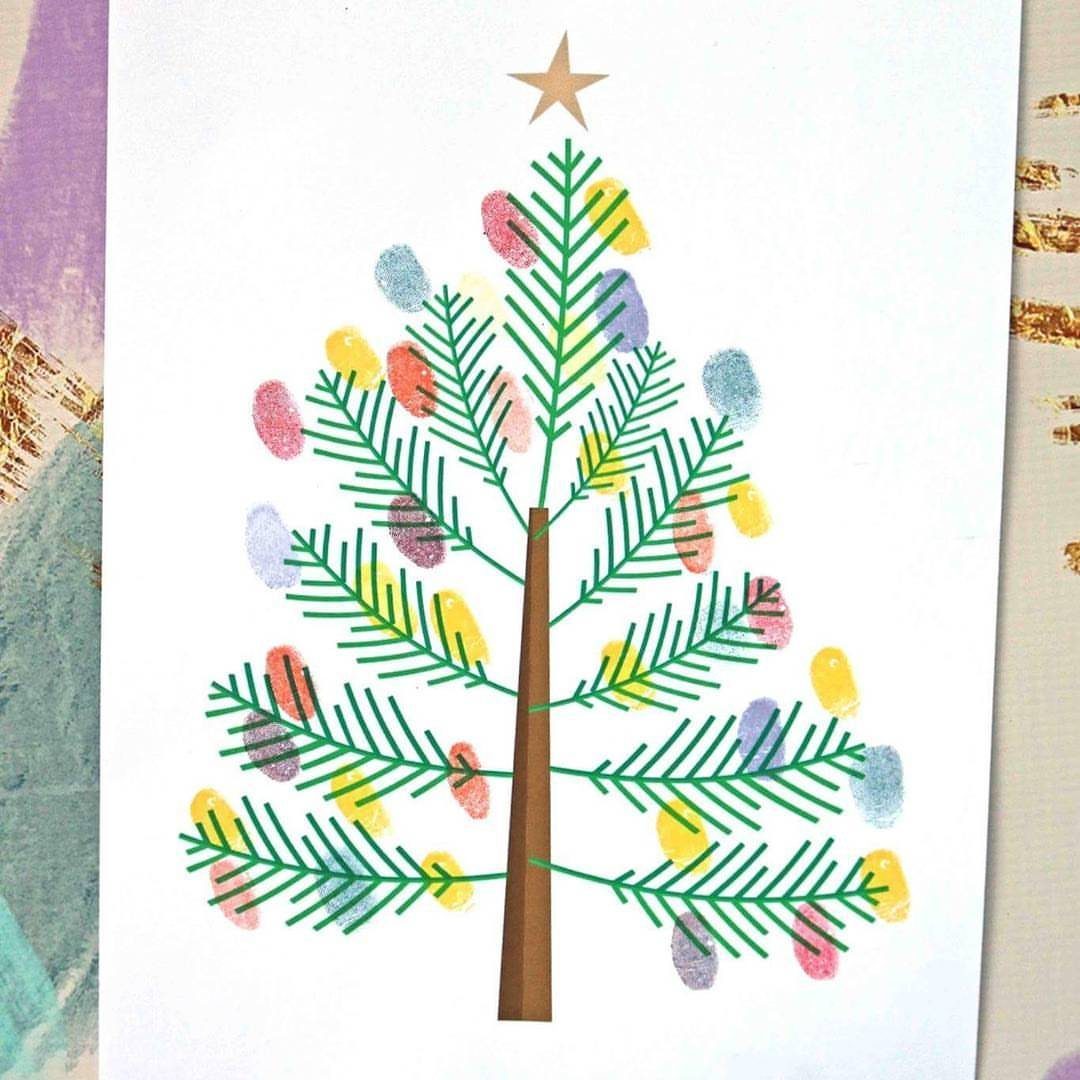
Thumbprints in colored ink dot across a paper tree faster than a brush ever could. A stamped tree outline gets printed first; the child adds only the thumbprint ornaments in red, yellow, and blue.
Markers finish what the thumbs start: a star at the top, maybe a trunk below.
The whole thing stays clean enough for a card because the fingers never touch paint, only ink pads. Washable ink exists for a reason.
Green thumbs can print the tree itself if you skip the pre-printed version.
That takes longer and spreads more color around. The card format mails flat; a row of these becomes a classroom garland.

Variety of Designs: Snow Globe cookie cutter set includes 10 different Snow Globe cookie stamps. These DIY cookie cutters are full of fun, you can make cookies for your kids and family. Different designs will give you different surprise, please enjoy the fun of DIY baking.

Made by T3D - we don't settle for the quality of cookie cutters on the market. So we have decided to make our own.

Made by T3D - we don't settle for the quality of cookie cutters on the market. So we have decided to make our own.
9. Candy Cane Playdough
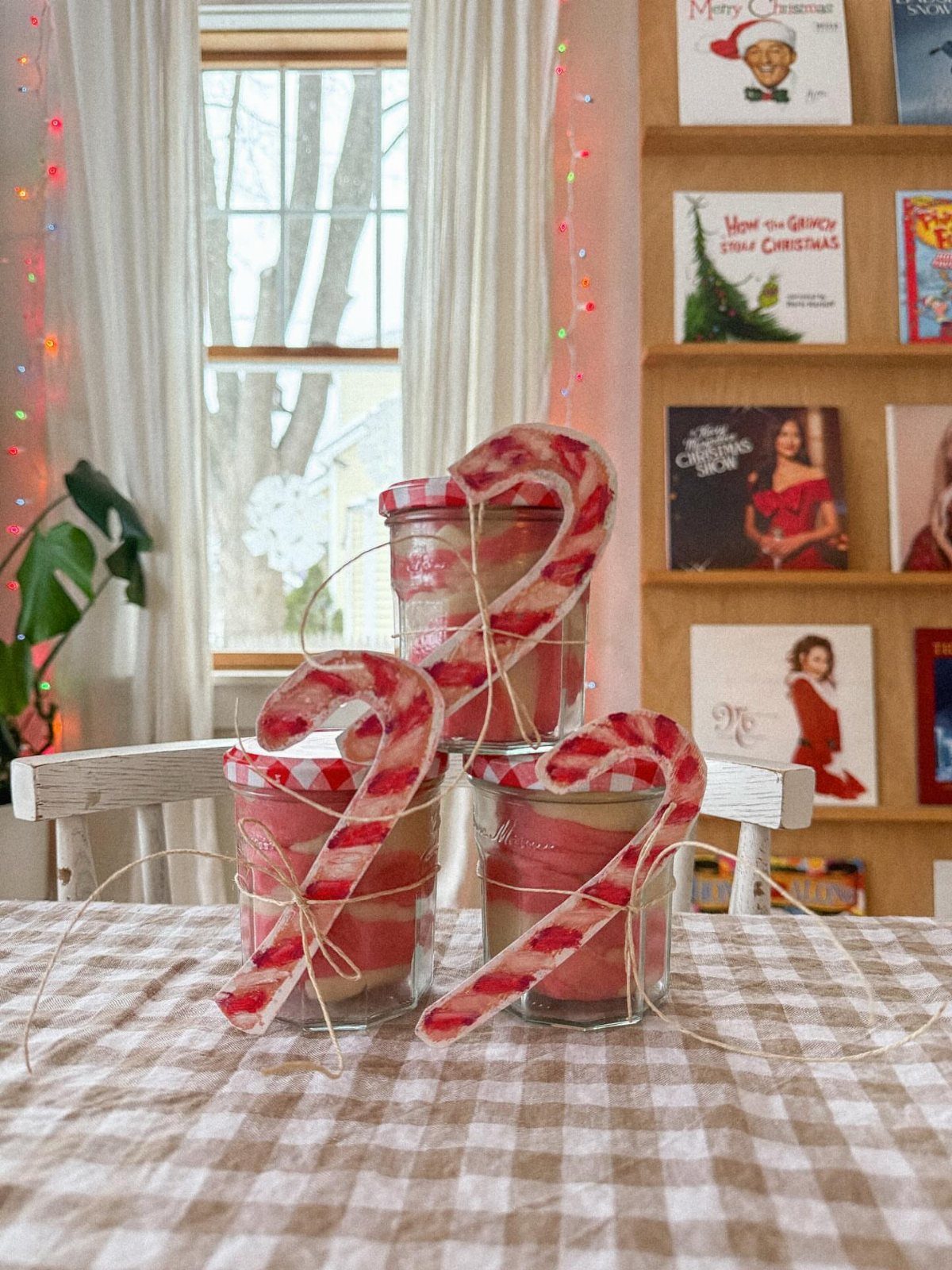
Red and white playdough, twisted together while still warm, looks enough like a candy cane to satisfy a 3-year-old. This keeps for at least a week if sealed, which is why it works well as a gift.
A no-cook recipe works here; the cooked kind lasts longer but needs stove time you may not have. Peppermint extract covers the flour smell and makes the whole room read as December.
Check whether your recipe calls for cream of tartar.
Without it, the dough turns crumbly by day three. The candy cane shape itself is simple enough that failure still looks festive.

Christmas Theme Stencils: You will get 25 pieces of different lovely Xmas pattern shapes templates, including snowman, gift boxes, etc. Nice size of 7.6*7.6CM/3*3” of each stencils. Great for most artwork, home projects, wall graffiti and wood painting.

Package Include - You will get 15 christmas stencils reusable and 1 open ring, which includes different classic christmas patterns, and each stencil is 6x5 inches.

Package content: There are 10pcs different Christmas painting stencils in the package. Each plastic template pattern is specially designed to meet your different decoration needs
10. Egg Carton Jingle Bells
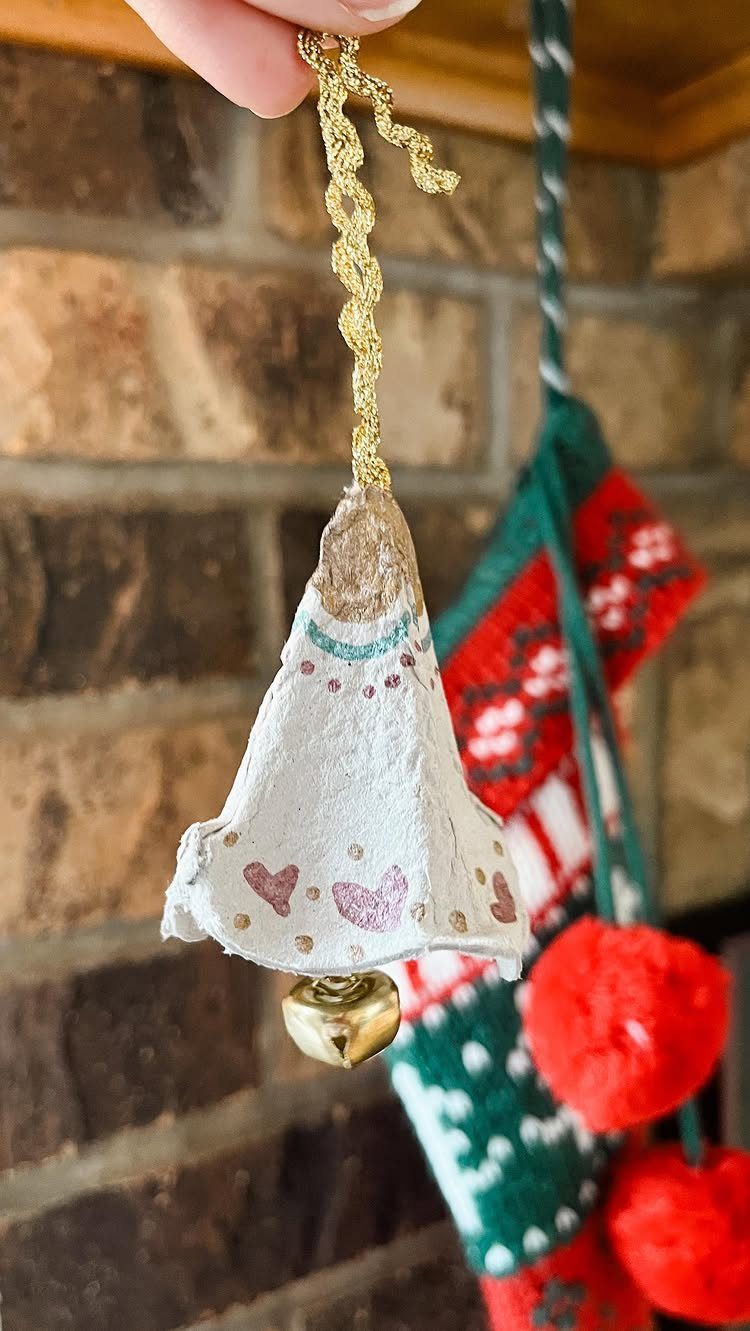
An egg carton cup, painted and hung with a real bell inside, makes noise when the paper kind would stay silent.
Gold paint, a gold bell, and a gold ribbon keep to one metal tone, which reads as finished without being complicated.
Pipe cleaners thread through the cup’s center to hold the bell, and the same loop hangs it.
Preschoolers paint the outside; an adult punches the hole for the pipe cleaner because cardboard splits if the hole is too large or too close to the edge.
The bell inside is small enough to swallow. Supervise the hanging, then hang these high.

Christmas Theme Decals for Xmas Decorations. Each flameless votive has a different Christmas theme decal. The set of battery operated LED votive candles are specially designed for Christmas. They are perfect for Christmas decorations as well as holiday gifts.

Solar Powered Mason Jar Lid Lights. - Energy Saving & Environment Friendly. 100% solar powered solar panel, no requires external wiring. 1.2v/600mAH AAA rechargeable battery included. It need take 6-8 hours charging time by fine sun light, light up for about 8-12+hours.

Battery-Powered Fairy Lights: Flexible copper wire with 20 mini LED bulbs creates magic twinkle effects. Easy to bend into starry shapes for DIY decor, mason jars, vases, table centerpieces or bedroom accents. Compact battery-operated design (CR2032 batteries included).
11. Egg Carton Christmas Trees
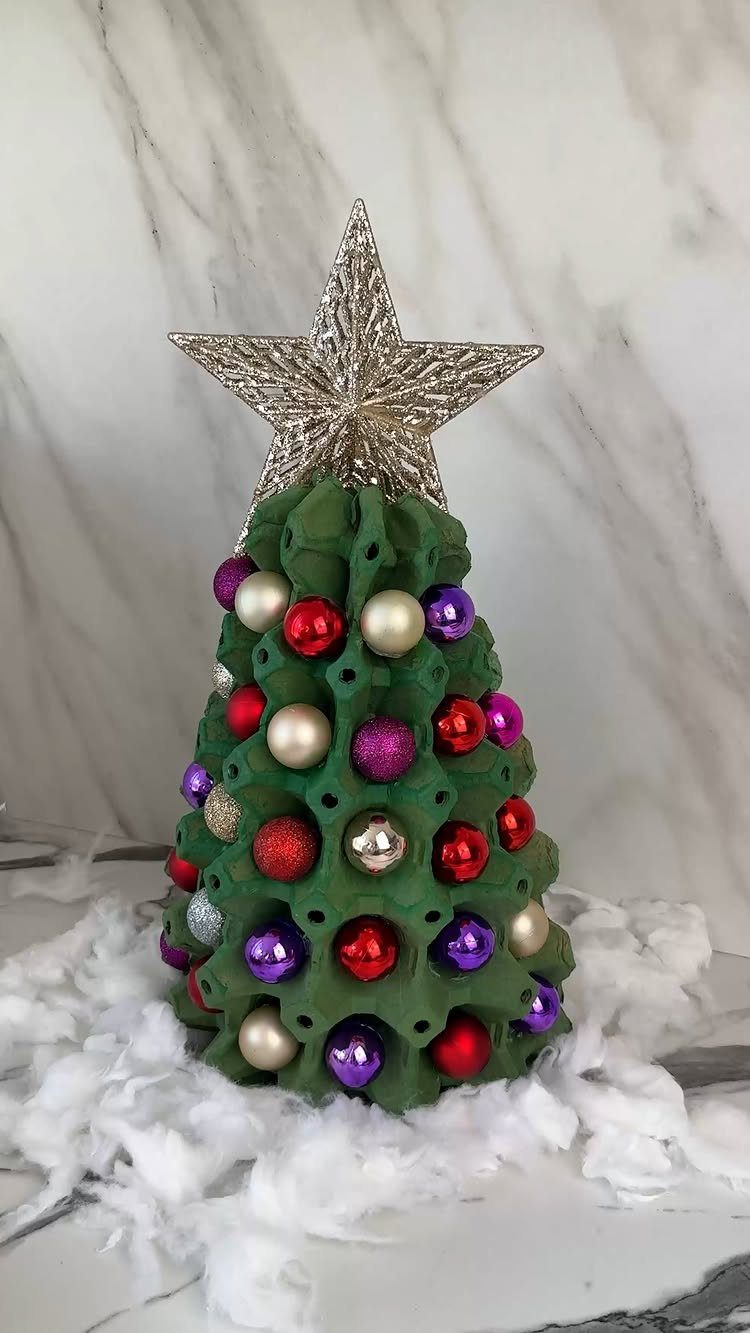
Stacked egg carton cups, painted green and edged with mini ornaments, build a tree that stands on its own base. Three tiers, each smaller than the one below, stack into a tree with a star pinned to the top.
Cutting the cups apart is the slow part; a serrated kitchen knife works better than scissors on the joined cardboard.
Preschoolers paint and glue while the adult handles the structure. Cotton snow is a display choice, not part of the build; the tree looks the same on a bare table.
Mini ball ornaments stay put with a dab of hot glue from the adult side. Pom-poms or stickers work if you do not have balls on hand.
12. Christmas Rock Painting
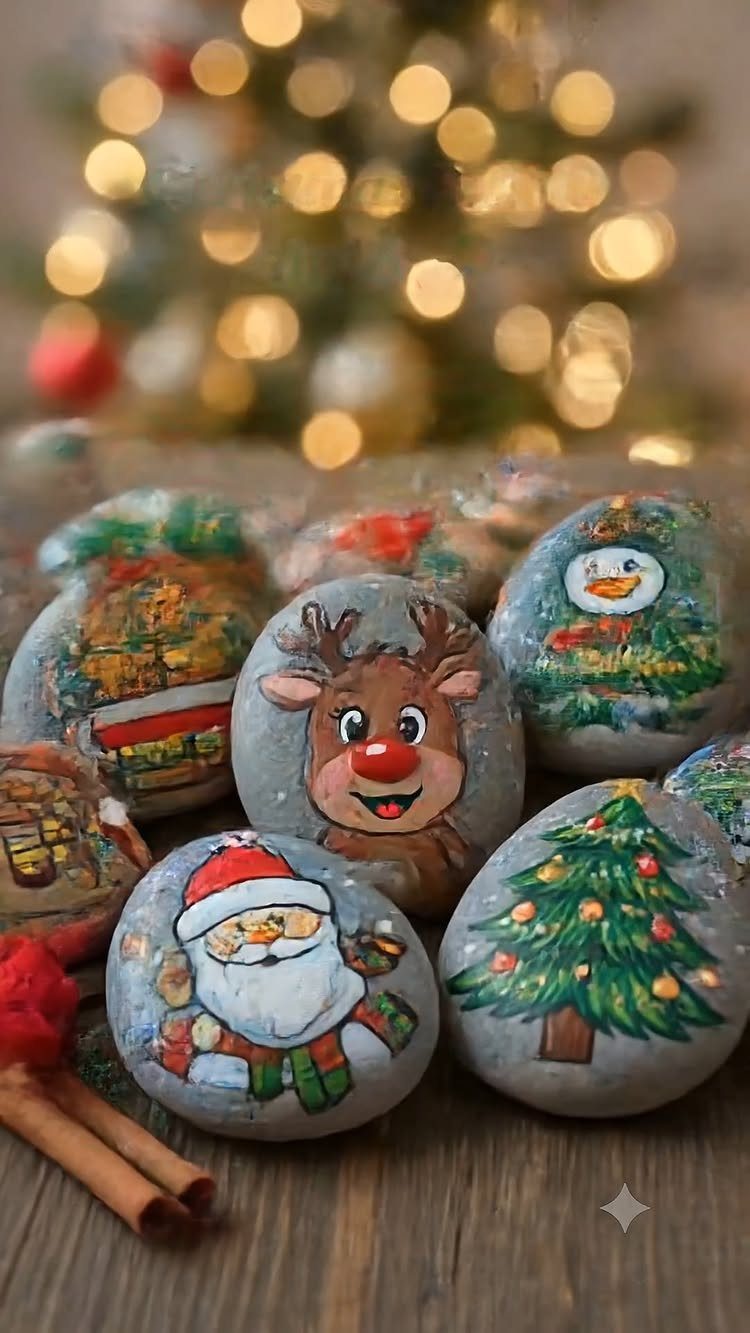
Smooth rocks, painted with Santa or a reindeer, become paperweights or garden markers that last past the season.
Santa, reindeer, snowman, and tree designs are simple enough to trace or freehand. Each is simple enough to copy from a picture held beside the rock.
Acrylic paint covers stone in one coat and survives weather if you seal it after.
For indoor use, tempera works and washes off hands easier. Fine-tipped brushes help with faces; a pencil eraser dots on eyes or buttons.
The rocks need to be smooth.
Rough stone catches the brush and frustrates small hands. A coat of white base paint, dry before the color goes on, makes every design brighter.
13. Paper Plate Baubles
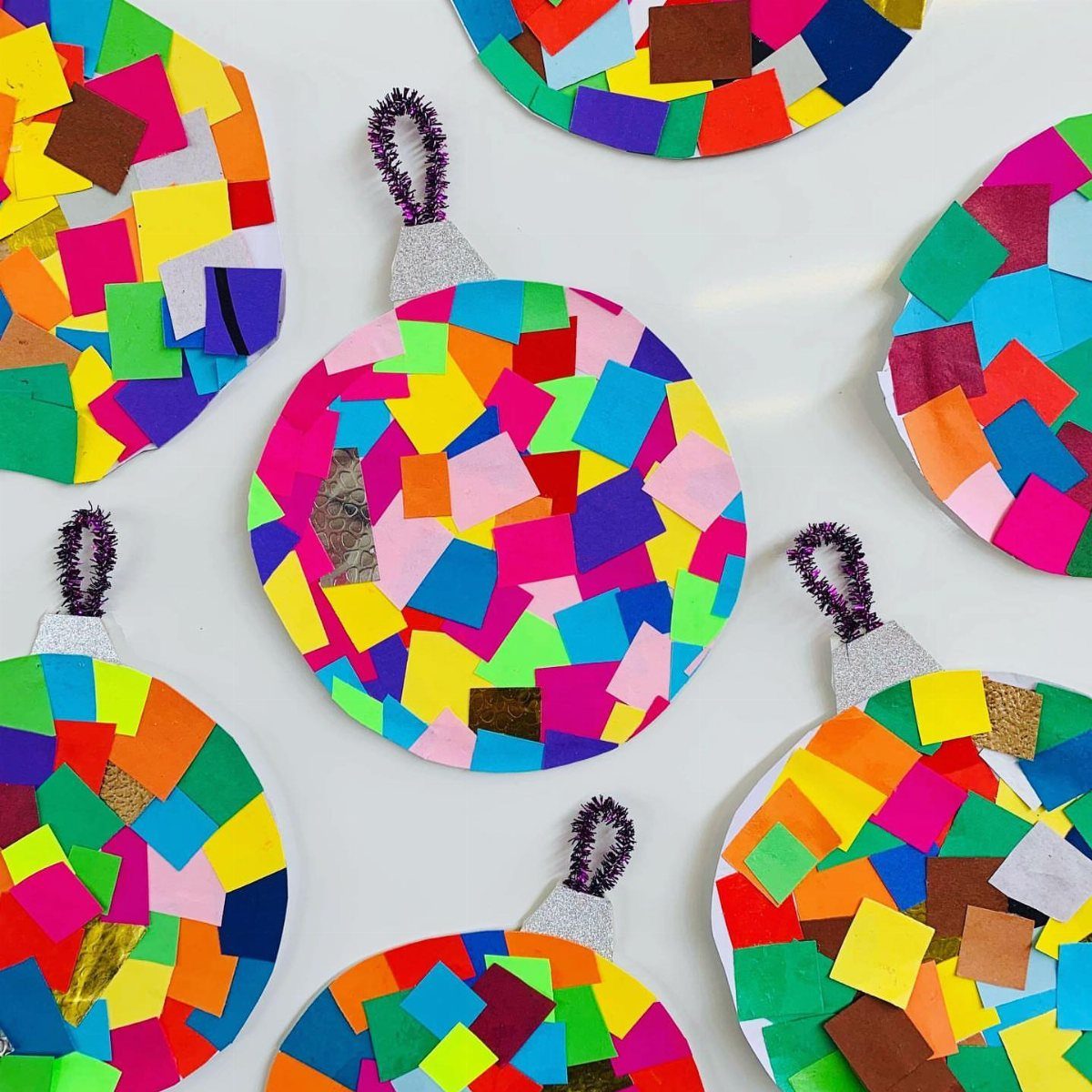
A paper plate cut into a circle, covered in overlapping scraps, becomes a bauble that hangs flat against the tree. Tissue paper, felt, or magazine pages work; the scrappier the mix, the better it reads from across the room.
A silver bottle cap glued at the top and a pipe cleaner loop for hanging turn a painted paper plate into a believable ornament shape.
Without them, it is just a decorated plate. Preschoolers tear and glue; an adult handles the cap, which can be foil or a painted bottle cap.
I would keep the scraps small. Large pieces wrinkle and need more glue than patience allows.
14. Fingerprint Christmas Lights
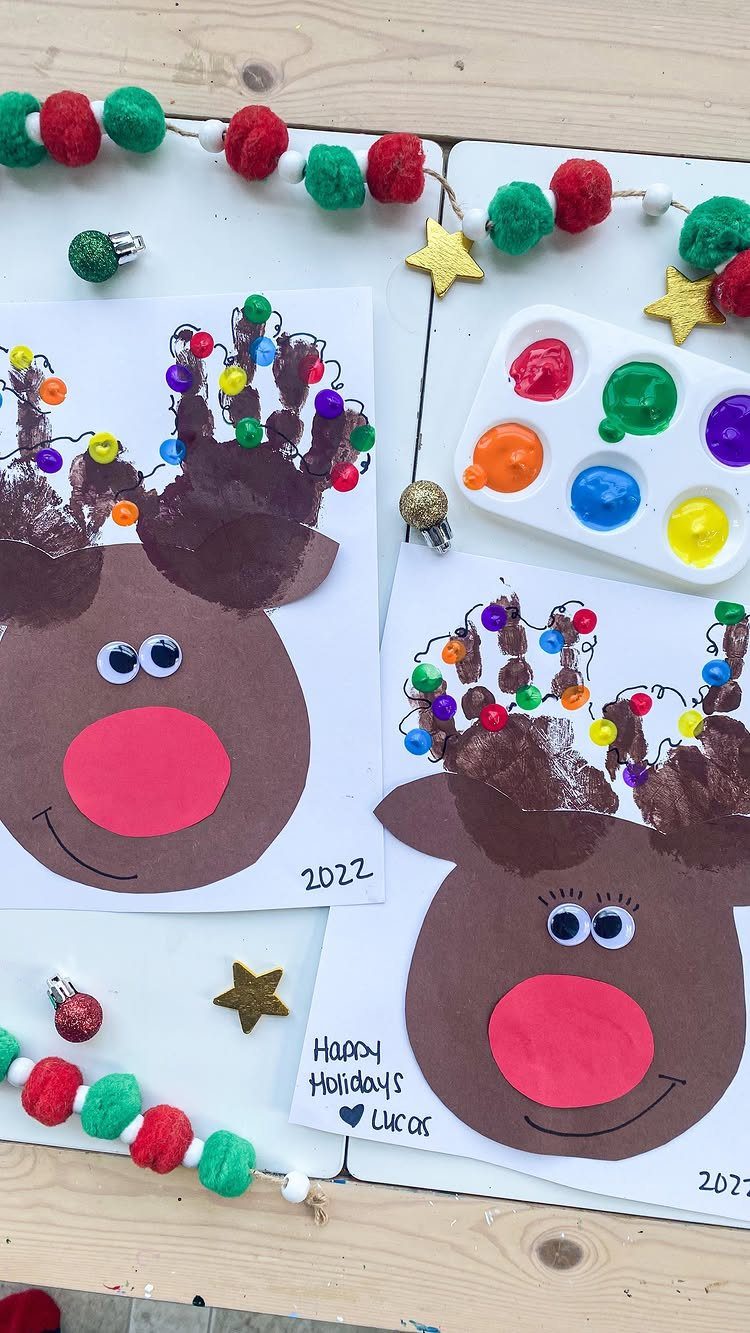
A line drawn across paper, dotted with fingerprint ovals, becomes Christmas lights faster than any brushwork. The fingerprints sit inside small rectangles or stand alone; either way, the thumb or index finger does the work.
Washable paint is the only kind worth opening.
Fingers press, lift, and move down the line. A black marker adds the cord between bulbs if the child has the control; otherwise, the dots alone read as lights.
The card mails flat and costs only the paint already in the cabinet.
15. Cupcake Liner Christmas Ornament
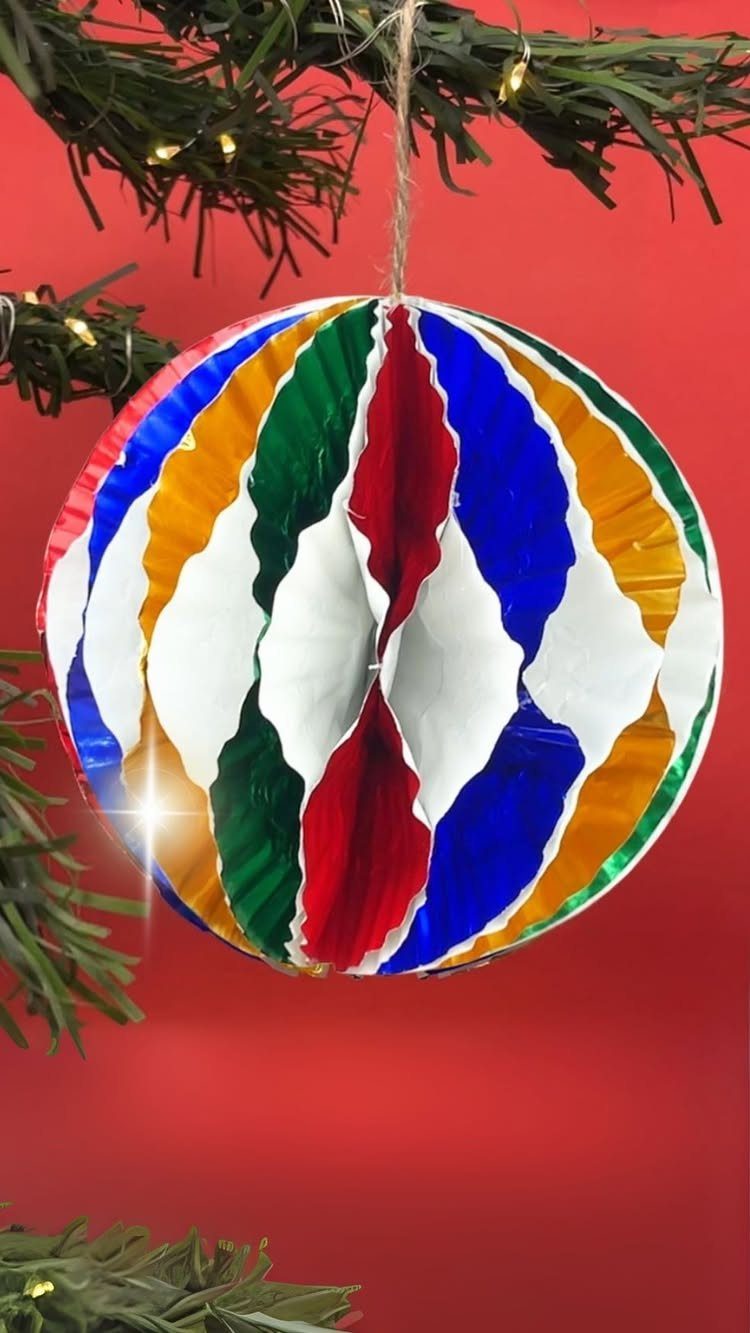
Cupcake liners, folded and layered into a sphere, make an ornament with more depth than paper usually manages. Foil liners hold their shape best; paper ones need more glue and gentler handling.
Preschoolers decorate the flat liners first: dots, stripes, or stickers.
An adult stacks and glues them into the ball shape, then threads twine through the center for hanging. The finished ornament catches light the way flat paper cannot.
One decorated liner, glued to cardstock with a drawn cap and string, becomes a card instead. The same materials, 2 results.
16. Roll-a-Christmas Tree
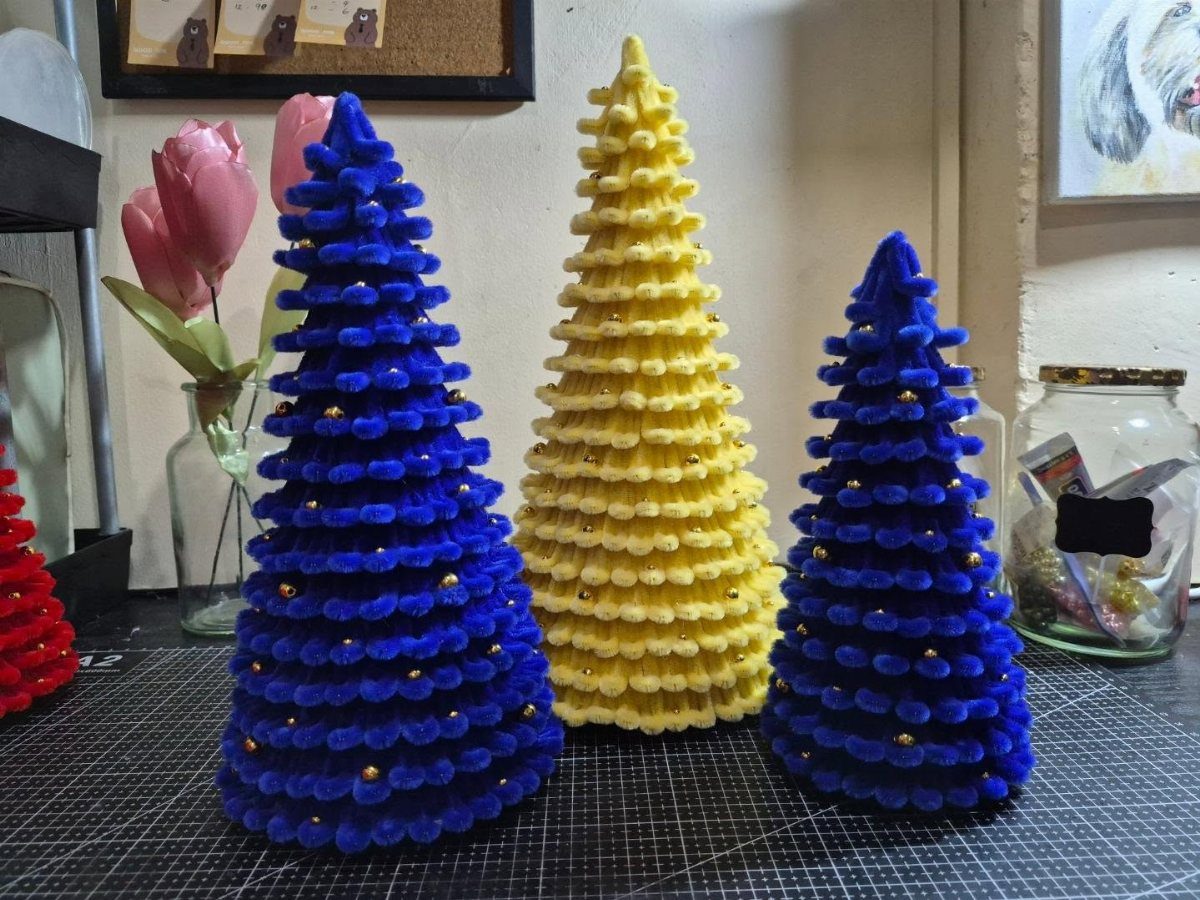
Pipe cleaners wrapped around a cone form, beaded as they go, build a tree that stands without glue. The bead adds weight and color; the pipe cleaner holds the spiral shape once wrapped.
A cardboard cone or a plastic cup, cut to taper, works as the hidden armature.
Preschoolers string beads and wrap; an adult shapes the first few turns to set the spiral. No paint means no drying time.
This is the entry for a child who will not sit through paint drying. The finished tree goes straight to the windowsill.
17. Paper Strip Christmas Trees
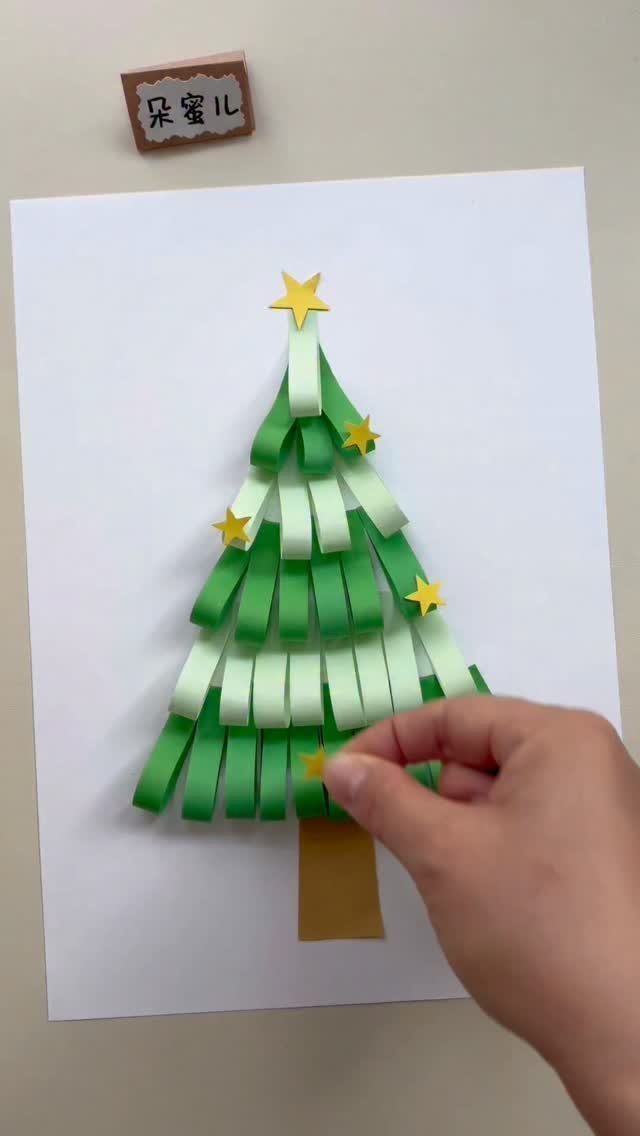
Green paper strips, cut by the child and stacked longest to shortest, build a tree that practices scissor skills and sequencing at once. The cut does not need to be straight; the variation becomes texture.
Glue holds the stack at one edge, fanned slightly so each strip shows.
A star at top, a trunk at bottom, and the tree is finished. Stickers or dots add ornament; the strips themselves carry most of the visual weight.
Uniform strips stack neater, but preschoolers rarely cut uniform. I would let the wobble stay.
18. Christmas Mason Jars
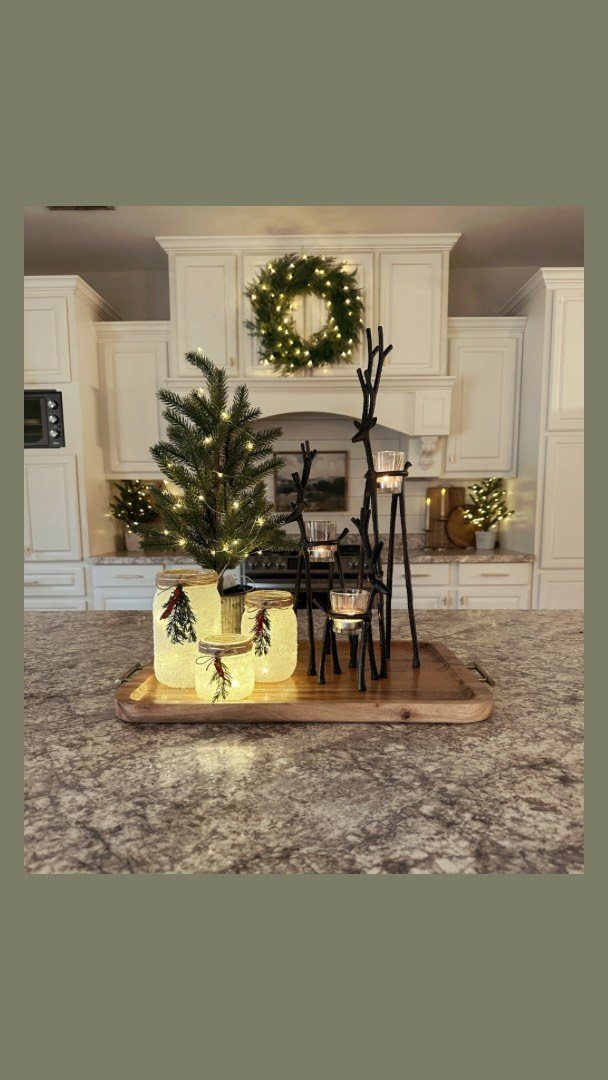
Mason jars, coated in faux snow and fitted with lights and greenery, become lanterns that outlast the craft session. The snow is paint or Epsom salt in glue; either gives the frosted look without real cold.
A toddler can swipe on the snow.
The hot-glued greenery, placed after the snow dries, is adult work. Battery lights inside mean no cord to trip over and no heat against the glass.
These suit a table that already runs rustic. The jar shape is familiar; the snow makes it seasonal without demanding much skill.
19. Christmas Tree Coloring Page
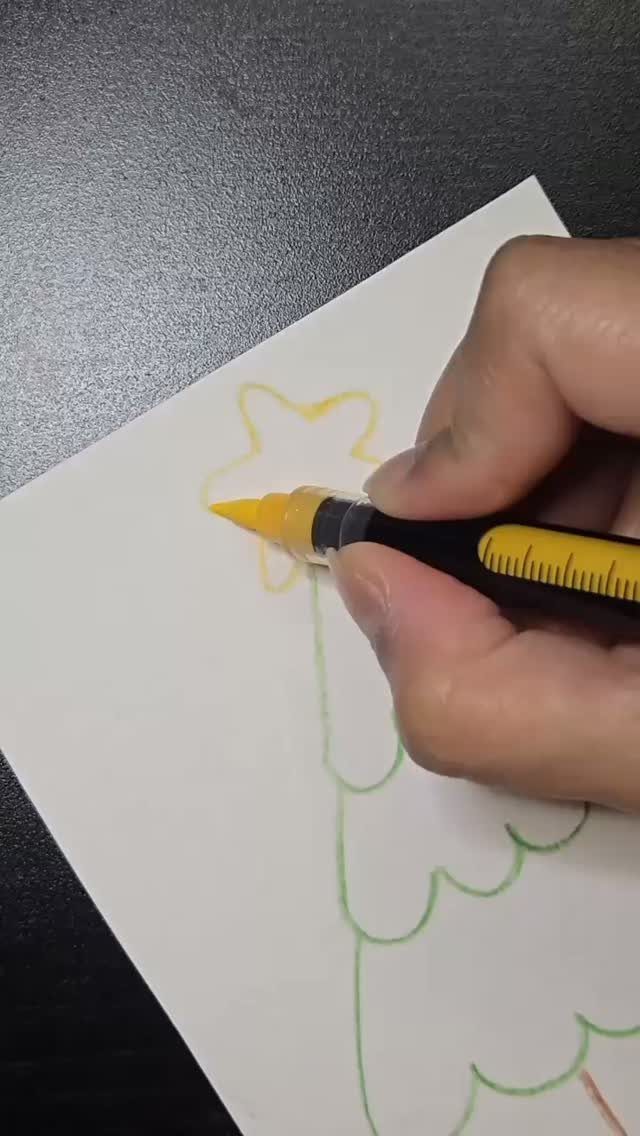
A printed outline, green marker on the tree and yellow on the star, gives a finished piece fast with no setup to store afterward. The simplest version is a single tree on standard paper, colored inside the lines or not.
Crayons work for younger hands; markers give the saturated color that reads from across a room. Washable markers are the safer bet for tables and sleeves.
This is the entry for a day when nothing is going right: the materials are already in the house, the mess is zero, and the result still goes on the refrigerator. Print five and you have a quiet half hour.
Benefits of Christmas Crafts
Fine motor skills get their workout in ways the list only hints at.
Pressing a hand into salt dough, crumpling tissue paper for a wreath, and wrapping pipe cleaners around a cone all build the small muscles of the hand and fingers, but each demands a different grip and pressure.
A child who struggles with one usually finds another easier, which is worth remembering when a project stalls.
Emotional expression runs through these crafts more than the steps show. The card a preschooler makes for a grandparent carries intent; the ornament they hang on the family tree marks participation in something larger.
These are not byproducts. They are the reason a simple project survives as a memory.
A holiday tradition gets built one project at a time, and preschoolers pick up fine motor skills, creativity, and emotional expression along the way.
The handprint tree done at 3 becomes the one compared at 5, then the one the child teaches a younger sibling.
Discover 70+ fun Christmas crafts, printables, and festive games for kids. Easy, giftable, and edible holiday ideas for family joy!
— ABCmouse
Materials for Crafts
The materials in the list fall into 3 groups worth keeping separate.
First, the consumables: paper in its several forms, paint, glue, and pom-poms.
These run out and need restocking, so I keep them where I can see the supply dwindle. Nothing stalls a Saturday project faster than discovering the glue bottle empty.
Second, the recyclables.
Egg cartons, paper plates, toilet paper rolls, and jar lids cost nothing and store flat until needed. Sorting recyclables by season keeps craft supplies free and ready; paper bags store flat under a sink until needed.
Third, the tools.
Scissors, hole punches, and the hot glue gun live above the reach of small hands. The list calls for adult handling of sharp or hot items, which means the tools need a home the child recognizes as not theirs.
Acrylic covers better but commits you to old shirts as smocks.
Crafting with Supervision
Supervision breaks into 2 kinds: the standing-by kind and the hands-on kind.
Scissors for preschoolers are the standing-by kind in most cases.
Left-handed children need left-handed scissors; the wrong pair twists the paper and frustrates. I stay close enough to rotate the scissors, not the child.
Hot glue is always hands-on.
The list assigns it to the adult in 3 projects, and that assignment should hold. A preschooler’s skin burns at a lower temperature and for longer; the risk is not proportional to the time saved.
Small parts present the hazard the list names once: the bell inside the egg carton ornament.
Swallowing risk is highest for children under 3, though preschoolers still put things in their mouths when absorbed in a task. The same caution applies to beads on the pipe cleaner tree.
Paint on sleeves is not safety, but it matters. Soap and warm water clean skin; fabric is less forgiving.
Encouraging Independence
Independence grows when the child chooses, not when the project is dumped in front of them and called free.
The list gives several openings for choice. Materials sit in the entry for the paper plate bauble: tissue, felt, or magazine scraps.
The child who picks magazine pages practices something different from the one who reaches for felt. Both are valid; the choosing is the point.
The child who stamps the tree in green ink works longer and spreads more color, but owns the result more fully. Either path is fine; the decision belongs to the child.
Repetition builds independence faster than variety does. The list notes that multiple cards or ornaments let a child refine.
I would set out materials for five cards, not one, and let the child stop when the interest stops. Stopping is also a choice.
Order matters.
Materials arranged in trays or baskets, visible and reachable, let the child begin without asking. The asking is where dependence lives.
Frequently Asked Questions
How to make Christmas crafts with kids?
Start with materials already in the house: paper plates, egg cartons, paint, and glue. Let the child handle the parts that match their grip strength, like crumpling tissue or pressing pom-poms, while an adult manages scissors and hot glue.
Pick projects that finish in one sitting and use materials you won’t miss if a toddler tears them up.
What are some ideas for Christmas decor?
Paper plate wreaths work for doors, and mason jars brushed with glue and Epsom salt hold battery candles for windowsills.
Salt dough ornaments, once baked and painted, last years on a tree. These are made by hand but read as finished from across a room.
What are some fun crafts for toddlers?
Handprint trees need only green paint and a palm; the card format mails flat. Salt dough ornaments let a child press their hand into soft dough before baking.
Paper plate Christmas trees stack in 3 tiers and stand on their own. Each suits short attention spans and survives the uneven results of small hands.
What are some good Christmas activities for EYFS classes?
Fingerprints in green ink build trees faster than brushes; a row of these becomes classroom garland. Candy cane playdough, twisted red and white, carries peppermint scent and keeps for a week sealed.
Beaded candy canes made with pipe cleaners and pony beads practice fine motor skills without paint or drying time. These scale to a group and need no stove or oven during the school day.