These 13 shrubs run from low, spreading junipers to smoke bushes that hit 15 feet if you never touch them, and the right match depends on whether your spot bakes against brick or sits in damp shade where little else survives.
Every entry earns its place through a first season of settling in, then mostly hands-off years after. A single late-March cutback to the ground is all the butterfly bush needs to answer with new flowering wood the same season.
[link-whisper-related-posts]1. Spirea
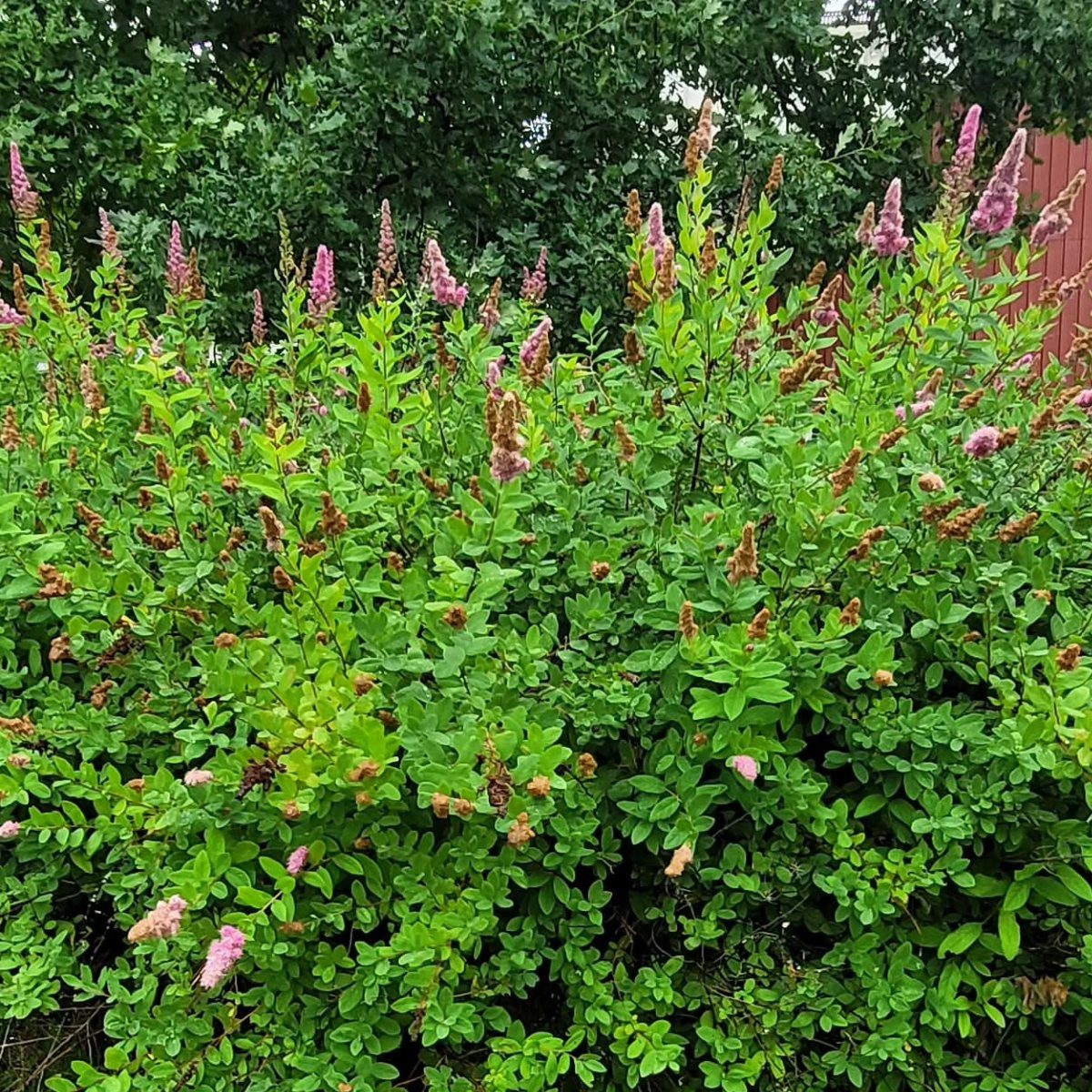
Pink flower clusters cover spirea from late spring straight through summer, and some newer varieties keep reblooming until frost without any deadheading on your part.
Most stay a manageable 2–3 feet tall and wide, so they fit into beds that already have other plants without swallowing them.
Spirea takes full sun or partial shade, and after a season of regular watering to get the roots down, mine has ridden out dry spells and cold snaps without any help from me.
An occasional prune in early spring keeps the shape fresh. Deer tend to leave it alone, and drought tolerance means you are not dragging the hose out every weekend.
It survives winter from zone 3 up through zone 9.

Cascading white blooms: Produces masses of double white flowers along arching branches each spring for a breathtaking seasonal display

ABUNDANT WHITE BLOOMS: The Snowmound Spirea is celebrated for producing dense clusters of crisp white flowers along graceful, arching branches in the spring. This live shrub adds a spectacular visual display to your outdoor landscape.

Compact ornamental shrub featuring vibrant golden-yellow foliage that adds bright color and texture to landscapes throughout the growing seaso
2. Boxwood
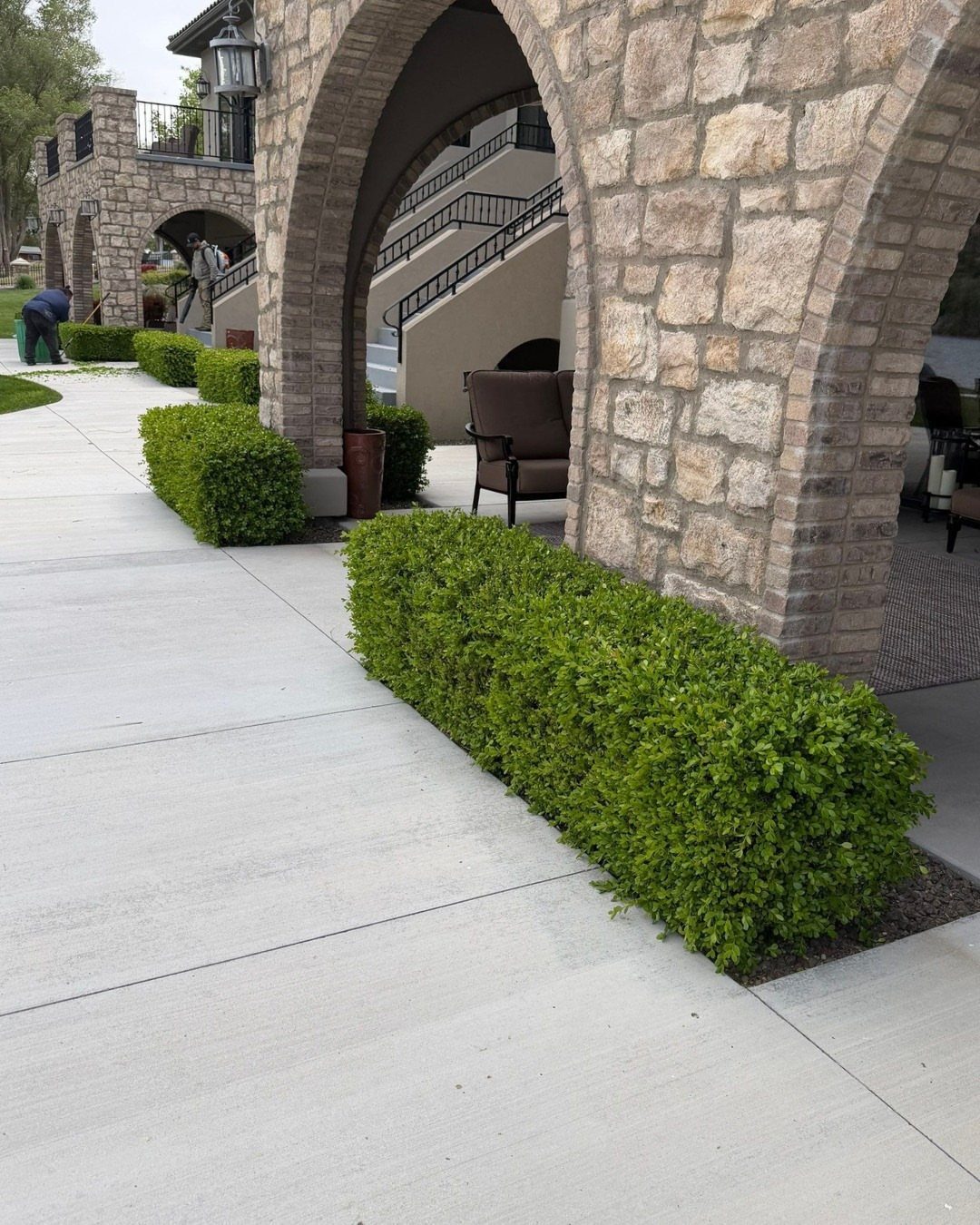
A boxwood hedge keeps its dark green color through seasons when everything else has dropped or browned, and the fine texture reads as tidy even when you have not touched it with shears in months.
The slow growth is the real time-saver here; you are not chasing it back into bounds every few weeks.
Sun to partial shade both work, so foundation plantings under eaves or along north-facing walkways are fair game.
Individual accent, clipped border, or formal knot garden: the same plant handles all three depending on how much shaping you want to do.
I shear mine once a year and scratch in a slow-release fertilizer in March; that is the whole calendar.

Timeless Evergreen Beauty – Japanese Boxwood keeps its rich green foliage year-round, providing structure and elegance in every season.

PREMIUM NURSERY GROWN: Arrives established with healthy root development to help your plant thrive. We cannot ship our plants to the following states: AK, AZ, CA, CO, HI, ID, MT, NM, NV, OR, UT, WA, or WY. All orders to these states will be automatically cancelled

USDA zones 5-9
3. Hydrangea
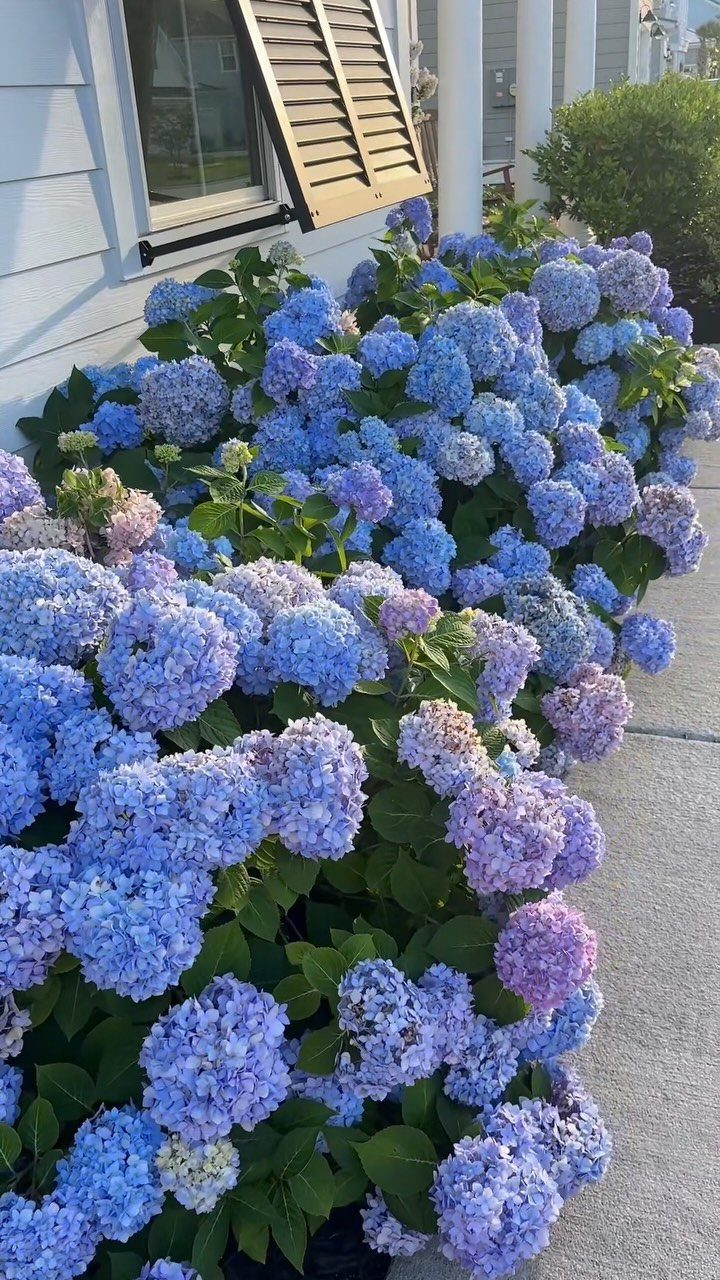
Hydrangea flowers run 4–8 feet tall depending on the species you choose, and the color shifts with your soil pH, so the same plant reads blue in one yard and pink in another.
That sounds fussy, but the care is not: consistent watering through the first season, then mostly hands-off.
Big Leaf, Panicle, Smooth, and Oak Leaf are the 4 common species, and each has its own habit.
Match the variety to your sun exposure, partial shade to full sun depending on type, and the bloom show runs summer into fall with minimal pruning. The flowers do the heavy lifting; you are not adding art to that wall.

For sale is one Nikko Hydangea plant that is approximately 6-12" tall and shipped in a 2.5" pot


Brilliant Blue Blooms – Produces large, globe-shaped clusters in striking shades of bright blue.
4. Juniper
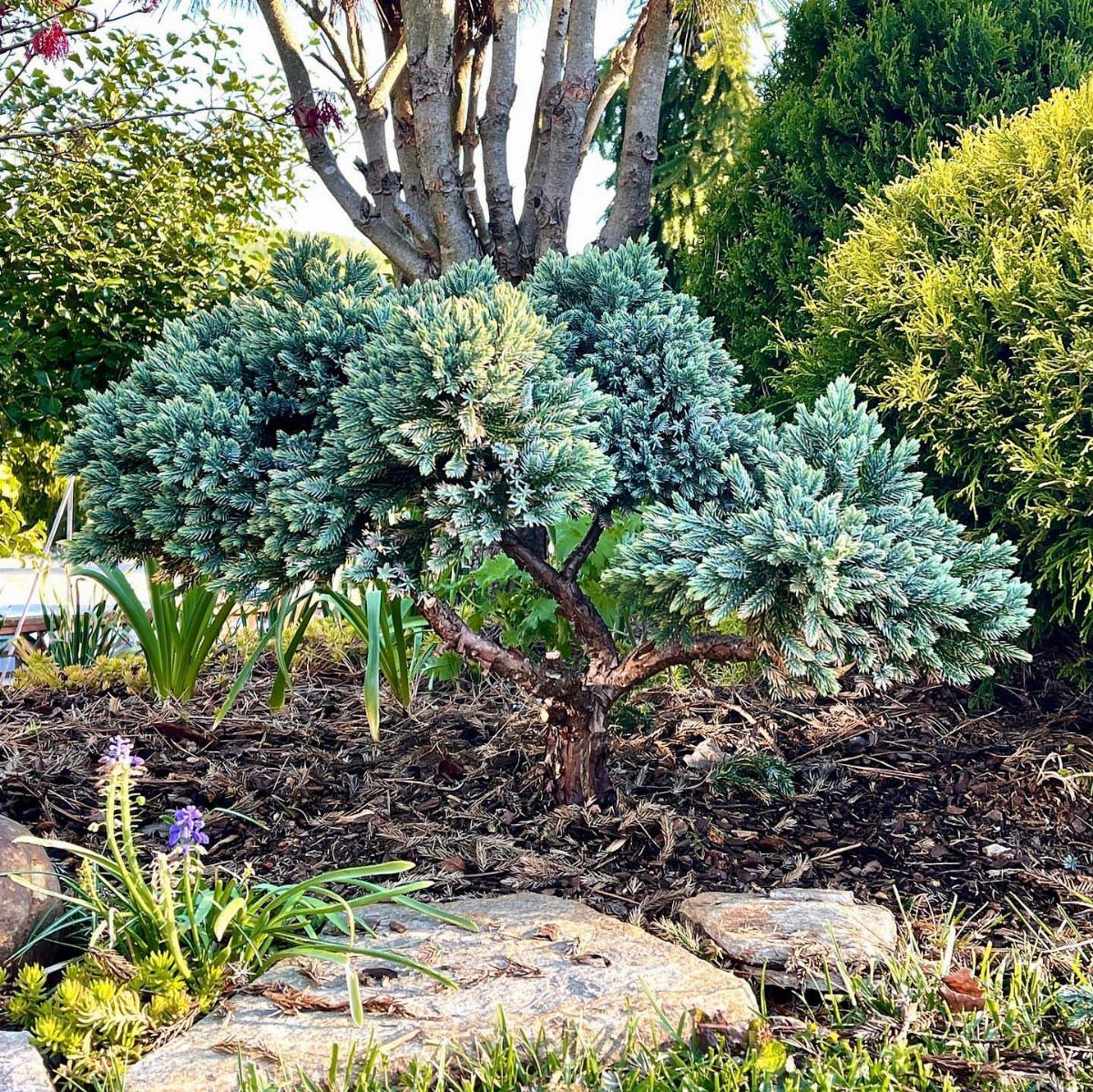
Blue-green needles stay year-round on juniper, and the color holds through heat and drought that would crisp other evergreens. Some varieties hug the ground at 16 inches, spreading 3 feet for low borders; others stand upright for height where you need it.
Full sun is non-negotiable, but once established, juniper tolerates poor soil and salty conditions without complaint.
Pruning is generally unnecessary; remove an odd branch in spring if it wanders, and a single granular evergreen fertilizer application covers any feeding. Deer tend to pass it by.

For sale is 1 Strawberry Sundae Hydrangea that is approximately 14-20" tall and shipped in a gallon pot.
5. Butterfly Bush
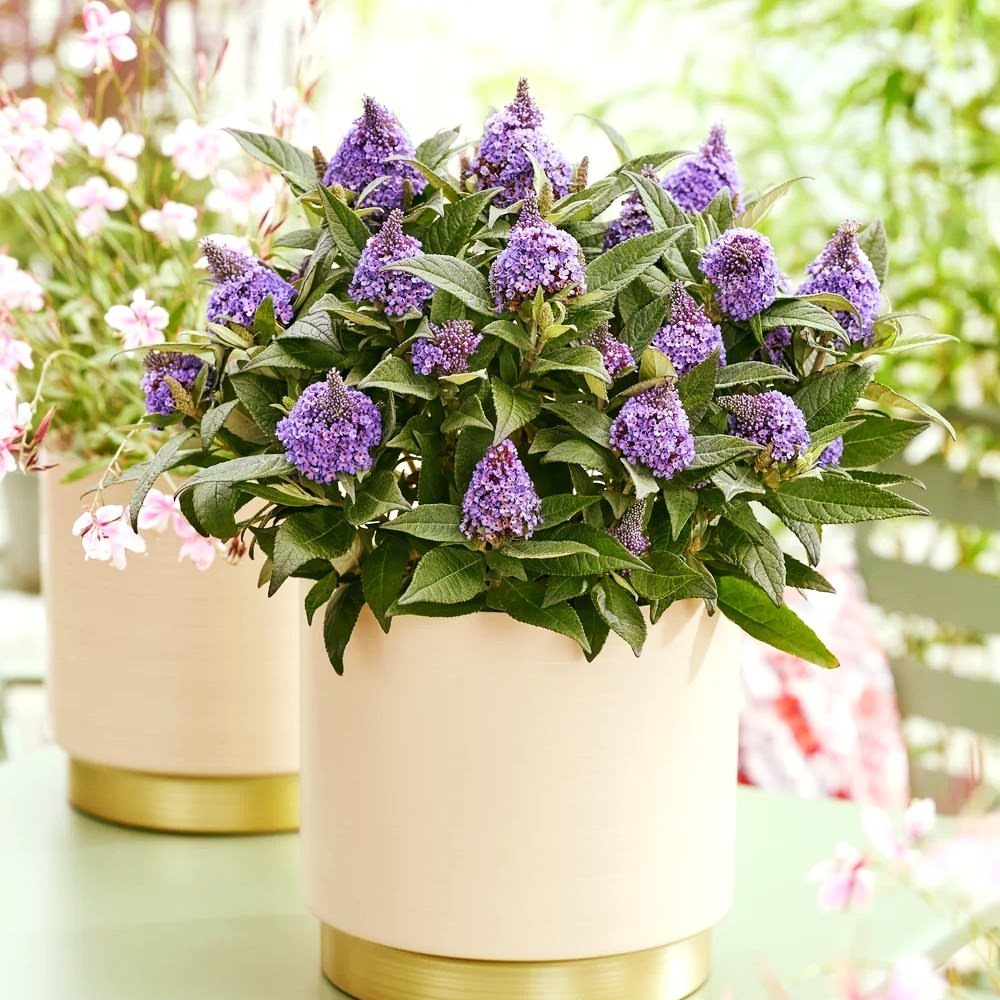
Purple flower spikes arch at the ends of branches from mid-summer into fall, and the fragrance pulls in butterflies while you are doing nothing at all.
Butterfly bush grows fast, so you get the show quickly; dwarf varieties keep it to a size that works in smaller beds or even large containers on a patio.
Full sun is required for flowering, and the plant needs that light to pump out the blooms that attract pollinators.
Water deeply through the first year, then back off; established plants handle drought without intervention. I cut mine back hard in late March, almost to the ground, and it answers with new wood that flowers the same season.
6. Smoke Bush
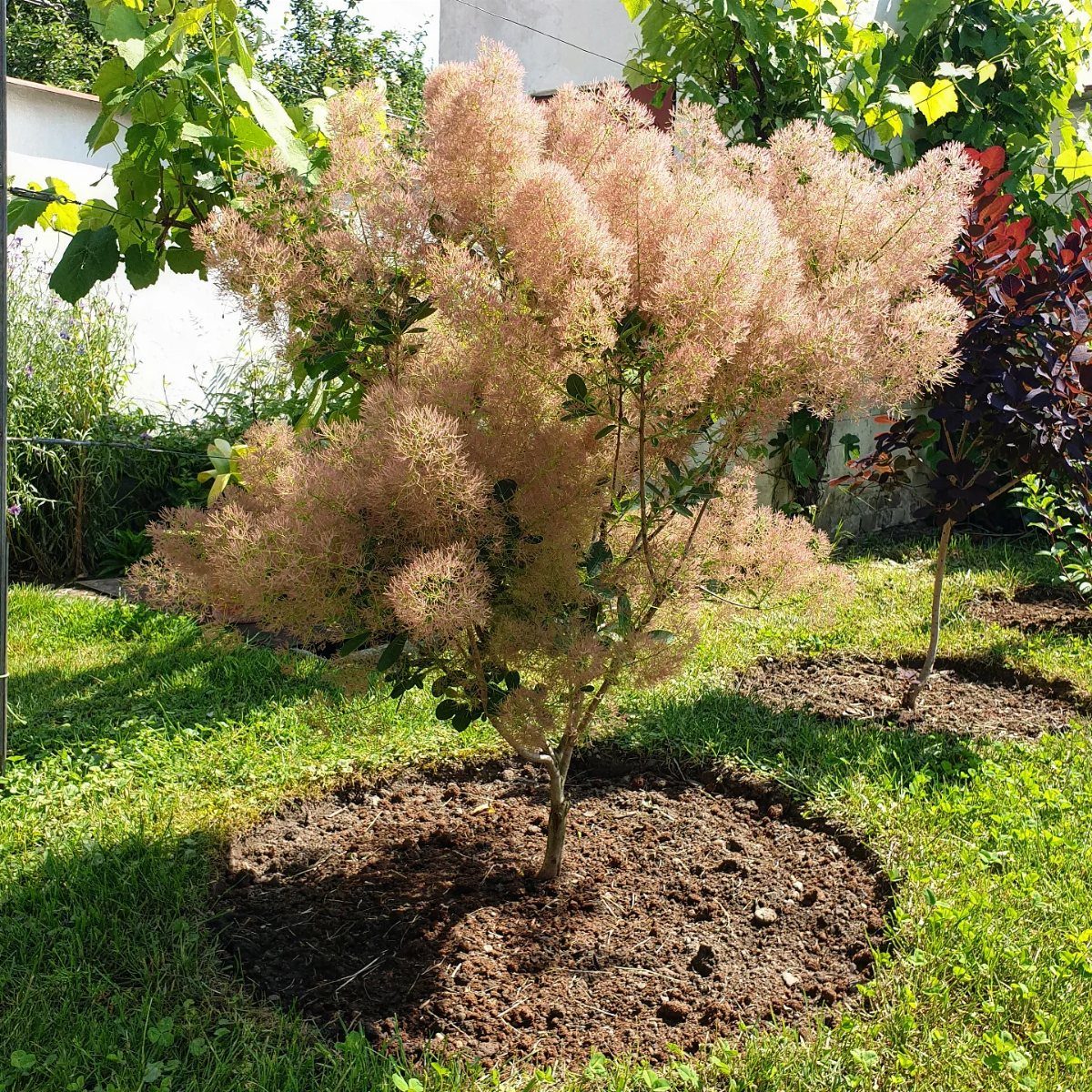
In July the branches carry soft, airy panicles that really do look like smoke, and by October the leaves have shifted to a color somewhere between rust and plum.
The same plant works as a multi-stemmed shrub or trained into a small tree form, depending on how you prune it.
Poor soil is fine; this plant tolerates conditions that would stall pickier shrubs.
Full sun gives the best color and bloom, and deep, regular watering through establishment sets up the drought tolerance that follows. Early spring pruning controls the 15-foot potential spread if your space is smaller.
‘Royal Purple’ is the variety to ask for if you want the deepest foliage color.
7. Burning Bush
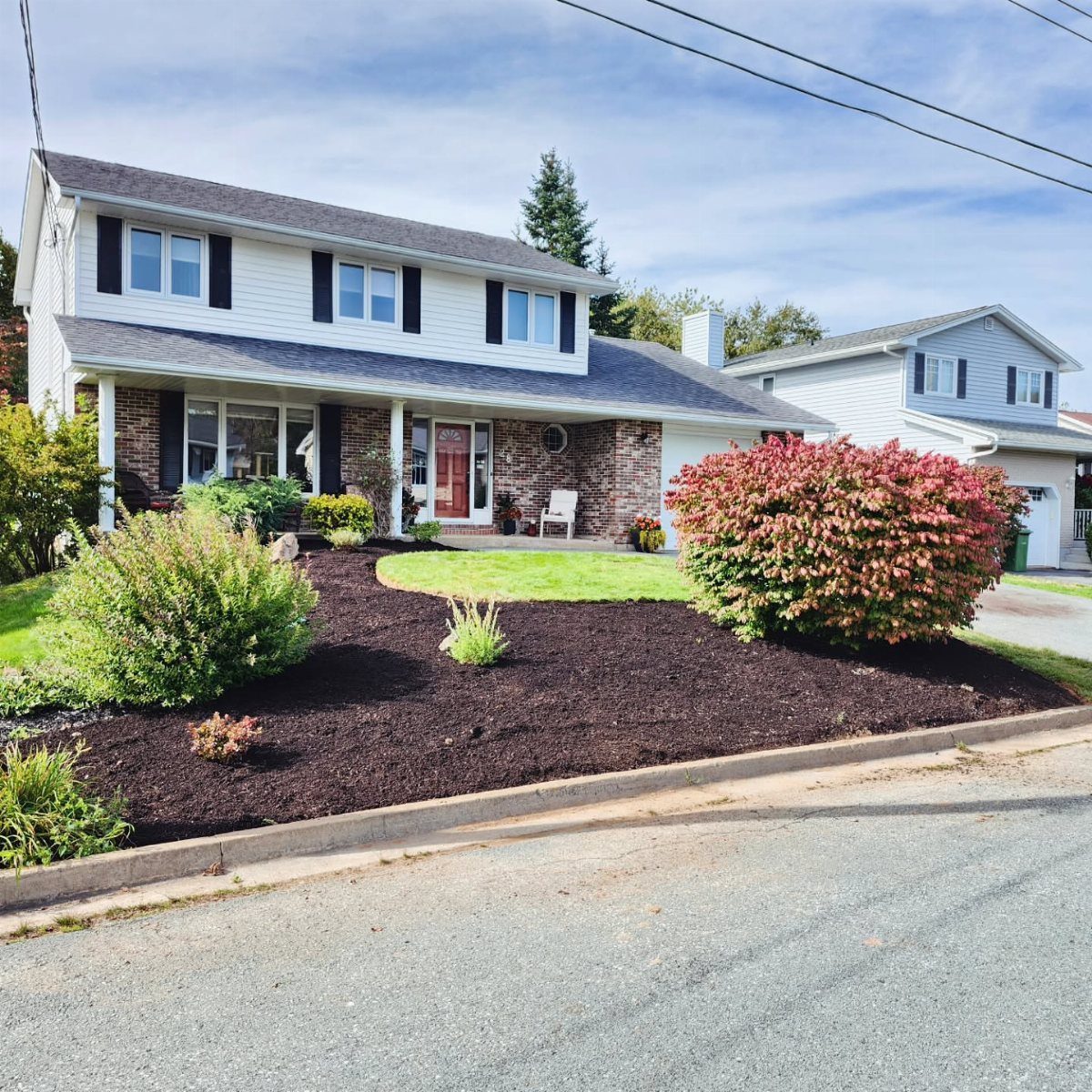
Burning bush earns its name in October when the leaves shift to a red so saturated it looks lit from inside.
Dwarf varieties keep the same color punch at 4–6 feet, which works for tighter beds or narrow side yards where a full-size shrub would eat the walkway.
Full sun to partial shade both work, and the plant asks for almost nothing after the first season of regular water.
I would site it where the low autumn light hits it directly; the red deepens in bright conditions and can read orange in too much shade.
A single spring feeding and a light trim to keep the natural rounded shape are the whole maintenance calendar. Deer pressure varies by neighborhood, but in most places they browse it only lightly.
Hardy from zone 4 to zone 8.
8. Weigela
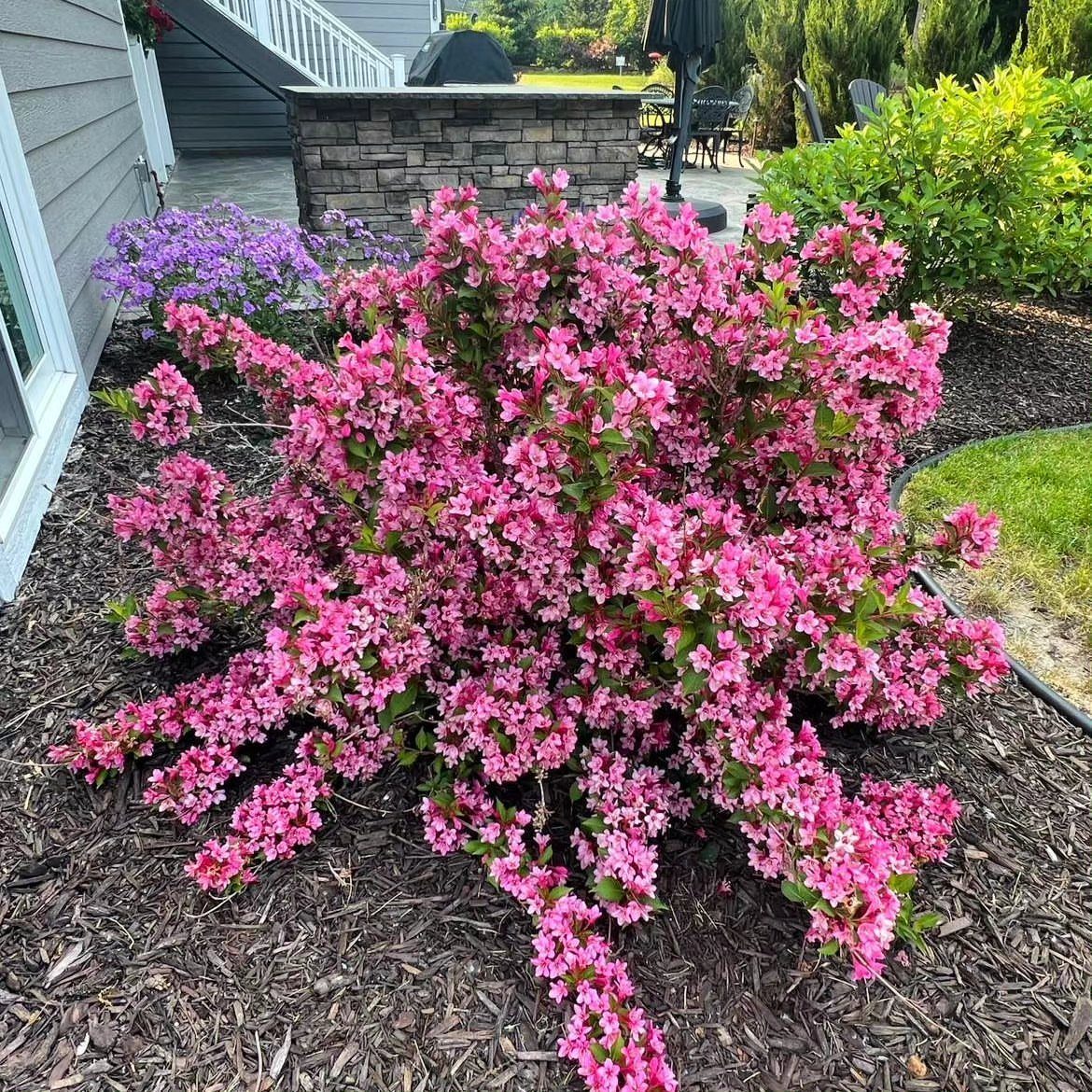
Trumpet-shaped flowers in pink, red, or white cover weigela from late spring into summer, and the newer reblooming varieties like ‘Sonic Bloom’ keep the show going without any deadheading. Hummingbirds find it on their own.
Full sun is ideal, though afternoon shade in the hottest zones keeps the foliage from scorching. Any soil type works as long as water drains through; once the roots are down, you can stop babysitting the hose.
A single prune after flowering finishes keeps the shape compact, but skip it and the plant still flowers fine, just looser.
Most varieties stay compact enough for smaller beds, with mounding forms that spread wider than they grow tall. Deer resistance is a genuine plus here.
9. Viburnum
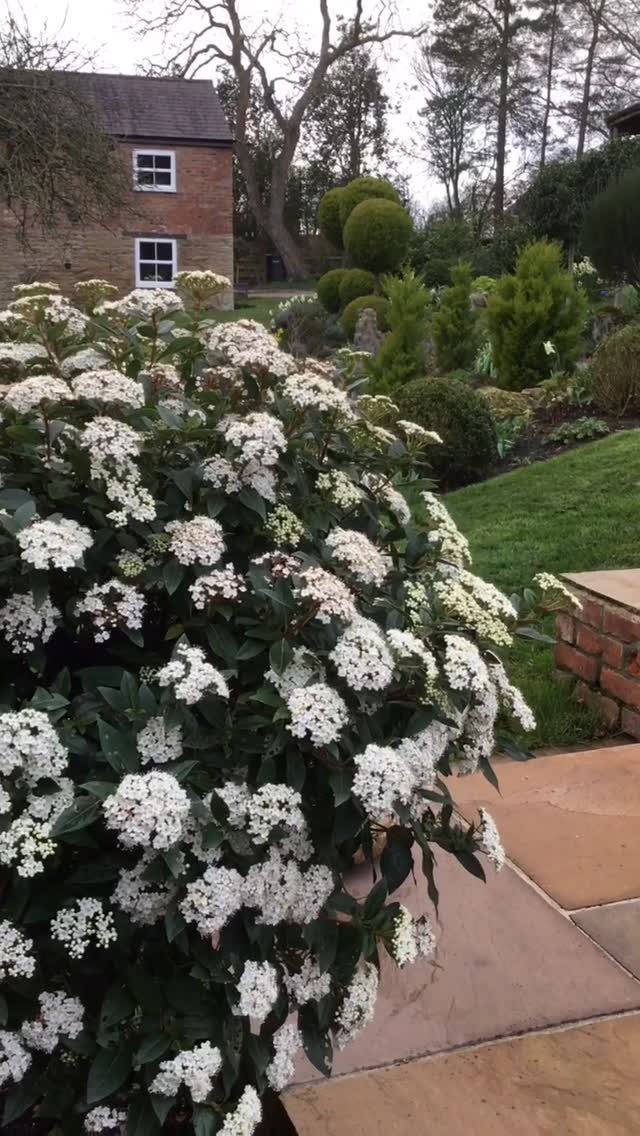
Viburnum grows fast enough to fill a bare corner in a season or two, and the spring flower clusters give way to berries that birds strip by late fall.
Size swings widely by variety, from 4-foot mounds to 10-foot screens, so match the tag to your space rather than pruning constantly to compensate.
Full sun brings the heaviest bloom, though several varieties handle partial shade without sulking.
Well-drained soil is the one real preference; beyond that, an occasional deep watering during dry spells and a single prune after flowering to shape or thicken are the whole job.
The berries replace bird feeders for a few weeks in late summer.
Hardy from zone 2 up through zone 9 depending on variety.
10. Yew
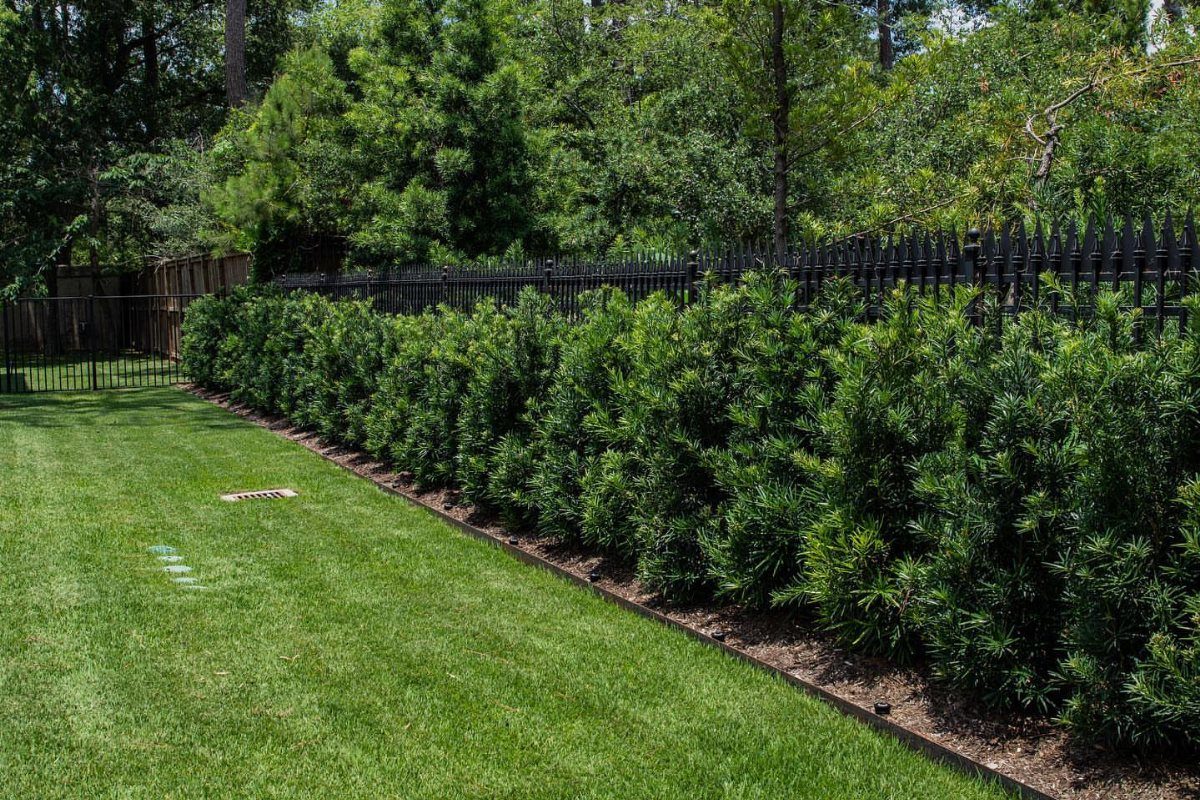
Yew handles shade that would thin most evergreens into bare twigs, and the dense, flat needles stay green through winter without browning at the tips.
Well-drained soil matters more than soil type; wet feet will kill it faster than neglect.
A single shearing in late winter or early spring keeps a hedge crisp, but the same plant left alone becomes a loose, upright shrub with red berries by fall.
I use a granular evergreen fertilizer in March only where the soil is thin or sandy.
Individual plants outlast most ownership; the hedge my neighbor inherited still reads solid green, planted back when the house was new.
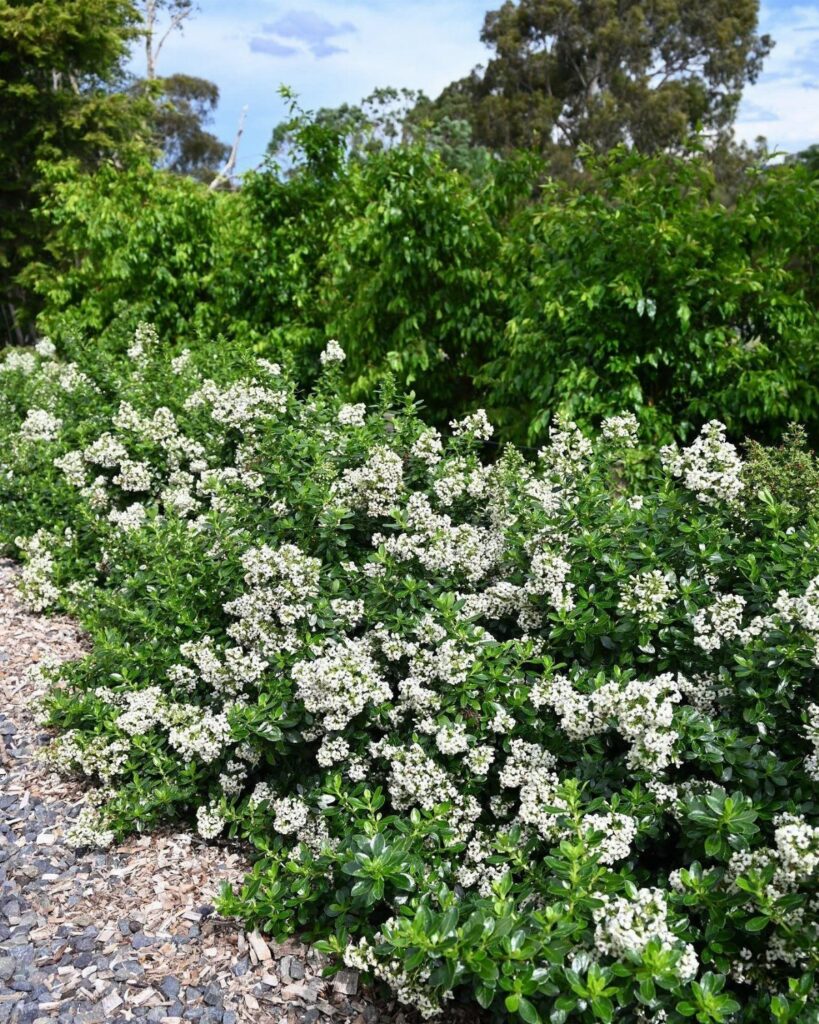
11. Sweetspire
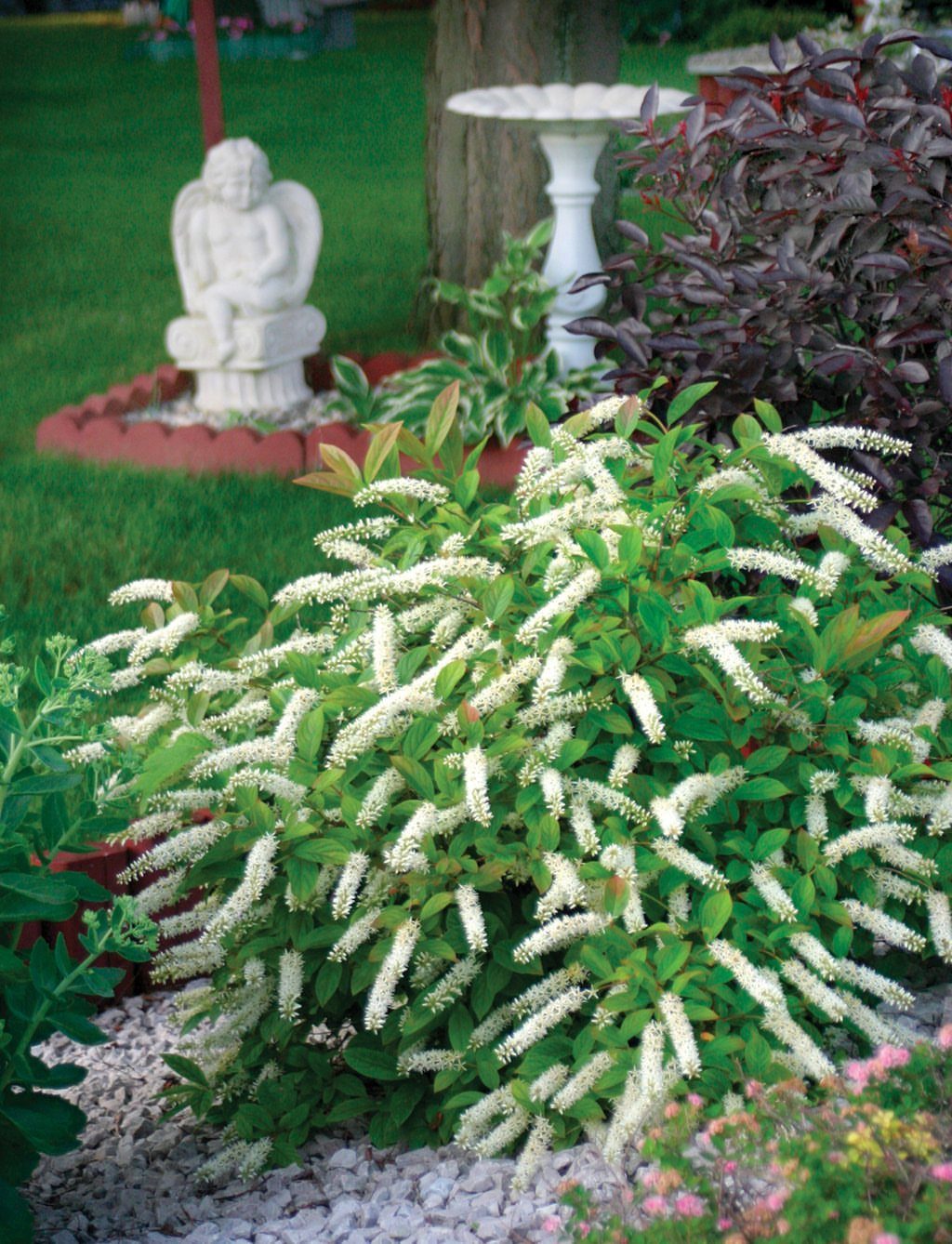
Long white flower spikes droop from sweetspire branches in early summer, and the fragrance carries farther than you would expect from a shrub that tops out at 2–3 feet.
It is one of the few plants that actually prefers damp soil; a downspout zone or the low spot where nothing else thrives is its ideal site.
Full sun to deep shade all work, and deer pass it by.
The only pruning needed is removing dead wood in spring; if you want a tighter shape, trim right after flowering finishes so next year’s buds have time to set.
Drought tolerance comes once established, but the first season needs consistent moisture to get there.
Hardiness runs from zone 5 to zone 9.
12. Hibiscus Syriacus
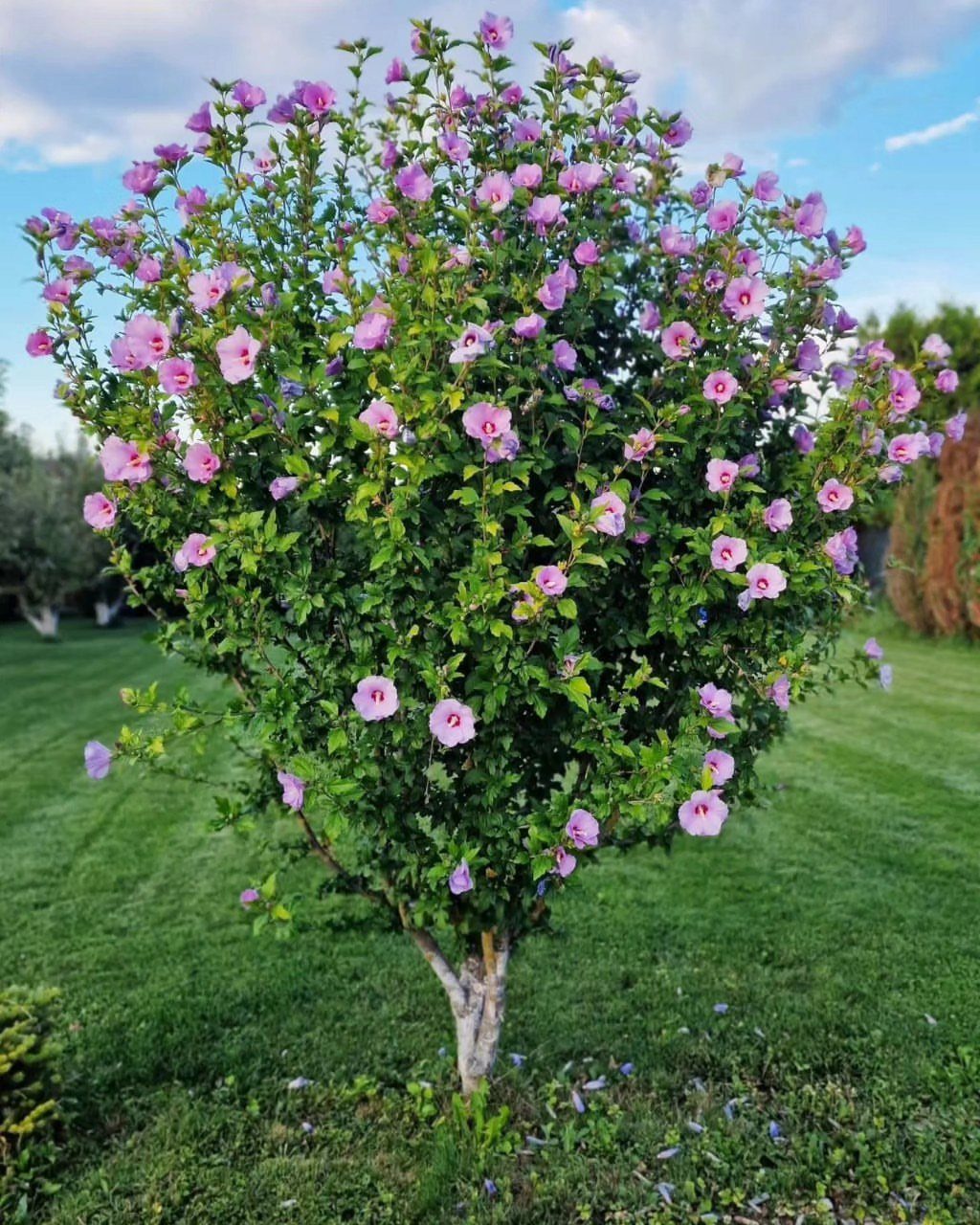
Hibiscus syriacus, or Rose of Sharon, carries blooms in pink, red, purple, or white from July through September when most shrubs have finished their show.
The flowers are sterile or nearly so in newer varieties, so you are not pulling up seedlings all spring.
Full sun and heat are what it wants; this is the plant for that south-facing bed that bakes against brick.
A spring application of granular fertilizer formulated for flowering shrubs feeds the heavy bloom production, and water through the first season sets up the drought tolerance that follows.
Left alone it reaches about 4 feet and spreads wider; a hard prune in early spring keeps it smaller and forces bigger flowers on new wood.
Deer ignore it, and salt-tolerant roots handle roadside plantings or coastal air.
13. Crape Myrtle
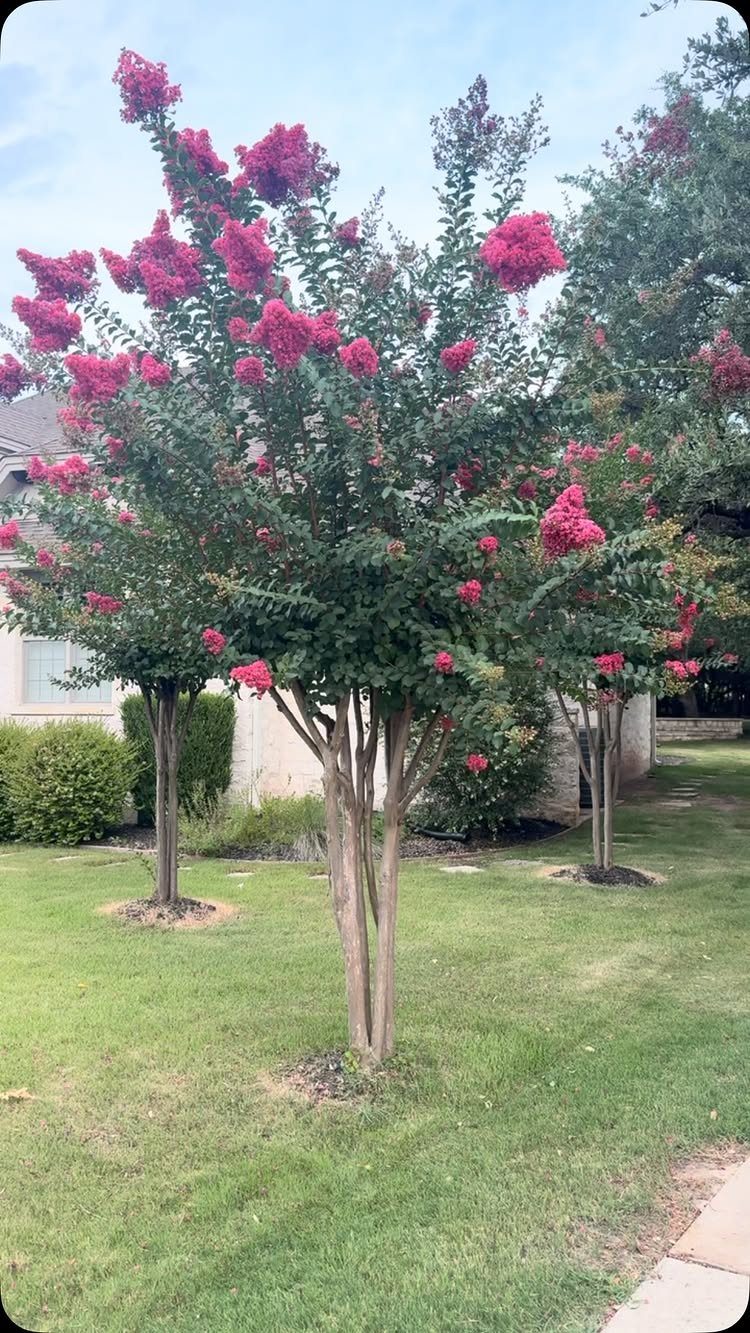
Crape myrtle flowers from mid-summer into fall, and the color range runs from white through pink to deep red depending on the variety you choose.
Compact shrub forms stay manageable for smaller beds, while tree forms suit a lawn specimen or street strip.
Full sun is required; anything less cuts the bloom. In colder zones, site it where a fence or building breaks the winter wind.
Water through the first season, then established plants handle dry spells without help. A light annual prune removes deadwood and controls size, but heavy cutting is unnecessary.
Japanese beetles are the one real pest; soil injections or occasional spraying keeps damage light if pressure builds in your area.
Choosing the Right Shrubs
Start with the spot, not the plant. A south-facing strip against brick wants something heat-hungry like hibiscus syriacus or crape myrtle; that same bed on the north side of a fence needs yew or sweetspire.
Measure the mature spread against the space you actually have, not the space you wish you had. A smoke bush left alone hits 15 feet; a dwarf burning bush stops at 4–6.
Soil matters less than drainage for most of these.
Wet feet kills yew fast. The one thing you cannot fix later is sun: crape myrtle wants full sun and will sulk in anything less.
The good news is that growers and breeders are ahead of the curve and already producing a range of down-sized versions of popular landscape shrubs that make ideal front-and-center choices.
— Preen
Maintenance Tips
First-season watering is where most people quit too early. After that, established shrubs like juniper and butterfly bush handle dry spells without you.
Pruning is occasional, not absent.
I shear boxwood once a year, cut butterfly bush back hard in late March, and remove dead wood from sweetspire in spring. Skip a year and most of these keep flowering; the shape just gets looser.
Fertilizer is situational. Rich beds often need nothing at all.
The one universal: well-draining soil. Standing water kills more shrubs than neglect.
Drought Tolerance
Drought tolerance is a earned trait, not a promise on the tag.
The roots need that first year of consistent moisture to grow deep enough to find water on their own. Spirea, juniper, and butterfly bush all get there, but only if you do not rush the establishment.
Once the roots are down, the savings are real. A few still need attention in extended drought; even established shrubs can stress through weeks of no rain.
The real win is the water you do not use, not just the time you save.
Seasonal Interest
Year-round interest means different plants cover different months, not that one plant carries the whole calendar. Hibiscus syriacus and crape myrtle pick up in July and run into fall.
Winter structure comes from evergreens: boxwood, juniper, yew. Red twig dogwood, not on my list above, carries red stems through the coldest months; the principle is the same.
Plan for the gaps.
A bed of summer-only bloomers looks empty by November. I mix foliage, flower, and evergreen so something always reads intentional, even when nothing is flowering at all.
Frequently Asked Questions
What are some hardy shrubs?
Boxwood, juniper, and viburnum are the toughest choices on my list. Viburnum runs from zone 2 to zone 9 depending on which type you pick, and juniper barely flinches at cold snaps or dry spells once the roots have settled in.
Yew also lasts decades; my neighbor’s hedge was planted when the house was new and still reads solid green.
What are some ideas for a low-maintenance front garden?
Boxwood stays green when the rest of the yard has gone brown, and one cut a year keeps it tidy.
Spirea fits smaller beds at 2–3 feet, flowers for months without deadheading, and deer leave it alone. Butterfly bush fills gaps fast, attracts pollinators, and only needs a hard cutback in late March to perform.
What plants need the least maintenance?
Spirea, weigela, and hydrangea all make the cut. Spirea flowers from late spring through frost on some varieties with no deadheading at all.
Weigela’s newer reblooming types like ‘Sonic Bloom’ keep going without removal of spent flowers, and hydrangea needs mostly hands-off care after the first season of consistent watering.
What shrubs don’t need sun?
Yew fills out in shade that leaves most evergreens looking like wire coat hangers, and sweetspire handles anything from full sun to spots where the light barely reaches.
Sweetspire likes its soil on the wet side, so that soggy patch by the downspout or the low spot where other plants rot is actually where it wants to be.
Both deer pass by, and neither asks for much beyond removing dead wood in spring.