These ideas run from a $100 potting bench built from scrap to a sunken stone fire pit with bench seating, and the one that belongs to you depends on whether you have a slope to hold back, a stump to hollow, or just a dinner-plate terracotta saucer and a covered porch.
The common thread is that none of them ask for more than a weekend and your own hands; even the gabion wall, heavy as it is, uses nothing more than hardware cloth and whatever stone you can source cheap nearby.
[link-whisper-related-posts]1. Garden Fountains
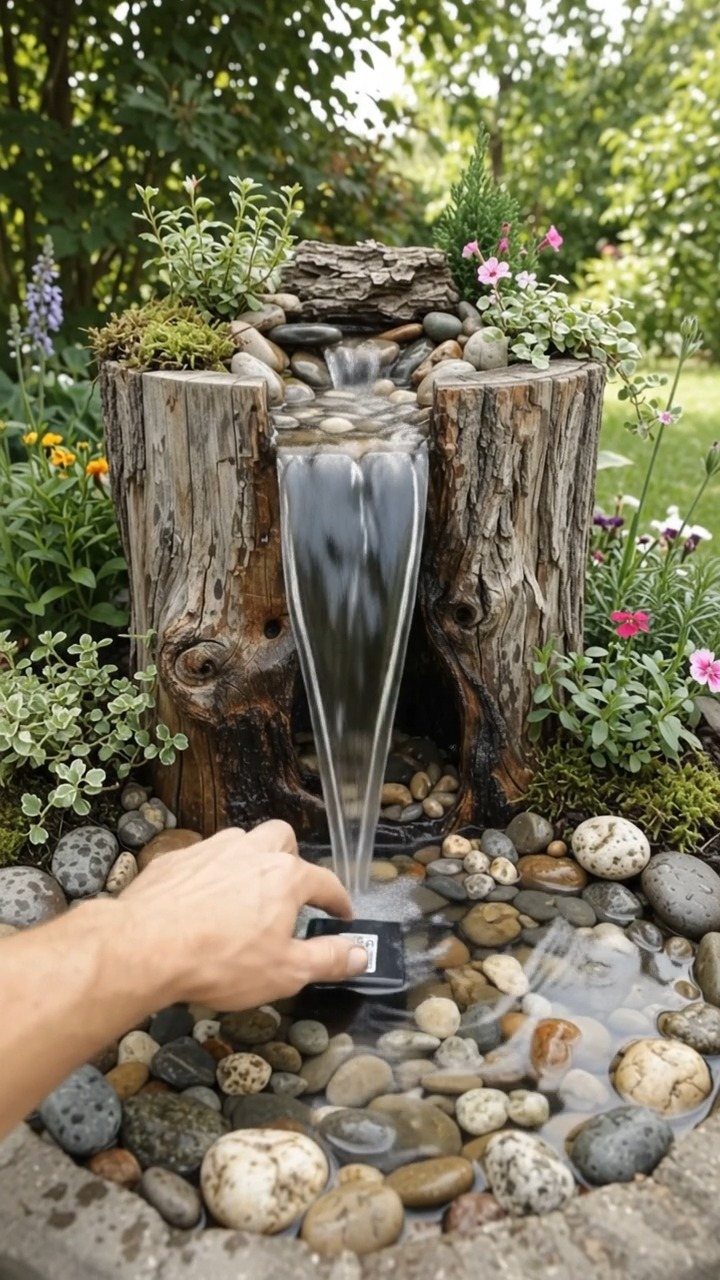
A garden fountain built into a hollowed tree stump turns a quiet corner into something you want to pause beside.
The water runs over rocks into a pebble basin, and that sound does more than look pretty: it cools the air around it and covers the street noise you stopped noticing until it was gone.
You can buy a small submersible pump for cheap and run the tubing through a hole you drill yourself.
A stock tank from the farm store works if you do not have a stump to hollow; add a solar fountain head and a few water lilies, and the goldfish come later if you want them.

Magical Gnome Garden Fountain:Bring a fairy-tale touch to your outdoor space with a charming gnome, tree stump, mushrooms, and cascading waterfall design. This whimsical fountain creates a unique garden centerpiece full of character and charm. If the pump breaks, please contact us for a free replacement.

Charming Tree Stump Design – Two friendly gnomes raise beer mugs beside a tiny woodland door. The top water spray adds lively movement, making this whimsical fountain a fun conversation starter for your garden or patio.

REALISTIC TREE STUMP WATERFALL DESIGN: Bring a woodland-inspired accent to your outdoor space with this 23.6-inch fountain. Detailed bark textures, moss-like accents, leaves, stones, and carved wood elements create a natural tree-stump look for gardens, patios, porches, decks, and backyard corners.
2. Garden Vignettes
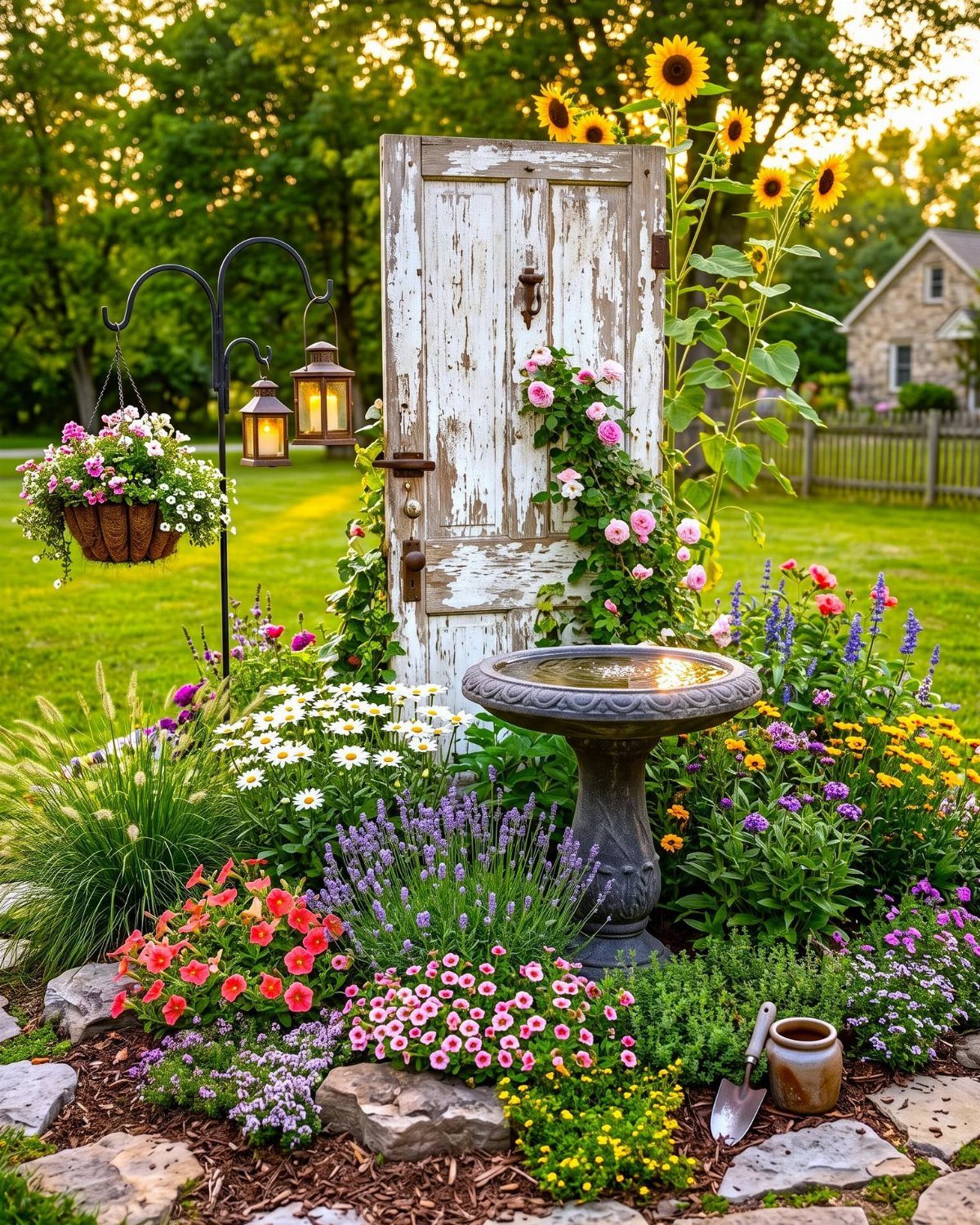
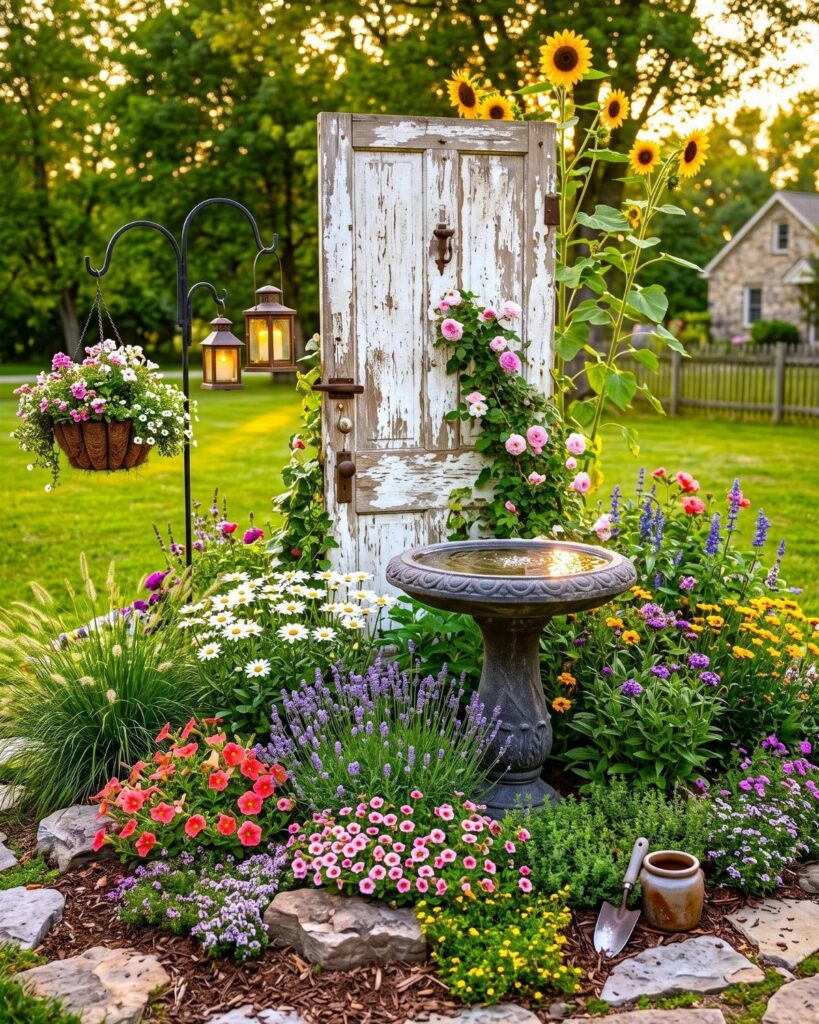
Garden vignettes are the reason some yards feel like rooms and others feel like a plant collection left out in the rain.
A weathered door propped against a fence, a stone birdbath, a shepherd’s hook with a lantern: these pieces do not do much on their own, but grouped together they make a place worth walking toward.
Start with one anchor piece, something with height or age.
Set it slightly off-center, add something lower in front, then tuck a small surprise at ankle level. Change it when the mood strikes; a vignette is not a commitment.

Stack of 8 river rocks, balanced one atop the other for a unique look

Premium Material: The house statue is handmade and made of high-quality resin material that ensures durability and long-lasting use

MAGIC FAIRY DOOR KIT: Fairies, gnomes and pixies are looking for fairy worlds, use fairy doors and windows to welcome them to your garden! It can be fixed to the trunk of a tree, in a pot on the patio, or in your own room., inviting gnomes and fairies to come and stay. Using our fairy suit, you can easily turn your garden or bedroom into a fairy tale world.
3. DIY Greenhouse
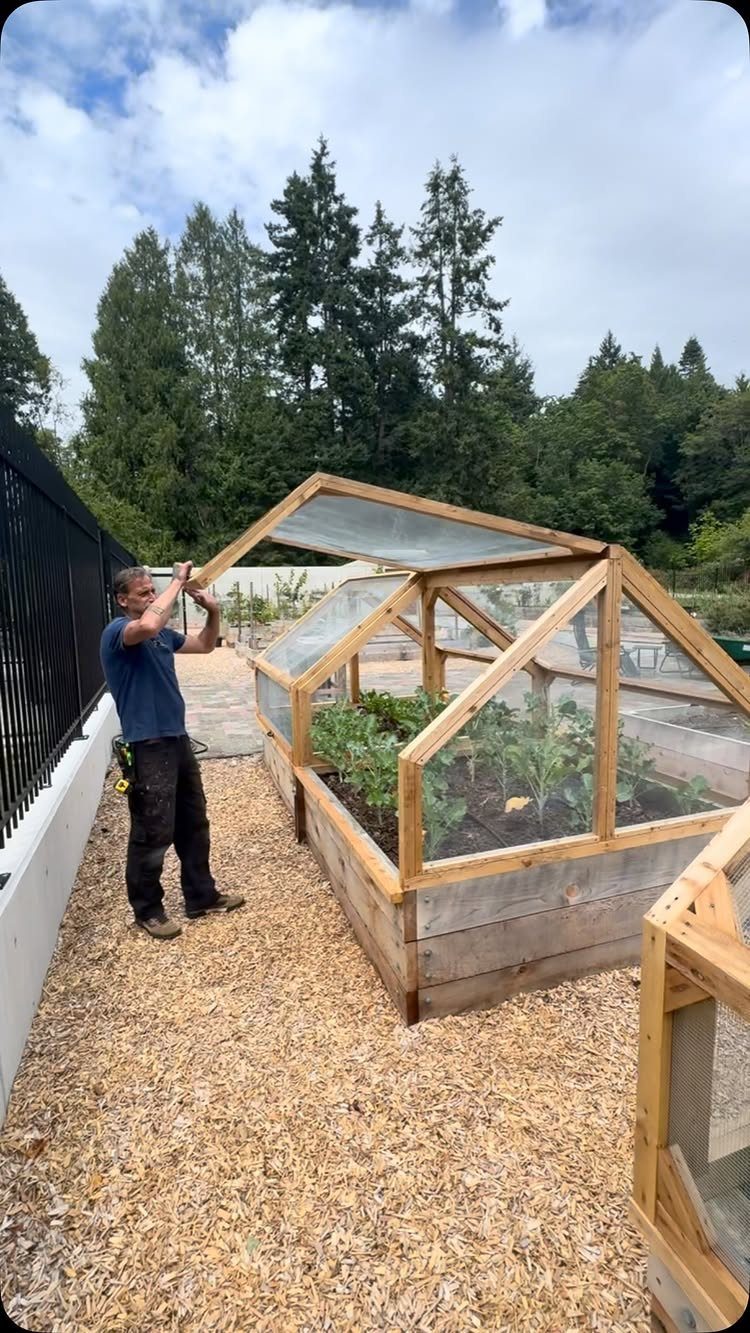
A hinged roof you can lift with one hand changes everything about raised-bed gardening. The glazing traps heat early in the season, and propping that roof open on warm days keeps the lettuce from bolting before you are ready.
An 8 by 6 ft footprint is the common starting point, placed where it catches morning sun. Level the ground first and use well-draining material under the base; rot sets in fast if the wood sits in wet soil.
The clear panels are the part worth spending on, cheap plastic clouds over in 2 seasons and you will be replacing them.

60 PCS Garden hoops for Raised Beds Netting: Greenhouse Hoops frame widely used indoors and outdoors, great for the yard, vegetable garden, and garden raised beds. DIY Garden Hoops Grow Tunnel Kit works well to protect your plants, seedlings, herbs flowers,strawberry in any season gardening plant.Plant support for climbing plants,plant stakes for outdoor plants,Tomato support garden stakes
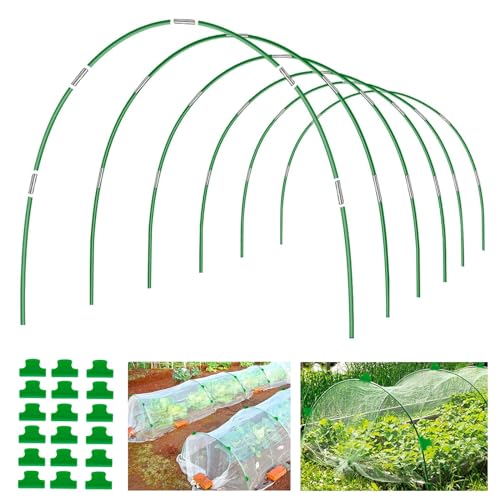
PVC-coated for all-weather durability: Protective coating resists rust, corrosion, and UV damage; Withstands sun, rain, and humidity with no cracking or peeling; Ideal for year-round outdoor use

★【PREMIUM GARDEN HOOPS GROW TUNNEL KIT】: Our garden hoops frame is a versatile solution for plant protection and growth enhancement. Crafted from durable, fiberglass, this kit includes 36 rust-resistant garden hoops, 30 connectors, 24 garden clips, and 12 support bases, offering a complete DIY experience.
4. DIY Garden Art Projects
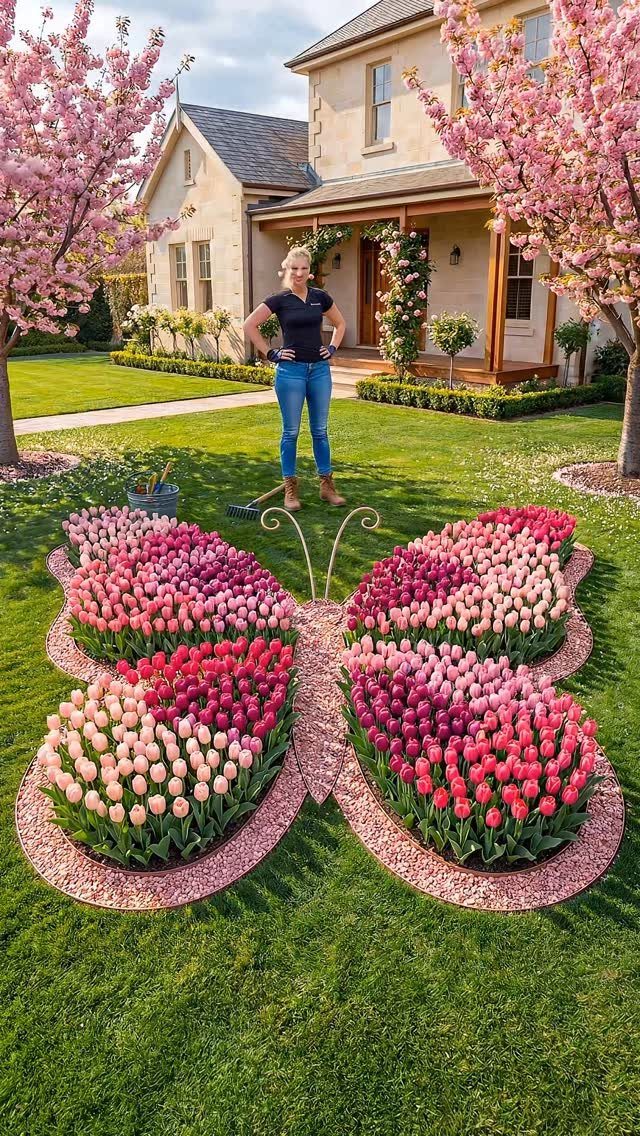
A butterfly-shaped bed of tulips and gravel on a lawn is the kind of project that makes you smile every spring for years after.
The shape gives it away as something made, not planted, and that handmade quality is exactly what keeps it from looking like a municipal display.
Draw the outline with a hose first, then strip the sod and lay your gravel paths before you set any bulbs. Upcycled materials work for the edging: old brick, broken concrete, cedar shakes left over from a roof job.
The tulips will need replacing every few years as they tire out; plan for that or switch to something self-seeding like grape hyacinth.
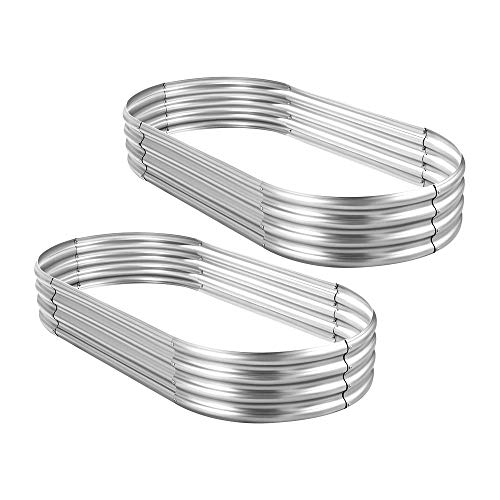
Each raised metal garden bed size: 4×2×1ft , 7Cu
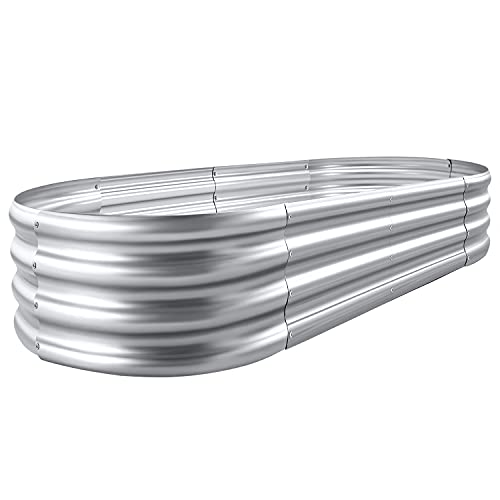
Each raised metal garden bed size: 4×2×1ft ,7.14Cu

Size: 60×29×11 in, 68 gallons of soil required.
5. Winding Garden Paths
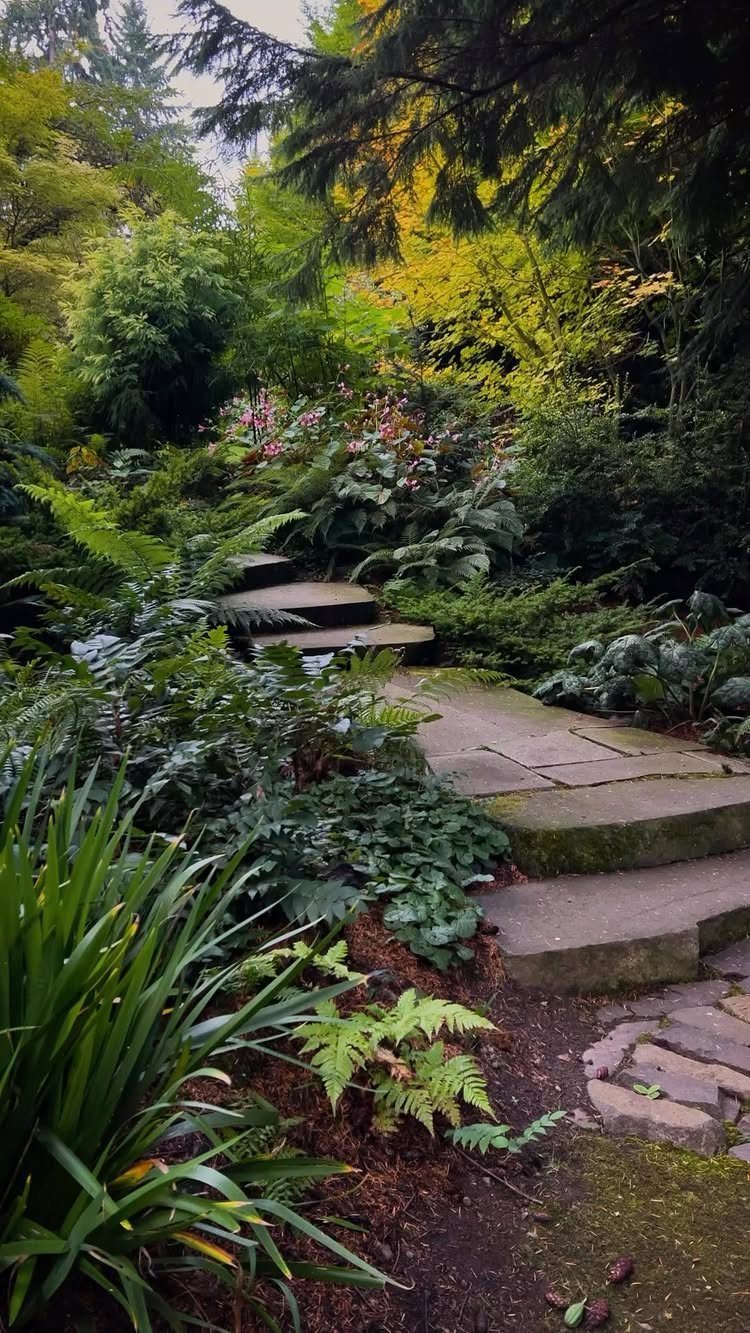
Flat stone steps winding uphill through ferns and woodland plants give a garden the feeling of having always been there.
The curve hides what comes next, which matters more in a small yard than you would think; a straight path tells you everything at once.
Flagstone, gravel, wood planks, or even a thick layer of mulch over compacted soil will work. Keep the surface slightly uneven for grip, but not enough to catch a toe.
Line the edges with fieldstones or logs if you want definition, or let plants colonize the cracks for a softer border. Light the turns if you walk it at night; a solar stake every few feet is enough.

Optimal 11.5-Inch Elevated Gardening: With a generous 11.5-inch height, this raised garden bed provides ample depth for healthy root systems. It's ideal for a variety of plants, including flowers, herbs, vegetables, and small trees, promoting better drainage and soil quality than ground-level planting

PERFECT SIZE: Our 6×3×1ft raised garden bed comes with Rubber Edging Strip x 1, Hand Wrench x 1, Screwdriver x 1, Gloves x 1. It is easily movable, meeting diverse planting needs for growing vegetables, flowers, fruits, and herbs in your patio, yard, garden, or greenhouse

Advanced Drainage & Elevated Base: The planter box with trellis engineered with integrated drainage holes and raised feet to prevent waterlogging and root rot while keeping the base dry and easy to clean—ensuring optimal plant health.
6. Fire Pit Areas
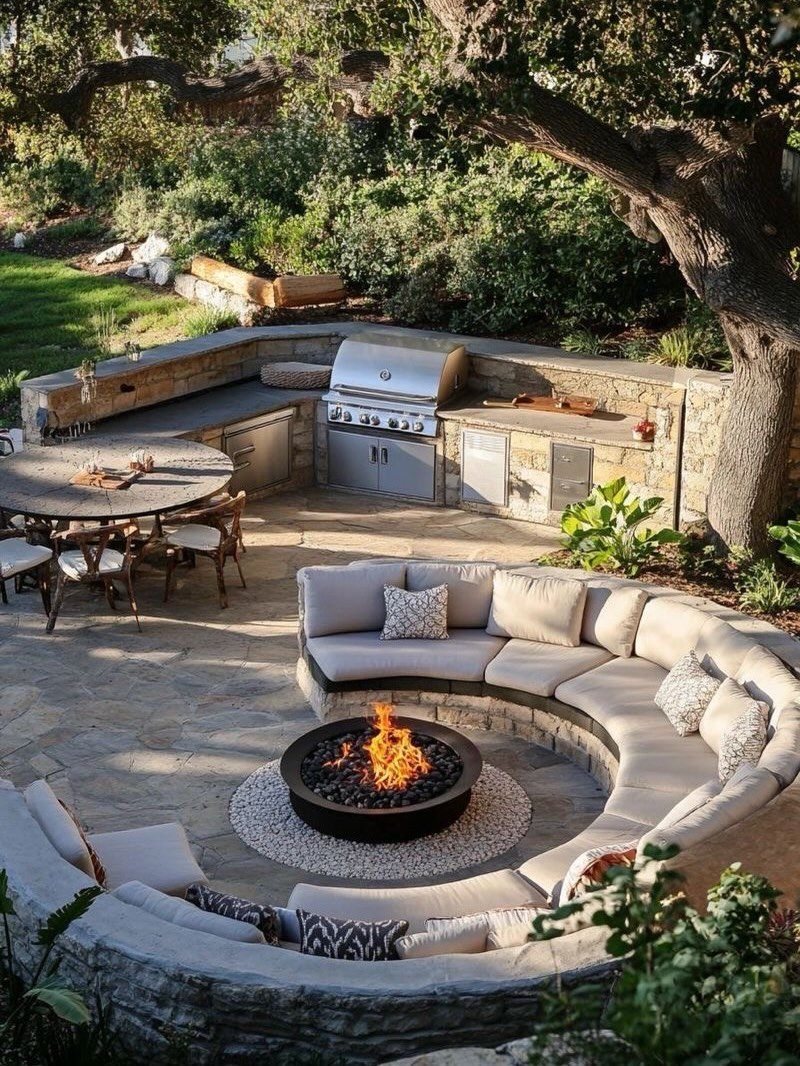
A sunken stone fire pit with built-in bench seating turns a patio into the place people drift toward after dinner. The circle matters; everyone faces each other, and the fire stays central no matter how the conversation splits.
Set it well back from any structure or overhang, more if your area has dry spells.
The seating should be low enough that the fire warms faces without scorching them, and deep enough for cushions that will spend winter in a shed.
A gas line is cleaner than wood, but wood gives you something to do with your hands while the conversation meanders.
Tree Stump Waterfall Design: Bring a natural woodland feel to your outdoor space with this tree stump-style cascading fountain. The layered waterfall design creates a relaxing flow, making it an eye-catching centerpiece for gardens, patios, porches, decks, and backyard corners.

REALISTIC TREE STUMP DESIGN — Handcrafted to mimic a natural tree stump with intricate wood grain, mossy textures, and organic hollow details. Water cascades gently from the top hollow down through layered channels, creating a serene woodland atmosphere that blends seamlessly into any garden, patio, or backyard landscape. Unlike generic tiered fountains, this nature-inspired design becomes a true focal point that draws compliments from every guest

WHIMSICAL FAIRY TALE DESIGN: Transform your space into a magical forest! This charming outdoor water fountain features a vivid resin tree stump, colorful glowing mushrooms, and a playful gnome resting on top. The natural rock-like texture and vibrant colors make it an eye-catching yard art piece that instantly upgrades your garden, courtyard, or living room decor.
7. Garden Signs

A hand-painted sign that reads "Thyme to Relax" leans against a pot of lavender and suddenly the whole bed feels intentional. A green sign beside painted rocks picks up a color already in the garden instead of shouting over it.
I like cedar or redwood for the board because paint holds on it and it grays nicely. Seal it with marine varnish if you want the color to last; let it silver if you prefer the weathered look.
Lettering can be vinyl, stenciled, or freehand with a small brush and exterior paint. Change the message with the season, or make it a gift for a neighbor who borrows your tools.
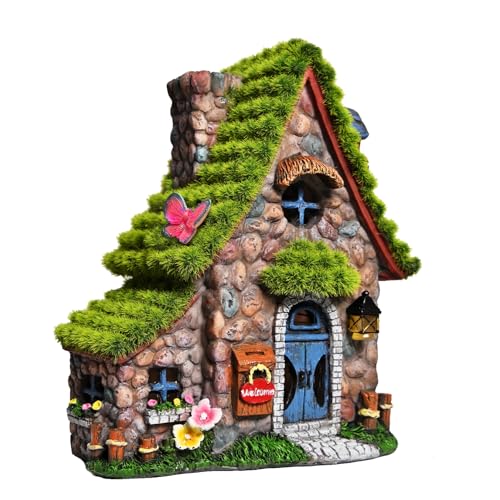
【Easy to Use】:This fairy h ouses for gardens does not need to be plugged in,just keep the button under the lantern in the "ON" state. It automatically charges during the day and only takes 5-8 hours to fully charge, and it will automatically light up and last 8-10 hours at night. The operation is safe and simple, and there is no need to worry about the safety of electricity.

【Pretty&Usable Design】This metal weathervane subtly blends the shapes of the sun and moon face in a bronzed texture. It carries a sense of mystery and imagination. It is also a sensitive wind indicator, warning you before a storm arrives. Practical and beautiful, it’s a fine decoration for the garden.

Dollhouse Sidewalk-Micro mini path for fairy garden make your fairy garden world more vivide and cute
8. Garden String Lights
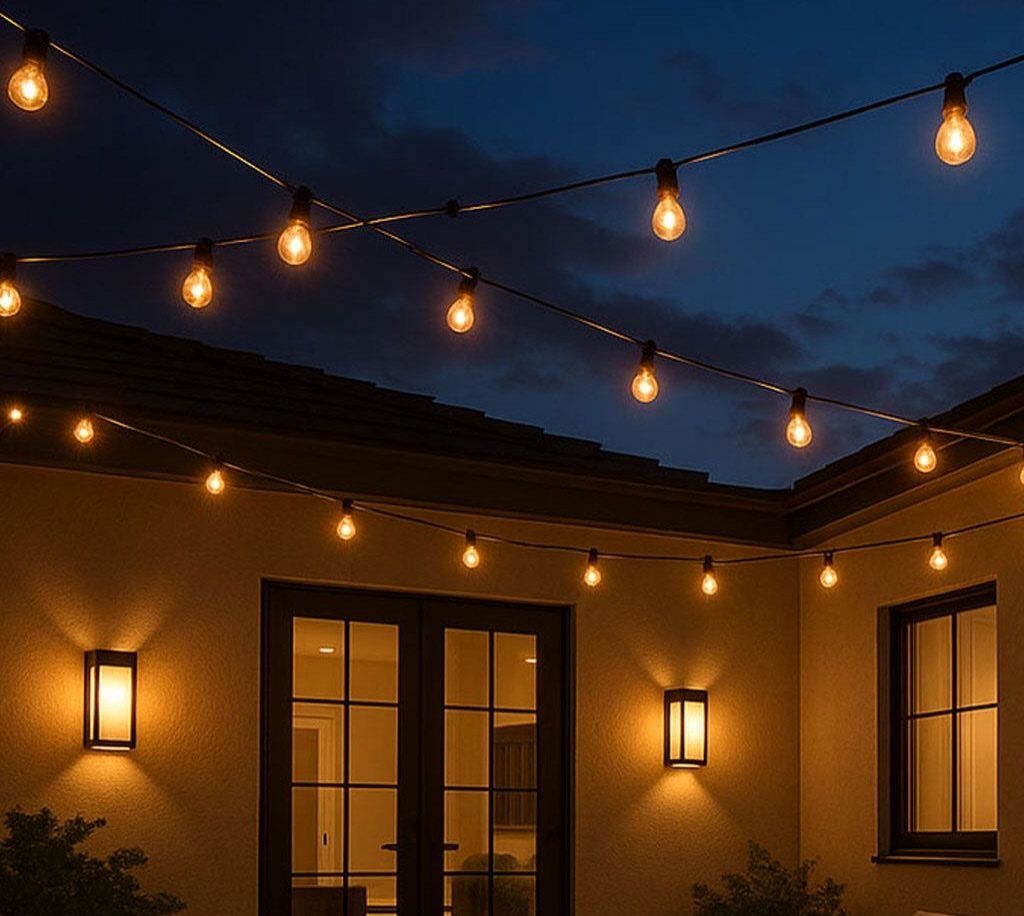
Bistro bulbs strung overhead turn a patio into a room you do not want to leave. Warm white string lights pull people in; cool ones push them toward the door, so choose the temperature with intention.
Start with the anchor points.
A masonry wall, a fence post, or a steel rod driven into the ground with concrete will hold the tension. Run a guide wire first on a long span; the sag will drive you crazy by August.
Solar sets are simpler but dim after a cloudy week. Plug-in strands give you the brightness to read by, if you have the outlet.

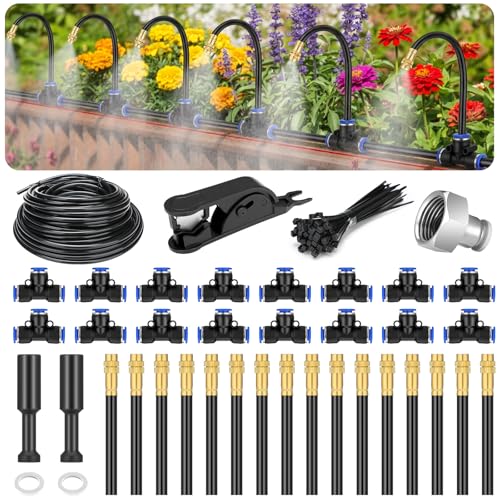
Comprehensive Kit: our drip irrigation kit includes 1 piece of 98 ft 5/16 inch irrigation tubing, 1 piece faucet adapter, 30 pieces of T joints, 30 pieces of adjustable spray nozzles, 1 piece hose cutter, 2 piece plug and 60 pieces of cable ties; Please verify your faucet size before purchasing as our faucet adapter is compatible with 3/4" threaded faucets

Eco-Friendly Material: Our garden Hoops are made from high-quality fiberglass that will never rust and are anti-oxidation, good flexibility and can be used for a long time without affecting the soil, and plants.
9. Garden Arbors
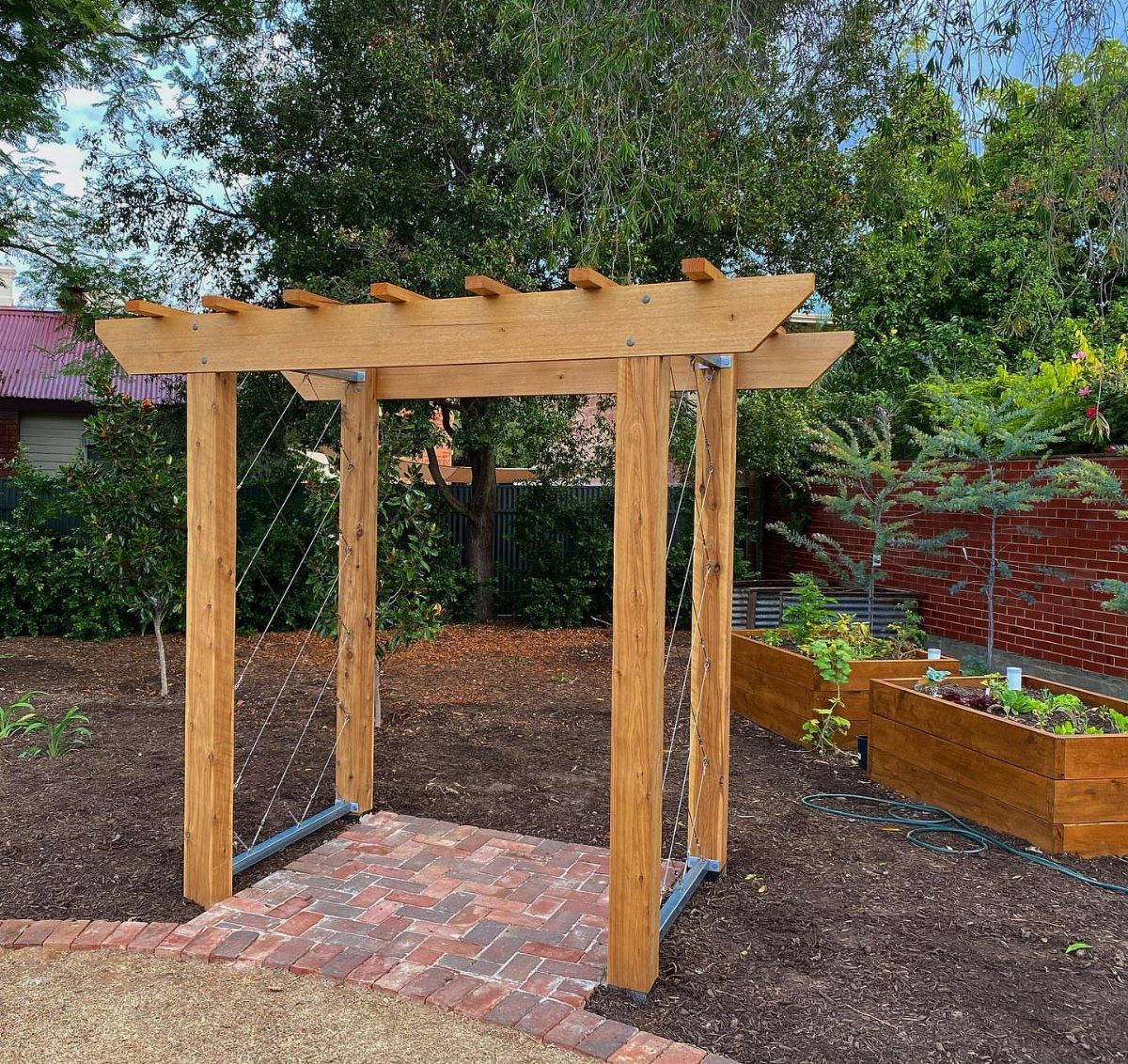
A wooden arbor over a brick path tells visitors they are entering somewhere on purpose. Wire sides do the real work on an arbor; without them, the vines would cling to nothing but air until the wood fills in.
Build the frame from pressure-treated 4 x 4s or cedar, and set the posts deep into concrete if you are in a frost zone. The wire mesh is livestock panel cut to fit, fastened with fencing staples.
Plant a clematis or grapevine at each base and wait. The structure disappears beneath the green soon enough, and the shade is worth the patience.

Raised Garden Bed - Add a new level of convenience to your gardening experience with the Galvanized Raised Garden Bed. Enjoy expanded yield and a more assembled garden layout with this garden accessory, each sized at 120 cm X 60 cm x 30 cm.

4X2X1FT GROWING SPACE: This oval raised garden bed measures 4 x 2 x 1 ft, providing 7+ cu. ft. of organized growing space for vegetables, herbs, flowers, strawberries and selected root crops. Its compact footprint fits naturally into backyards, lawns and small outdoor gardens while keeping plants easy to reach and maintain.

More suitable raised garden bed size and Volume:67"L x 20"W x10"H, 7 Cu. Ft. You can cultivate plants, like vegetables, flowers, herbs in your patio, yard, garden, and greenhouse.
10. Vertical Gardening
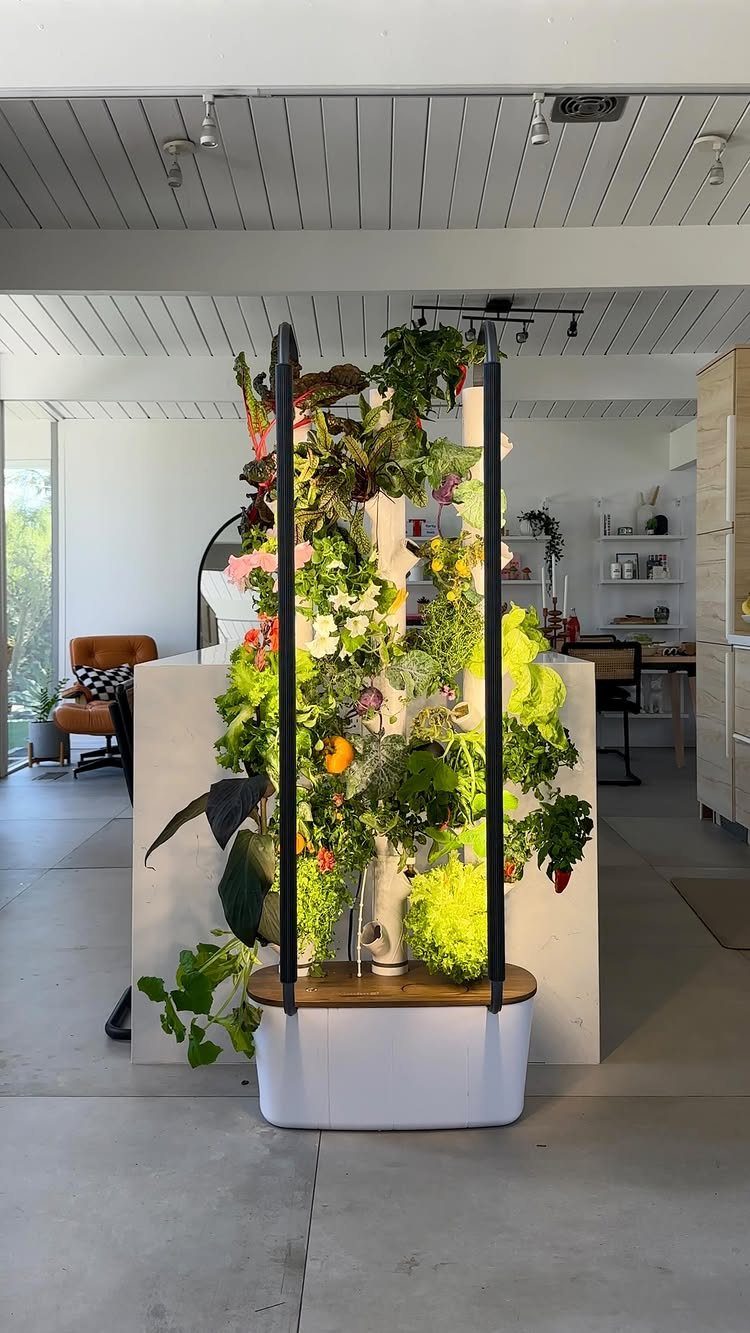
A wall of living herbs in the kitchen saves the trip outside when the recipe calls for basil.
Wall planters, pocket systems, or a simple cedar frame with landscape fabric pockets all work. Light makes or breaks a vertical garden: direct sun or a grow light on a timer, long enough each day for the plants you chose.
Annual herbs like basil and cilantro want replanting each spring; rosemary and thyme will stay put for years if you let them.

Optimal 11.5-Inch Elevated Gardening: With a generous 11.5-inch height, this raised garden bed provides ample depth for healthy root systems. It's ideal for a variety of plants, including flowers, herbs, vegetables, and small trees, promoting better drainage and soil quality than ground-level planting
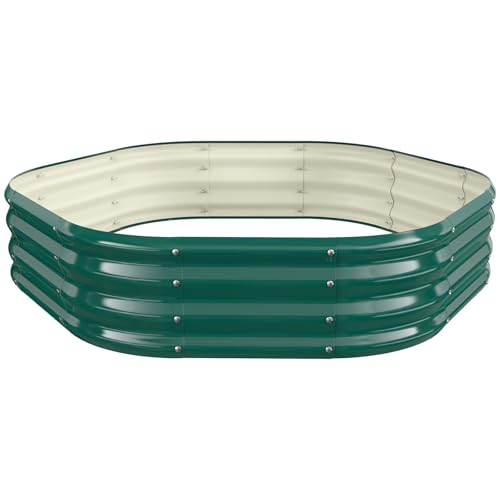
Spacious Hexagon Design:This 48-inch (4 ft) wide hexagonal garden bed provides ample planting space for vegetables, herbs, or flowers. The unique shape maximizes growing area while adding a modern, stylish look to your backyard, patio, or deck
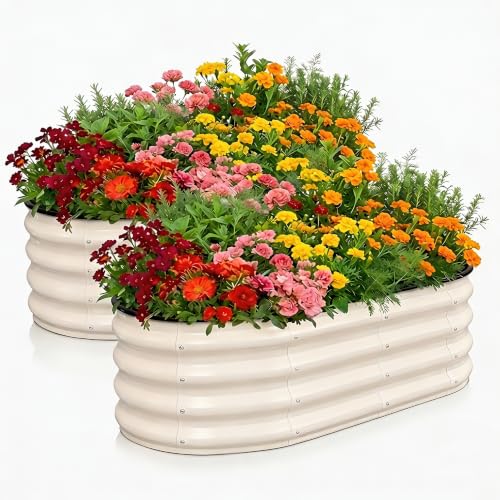
【Raised Garden Beds Outdoor】: GRASQUILINE’s galvanized raised garden bed features enhanced rust and corrosion resistance, ensuring years of durable use even in harsh outdoor environments and humid climates — so you never have to worry about premature wear.
11. Container Gardening
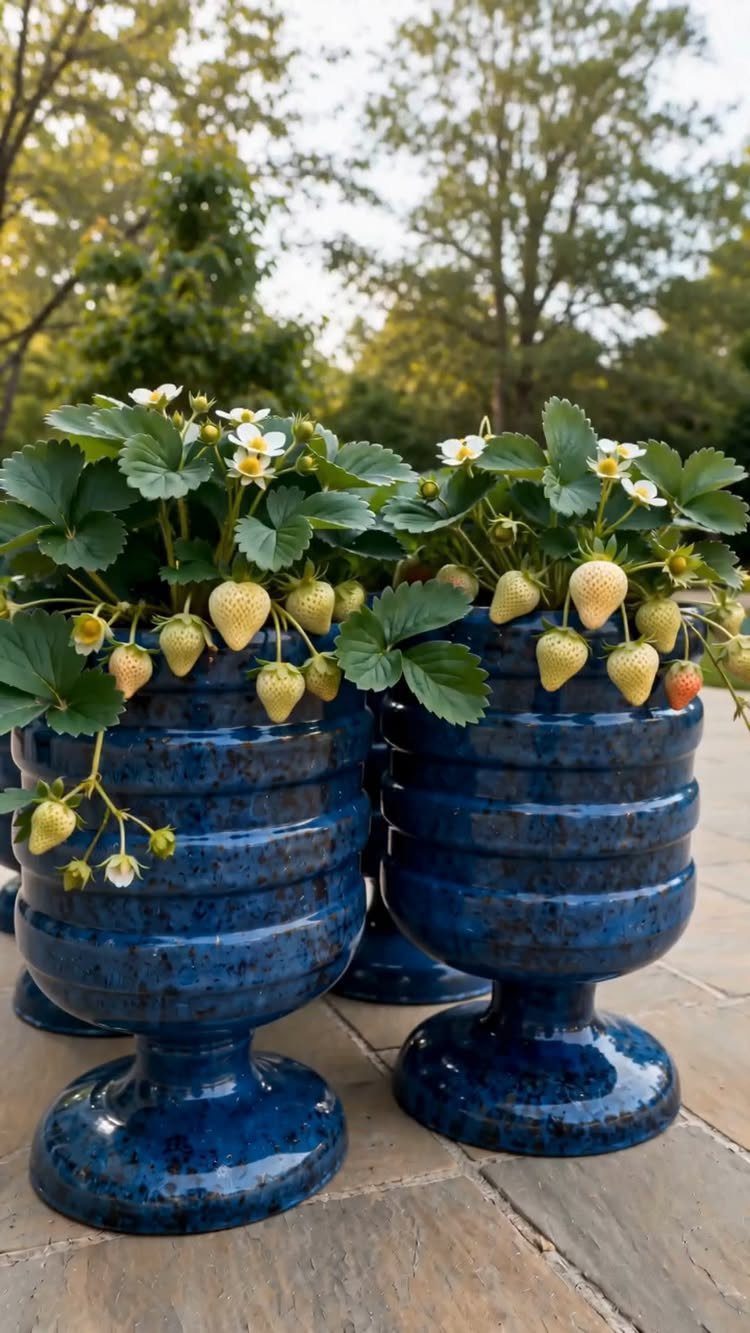
Strawberries in glossy blue pots on a stone patio prove that a garden does not need ground at all.
A pedestal shape lifts the fruit away from slugs and saves the back; that height is the detail I would copy first.
Any vessel with drainage can work. Drill holes if there are none, or layer gravel at the bottom and accept the risk.
The soil mix matters more than the pot: half potting soil, half compost, and a handful of perlite so the roots do not drown. Move the pots to follow the sun, or to the garage when frost threatens.
12. DIY Trellis
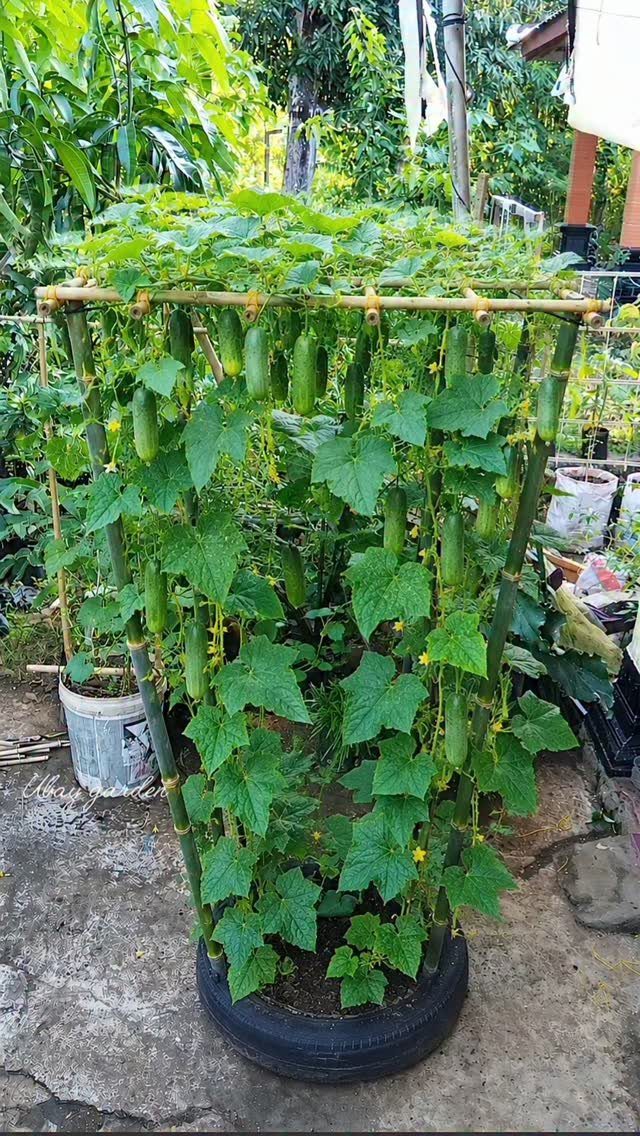
A bamboo cage lashed with twine and dropped into a recycled tire is the kind of trellis that costs nothing and lasts one good season.
The cucumbers do not care about permanence; they care about reaching light, and the rough surface gives their tendrils something to grip.
Gather branches after a windstorm, the straighter the better. Lash the joints with jute twine, not wire, so the whole thing composts when it collapses.
Set it in place before the seedlings go in; disturbing roots later sets them back by weeks. Peas, beans, or a compact cucumber variety all climb with enthusiasm.
13. Garden Seating Areas
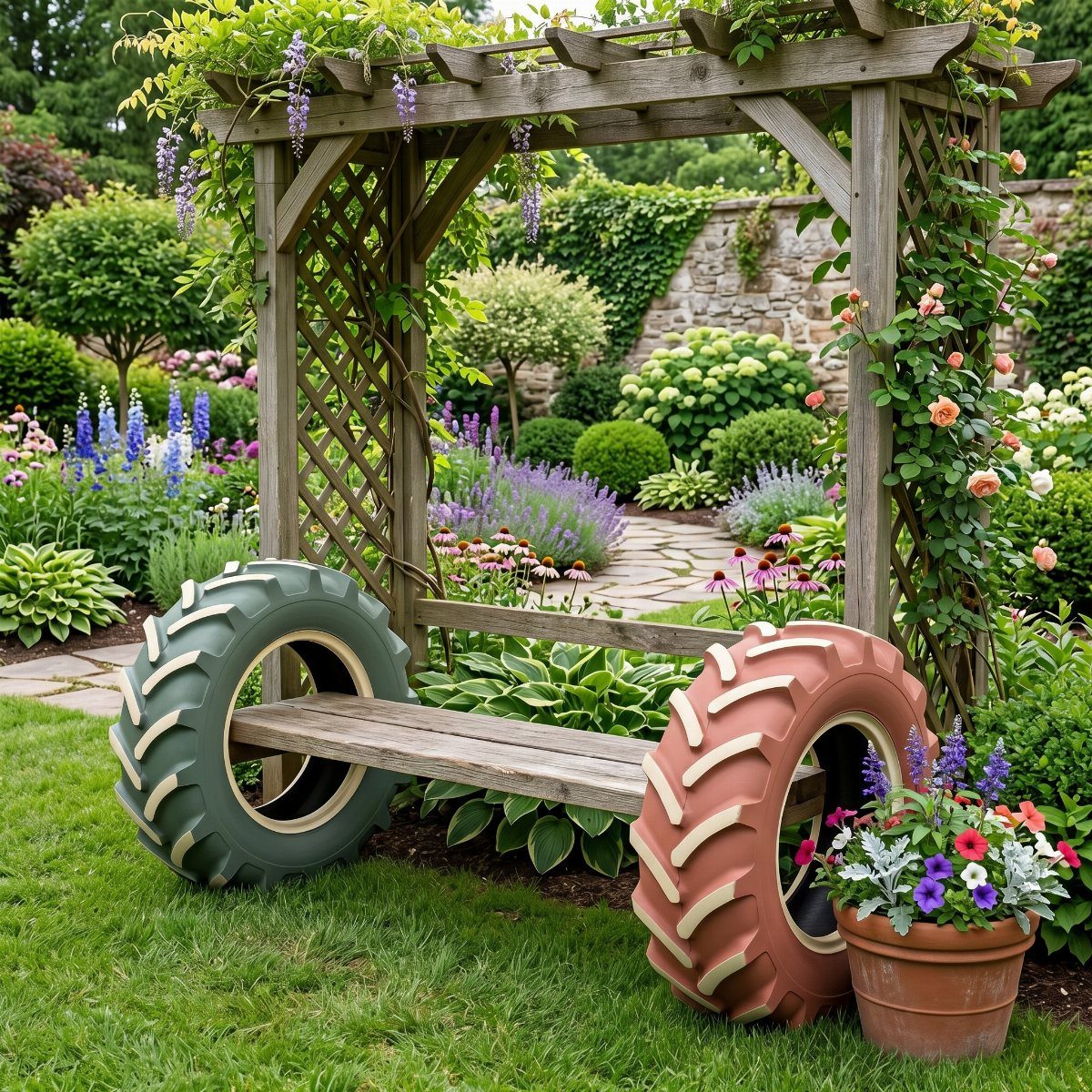
A couple coats of exterior paint turn tractor tires and a plank of wood into a bench that looks nothing like store-bought.
The tires ground it, the wood warms it, and the whole thing sits where the ferns and hostas crowd in close enough to brush your knee.
Set seating where shade falls by mid-afternoon and something fragrant grows within arm’s reach. A pergola overhead extends the hours you stay dry.
The surface needs to be flat enough for coffee, forgiving enough for an afternoon nap. Cushions live in a deck box or they mildew; there is no third option.
14. Cottage Garden
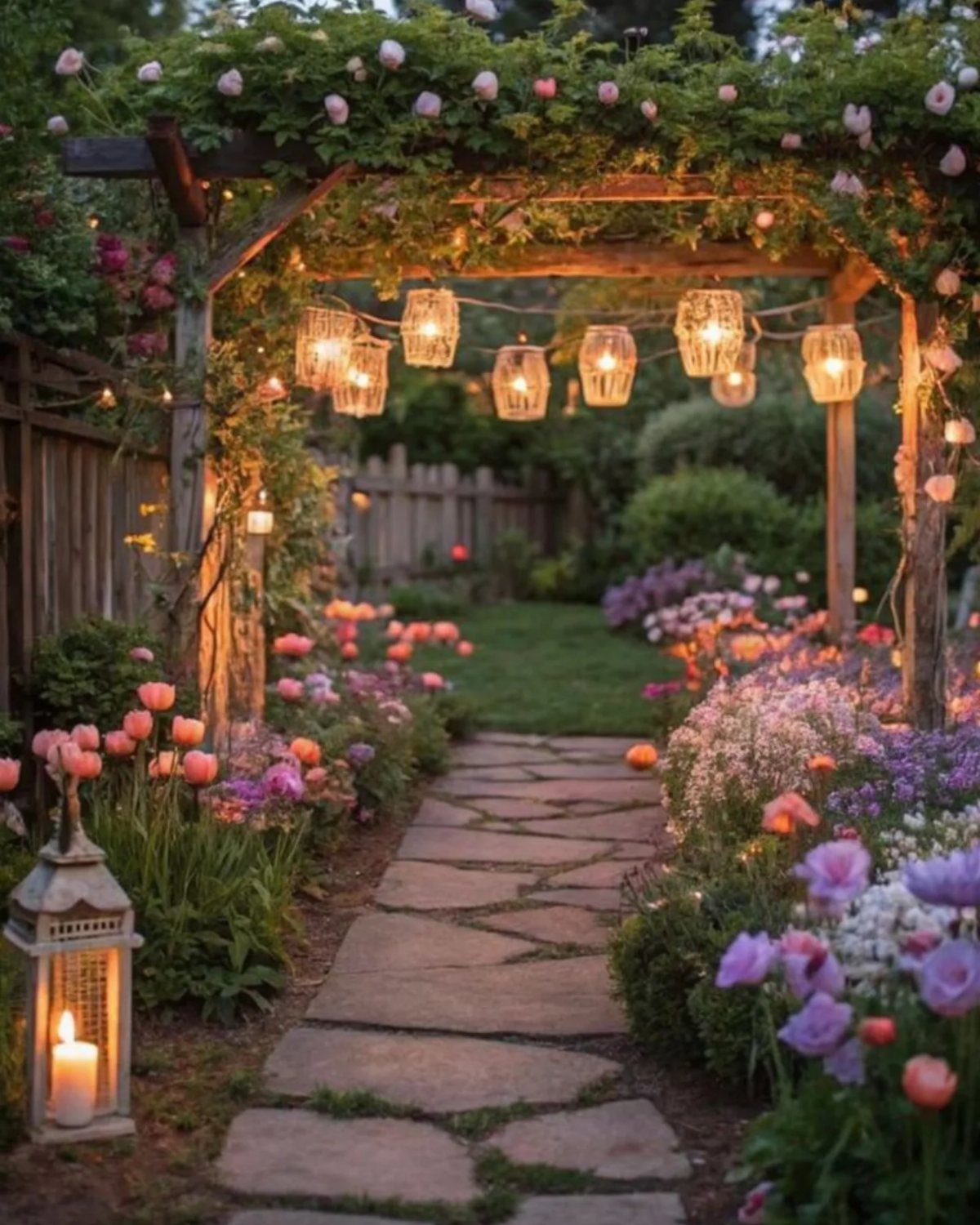
A stone path narrow enough for one person, edged with plants that lean in and touch shoulders, is the spine of a cottage garden.
Everything else grows from there: the foxglove taller than your shoulder, the catmint spilling onto the stone, the lantern hung where the pergola disappears under clematis.
Plant for the hours you are home. Moonlit gardens need white blooms and silver foliage to catch what light there is, and a few solar stakes if the moon is hiding.
The gravel path is the cheapest structure you can lay; refresh it every spring when the weeds start winning.
15. Layered Garden Borders
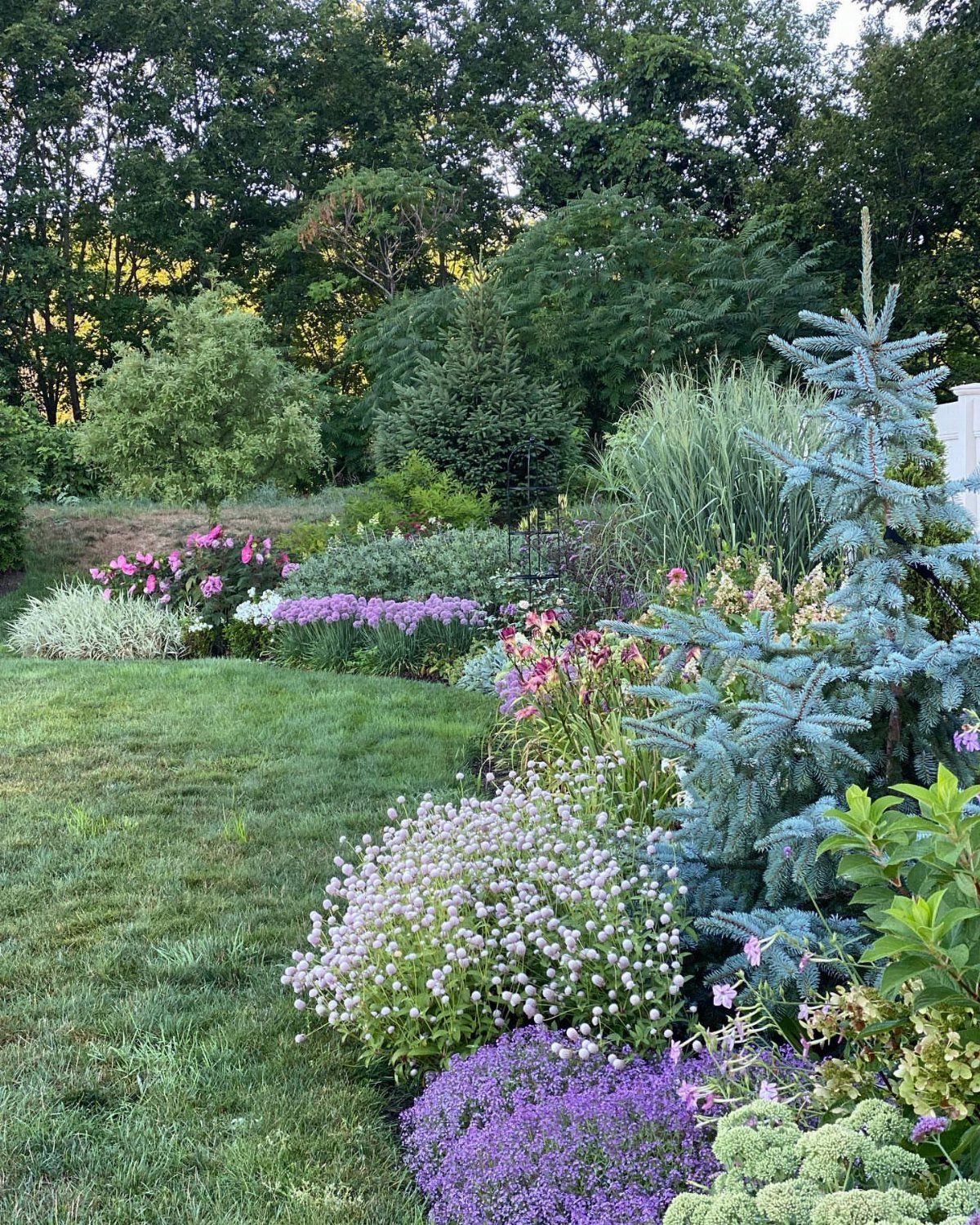
A border that rises from ankle-high ground cover to knee-high grasses to the shoulders of a shrub is a border you read like a sentence, not a shout.
Each layer catches light at a different hour, and the whole thing holds together even when one plant is having an off year.
Start with evergreen backbone plants, add seasonal color in the middle, let the front edge go soft with something that self-seeds.
Succulents work in dry corners, their thick leaves holding moisture through weeks without rain. The gravel mulch between them keeps the weeds down and the drainage sharp.
16. DIY Gabion Walls
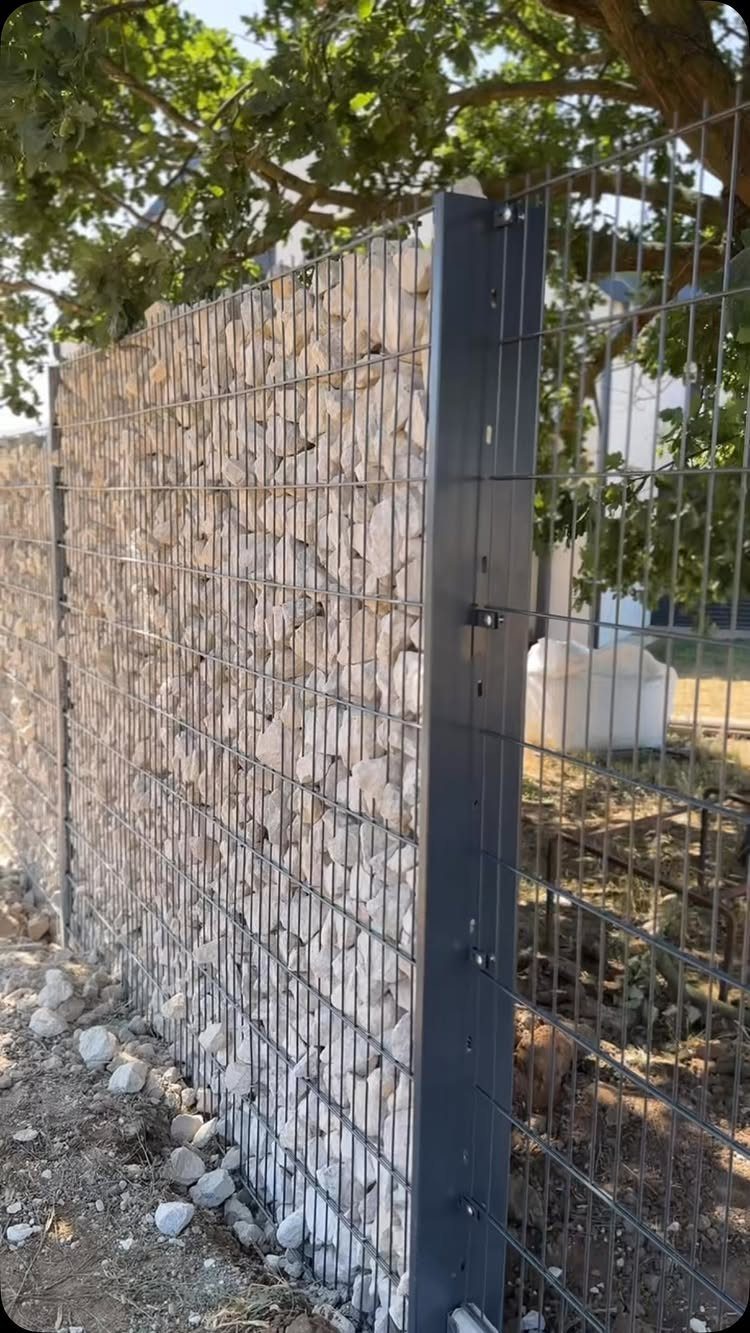
A cage of wire mesh filled with stone is heavy enough to hold back a slope and honest enough that you see exactly how it works.
The industrial grid against rough rock gives a garden weight that timber or brick cannot quite manage.
Hardware cloth works for the cage if you want to build it yourself; premade baskets save time. Fill either with river stone, broken concrete, or whatever you can source cheap nearby.
Set it on compacted gravel so it drains, not on soil where it will sink and tilt. Use it as a retaining wall, a raised bed border, or a freestanding screen that morning glories will climb in time.
17. Plant Markers
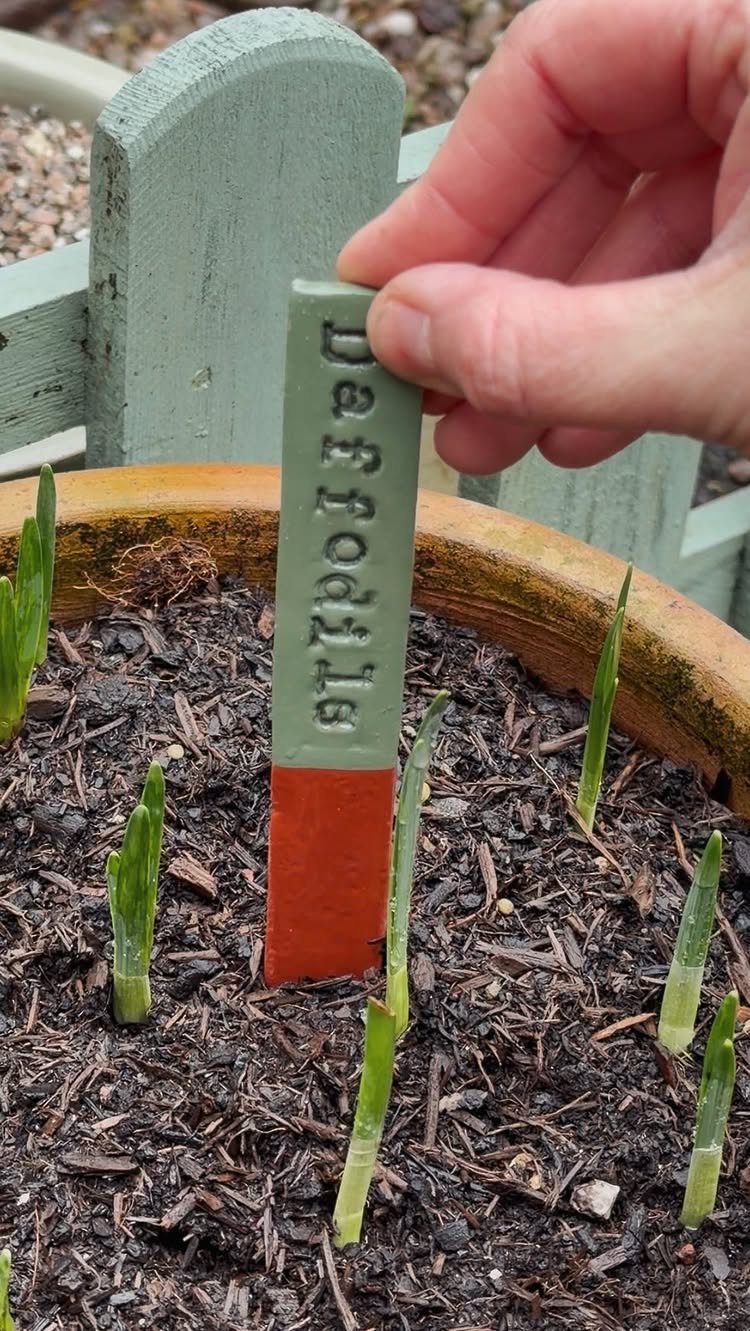
A ceramic marker pushed into damp soil will outlast the plant it names, the glaze weathering to something that looks earned.
Flatten one end of a pipe scrap, stamp or etch the name while the metal is soft, and the garden suddenly knows what it is growing.
Popsicle sticks work for a season, painted or left plain.
A ceramic marker, rolled to even thickness and cut to a point, carries the maker’s own hand into the dirt: roll clay to 4mm, cut rectangles 15cm by 2cm, notch the point.
The label becomes part of the planting, not an afterthought stuck in later.
18. DIY Bird Feeders
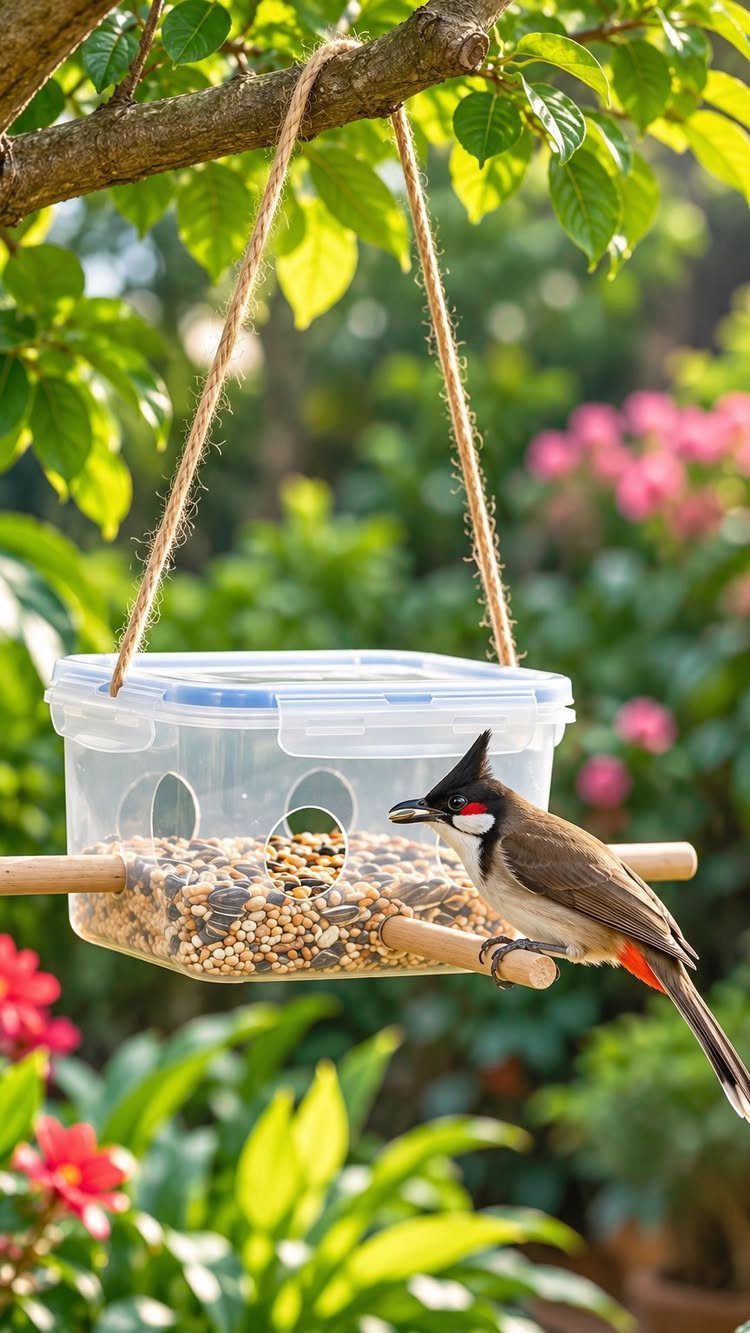
A plastic container hung from a branch with dowel perches is a feeder the birds will find by noon and the squirrels will find by Wednesday.
That is the trade: cheap materials, quick assembly, and the acceptance that you are feeding more than you planned.
A teacup and saucer wired together, hung with twine or beads, does the same job with more grace.
The cup holds seed, the saucer catches what spills, and the whole thing sways like a garden ornament that happens to function. Place it where you can see it from a window, or there is no point.
19. Repurposed Fountain Succulent Planter
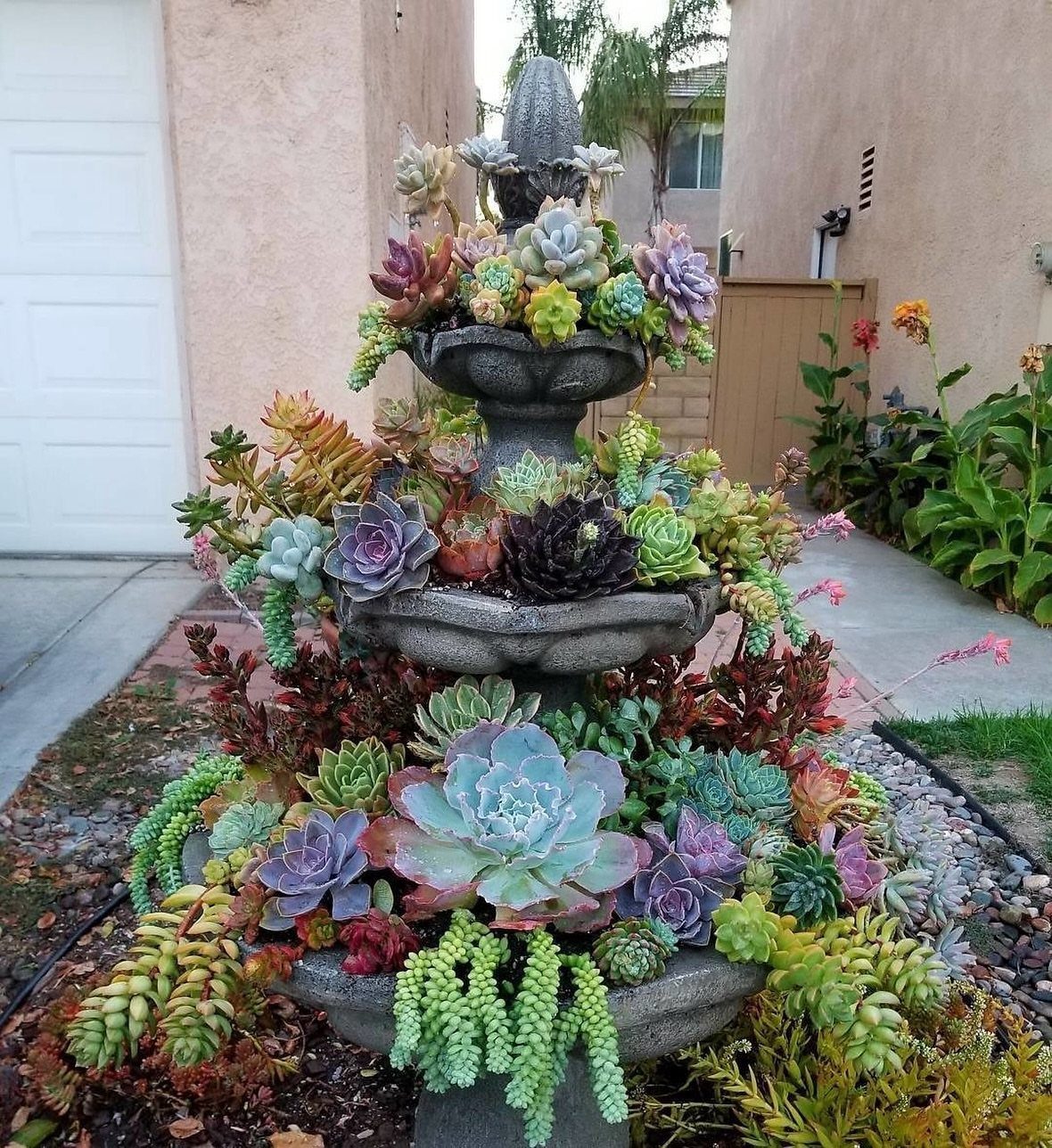
A tiered stone fountain with water long gone makes more sense as a planter than you would expect. The bowls are already shaped to hold soil, and the height gives each succulent its own stage.
Fill the lowest tier with gritty cactus mix, pack it firm, and nestle in echeveria and sedum varieties that match the stone’s warmth.
Let them spill over the edges; the fountain’s curves want that softness. Drainage is the detail to check first.
A real fountain has none, so drill holes or layer gravel deep enough that winter rain does not rot the roots. No sealant needed; the weathered surface is the point.
20. Outdoor Potting Bench Station
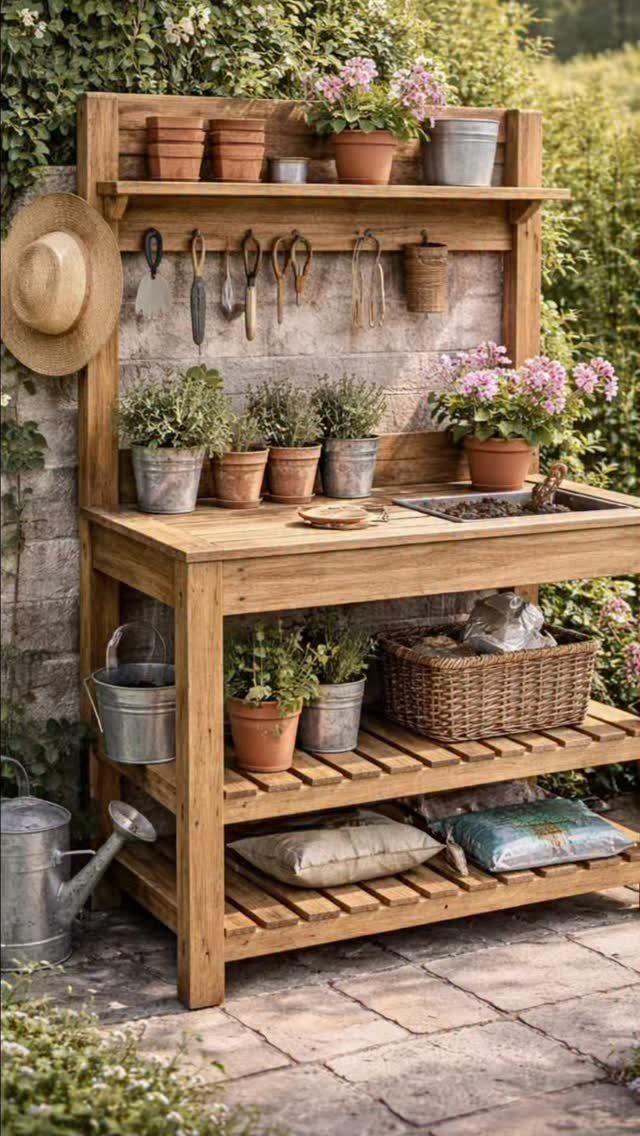
A wooden bench with a galvanized sink, shelves above for pots, and hooks for tools turns potting from a task done on your knees into something you stand at.
The height saves the back; that is the whole reason to build one.
Pressure-treated 2 x 4s and a salvaged sink basin will do it. The maker of one I saw spent about $100, which tells you scrap lumber and a flea-market sink are enough.
Set it on stone or pavers so the legs do not sink into mud come spring. A roof overhead extends the season; without one, the wood will gray and the tools will rust faster than you like.
21. Embossed Concrete Stepping Stones
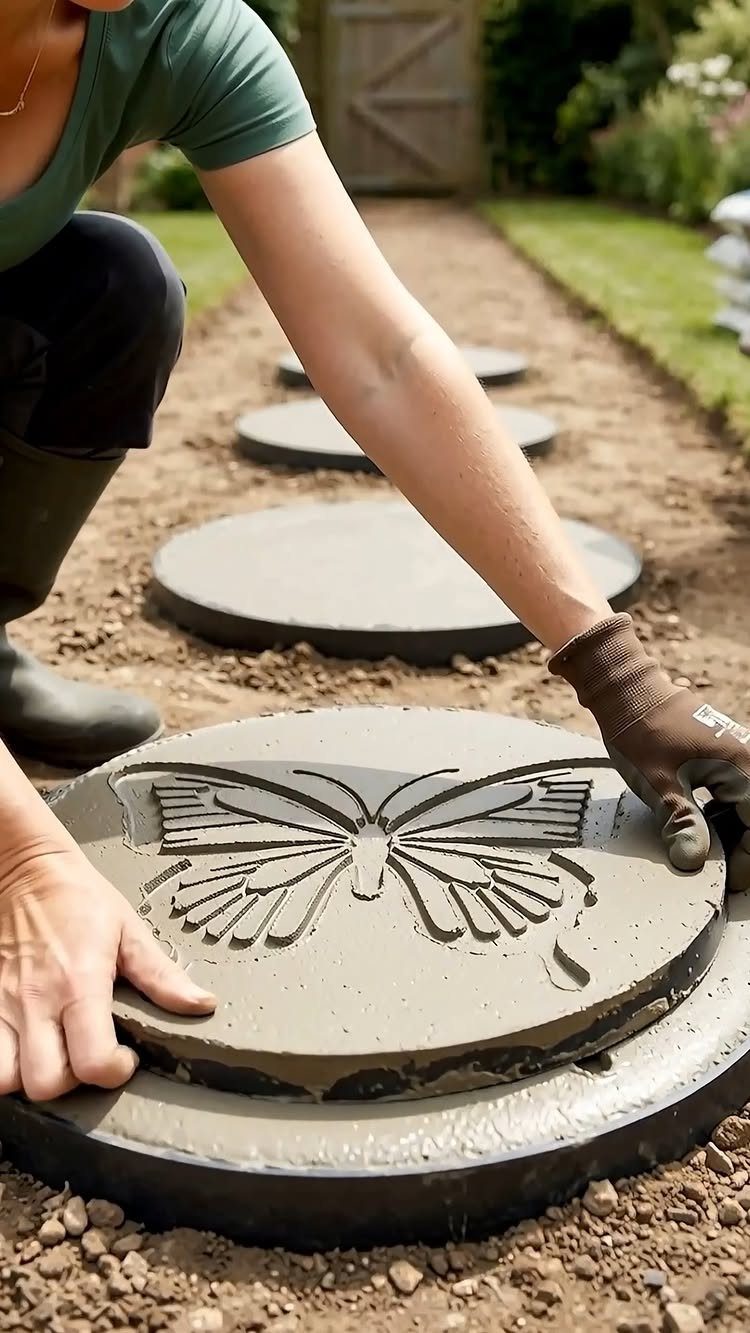
A butterfly pressed into wet concrete hardens into something that lasts longer than the flowers around it. The relief catches morning light and gives a path its own vocabulary.
Mix bagged concrete to a stiff consistency, pour into a round form, and press a rubber mat or carved stamp into the surface while it still holds the impression.
Smooth the edges with a gloved finger so bare feet find no sharpness.
Let it cure before moving it; concrete looks dry long before it is. Paint is optional and, to my eye, unnecessary; the texture alone does the work, and paint will flake in freeze-thaw cycles.
22. Miniature Fairy Garden
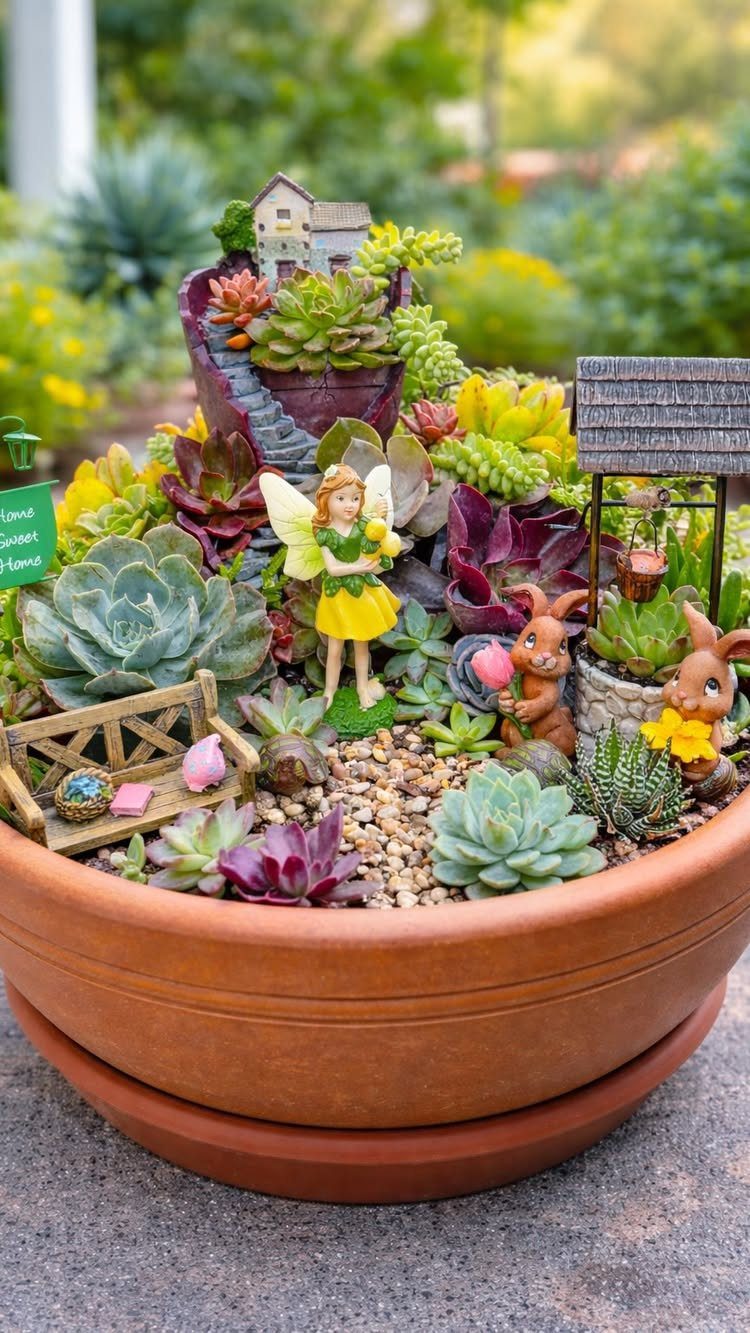
A terracotta saucer the size of a dinner plate holds a whole landscape if you choose small enough plants. Succulents work because they stay small and forgive the shallow soil.
Start with pebbles for a path, add a pinch of potting mix, and nestle in sedum or baby toes.
The tiny house and bench are resin, found at any garden center; the fairy herself is the detail that makes visitors bend down to look.
Keep it outdoors but under cover, or the saucer will fill with rain and the roots will rot. A covered porch is the right home for this one.
23. Spiral Stone Herb Garden
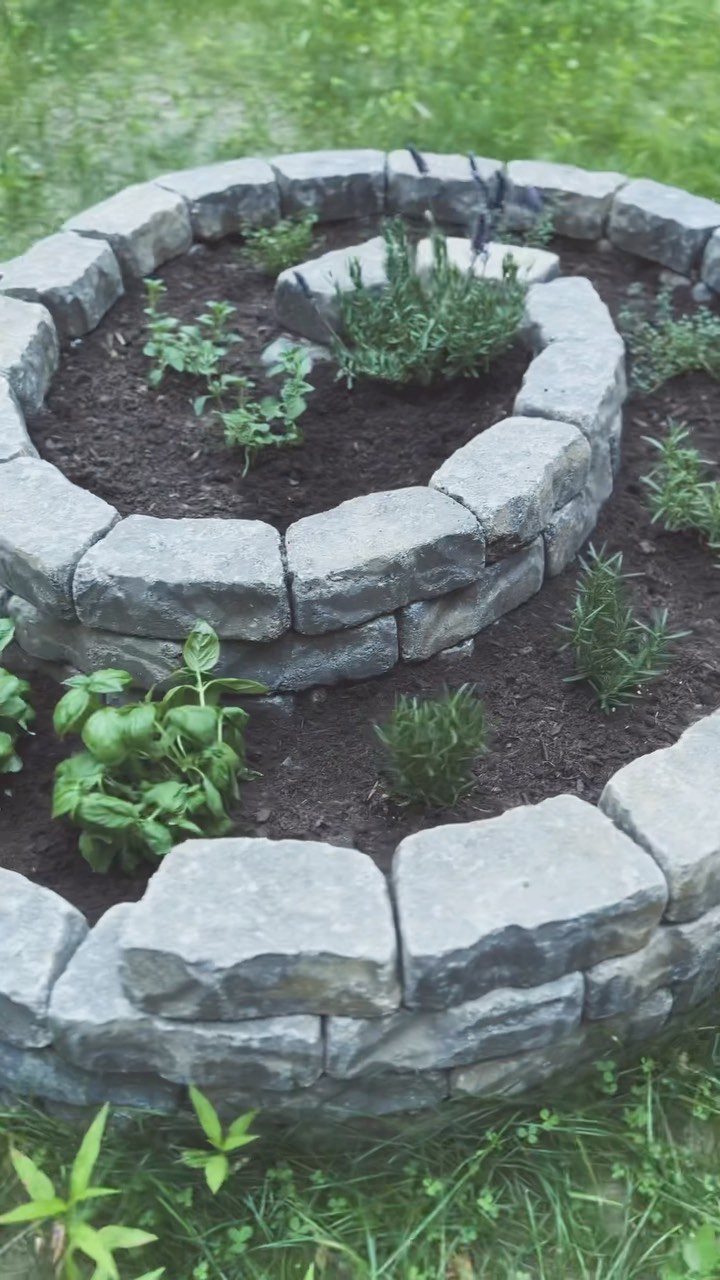
Stacking stones into a spiral that rises gradually gives each herb its own microclimate. The top stays dry and hot for thyme and oregano; the base holds moisture for basil and parsley.
Dry-stack fieldstone or broken concrete without mortar, so water drains through. The spiral shape is not decorative alone: the south-facing inner wall reflects heat, the north side stays cooler, and the top dries fastest after rain.
Build it in an afternoon if your stones are already gathered. Plant from the top down, tucking roots into pockets of gritty soil, and let the herbs fight their own battles after that.
24. Topiary Wire Sculpture Planter
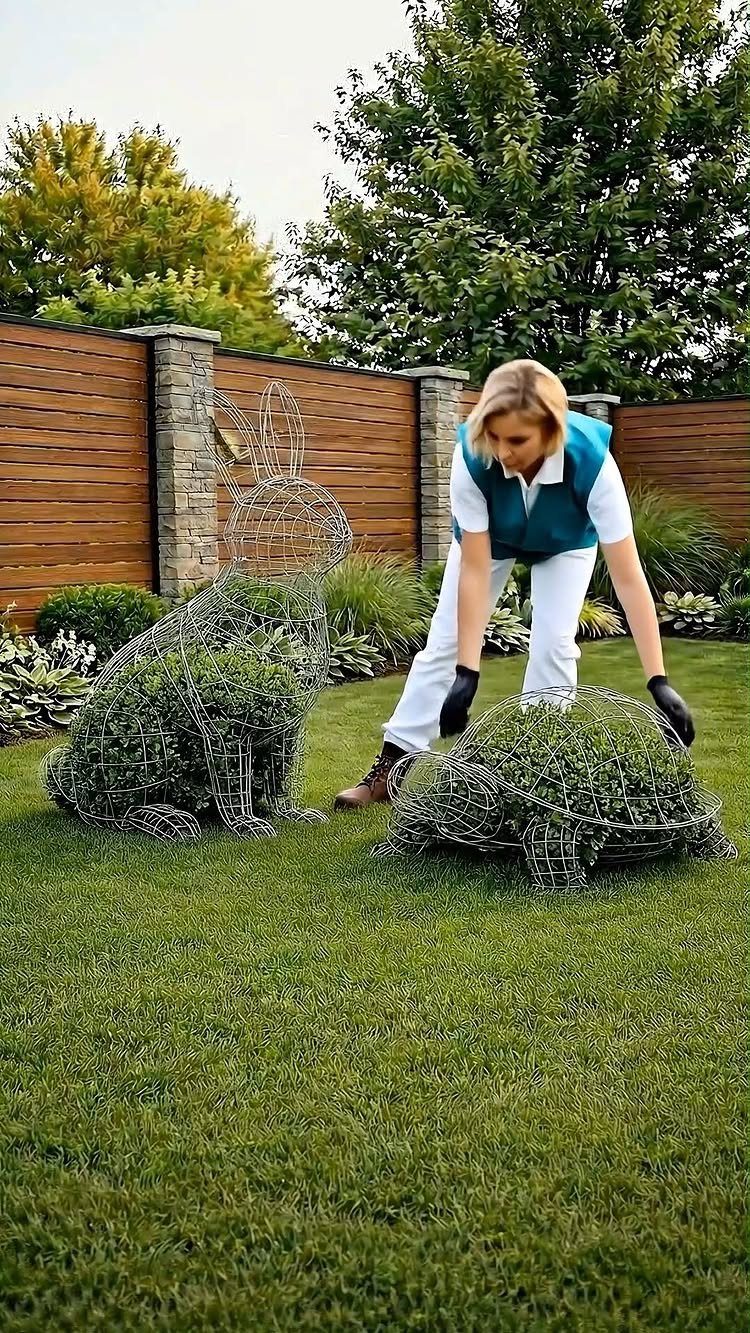
A wire frame shaped like a rabbit or turtle, packed with sphagnum moss and planted with small-leafed vines, becomes a living shape that grows in over the season. The sculpture disappears under green by August.
Fill the frame with moistened sphagnum, working it tight so roots have something to grip.
Poke in ivy or creeping fig starts every few inches, and water until the moss is saturated. The frame handles the shaping, so there is no clipping or training, only waiting.
Set it where the sprinkler reaches, or the moss will dry to straw in July heat. A frame this size needs daily attention in dry spells, so place it where you will see it and remember.
25. Tiered Circular Garden Bed
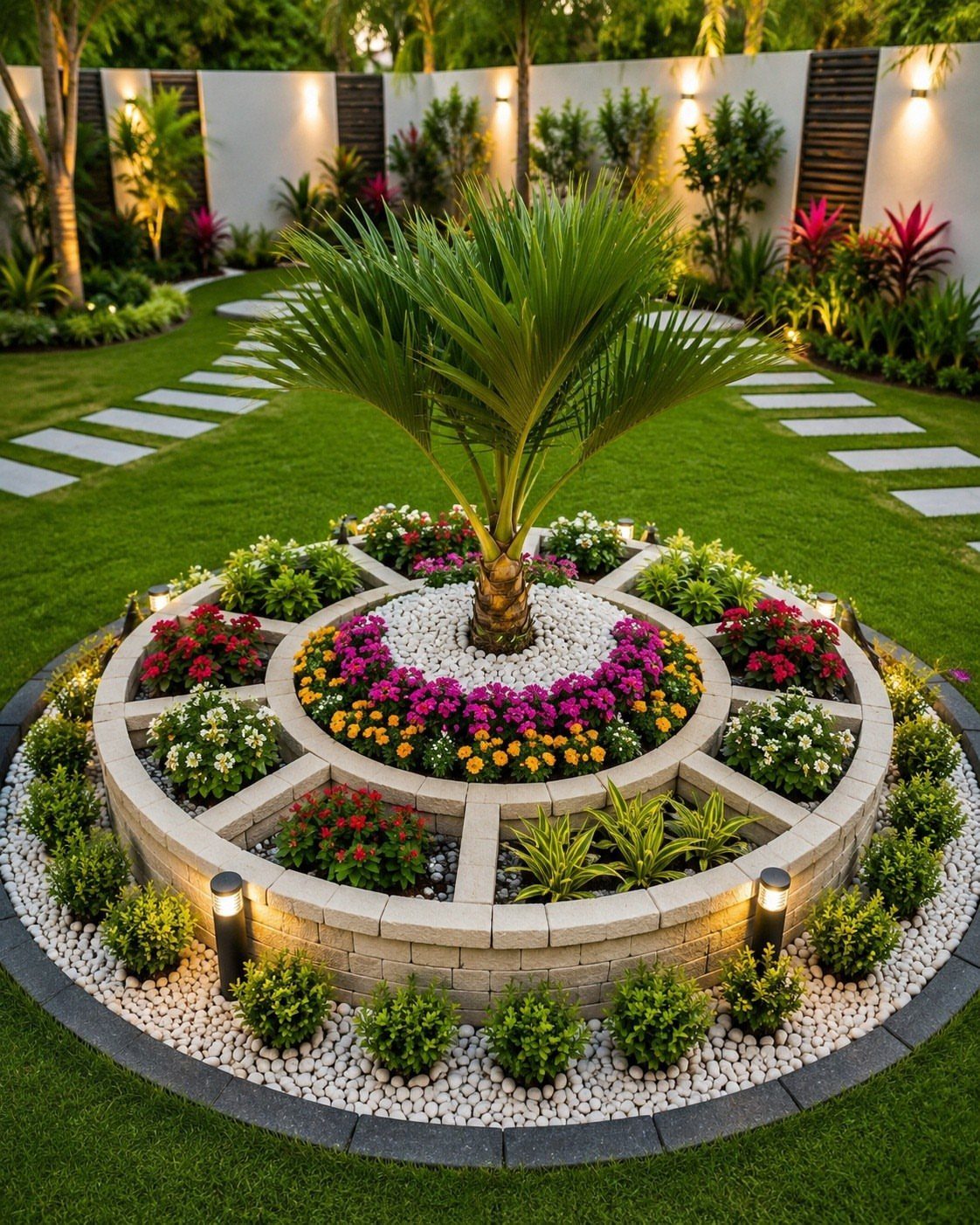
Concentric rings of stone step upward like a small amphitheater, each tier catching sun at a different angle and draining faster than the one below.
The center holds a specimen plant, a palm or a slender conifer, and the rings radiate outward in color: hot blooms near the core, cooler tones and gravel mulch at the edge where feet pass closest.
Dry-stack fieldstone or use precast concrete rings if the curve defeats your patience.
Each tier wants a solid layer of good soil over compacted base, and a gap between stone and soil line so mulch does not spill onto the lawn.
Build from the center out, checking level at every ring; a tilted circle reads as a mistake, not whimsy.
Annuals in the outer ring let you repaint the scheme yearly.
Perennials deeper in settle and spread, their roots stabilizing the slope. Water the center longest; the high point dries first, and the palm or conifer there has no neighbor shading its feet.
A bed this shape mows around cleanly, no corners to edge by hand. That is the practical gift it gives back for the work of laying stone.
Choosing a Garden Style
Symmetrical beds and clipped hedges look finished when you anchor them with one large piece: a statue, a fountain, a tall urn.
Without that center point the eye keeps wandering. The wildflower meadow option trades structure for pollinator habitat and a prairie-like feel, which means taller plants and less defined edges than the layered border entry.
Coastal, farmhouse, and fairy-garden themes are also easy to adapt to the space and budget you have. If the list’s projects appeal, the honest fit is probably cottage, eclectic, or wildflower; the rest of the list assumes informality, not geometry.
Incorporating Color
A cottage garden’s variety of flower colors can feel chaotic without something holding it together, whether that is a repeated hue in the hardscape or a theme chosen from the start.
The embossed concrete stepping stones use a butterfly shape, but the real lasting color is in the plants around them.
Color theory is not about more color. It is about knowing why the warm light works and the cool light does not.