These ideas run from a $50 tabletop bowl up to a sunken circle that needs some planning and maybe a permit check.
What decides which one is yours is whether you want the fire to move with you, stay put, or become part of the ground itself.
Before you grab that stack of landscape pavers, check the block specs. Not every paver is rated to sit right against a metal insert and take direct flame.
[link-whisper-related-posts]1. Gravel Surround Fire Pit
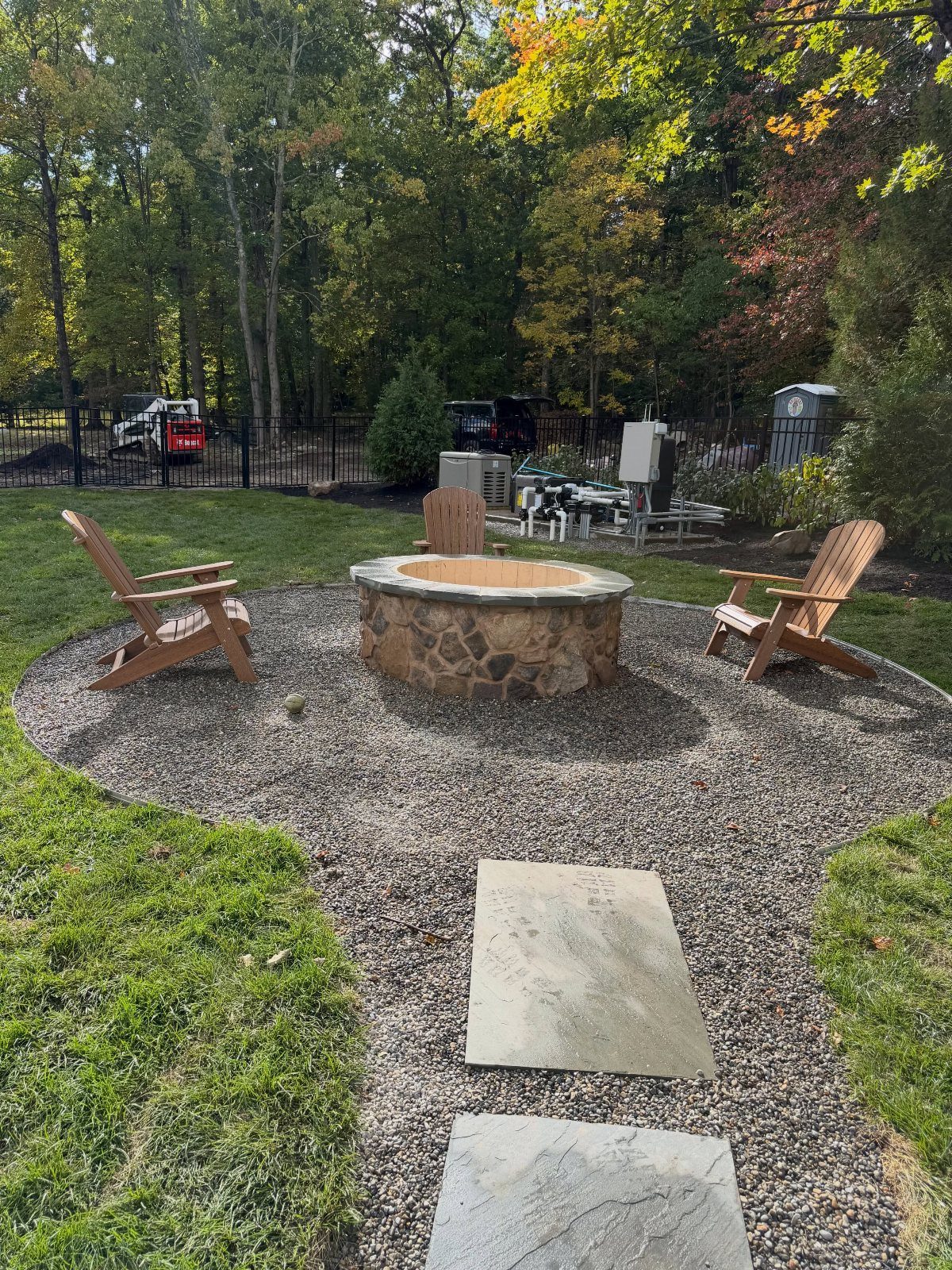
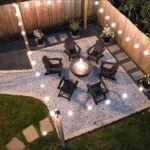
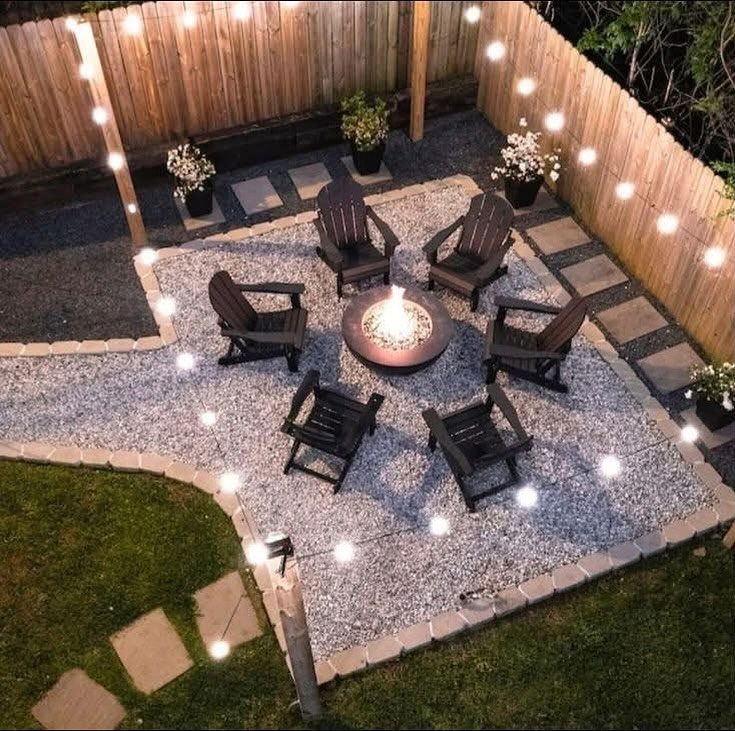
A stone fire pit centered in a gravel circle keeps the weekend build simple and the look clean.
2 tons of medium gravel, picked up by the truckload from a local yard, fills the surround for roughly the cost of a nice dinner out.
The gravel layer does the safety work: it blocks grass and weeds, catches stray sparks, and frames the pit so the space still feels finished after dark.
Wood Adirondack chairs or any seating you already own drops right onto it. No mortar, no leveling sand, no second trip to the store because something did not fit.

Durable Construction: The Silver Round Galvanized Fire Pit Ring is made from 0.8MM thick high-quality galvanized steel, ensuring long-lasting durability and resistance to rust or corrosion
2. Paver Patio Fire Pit
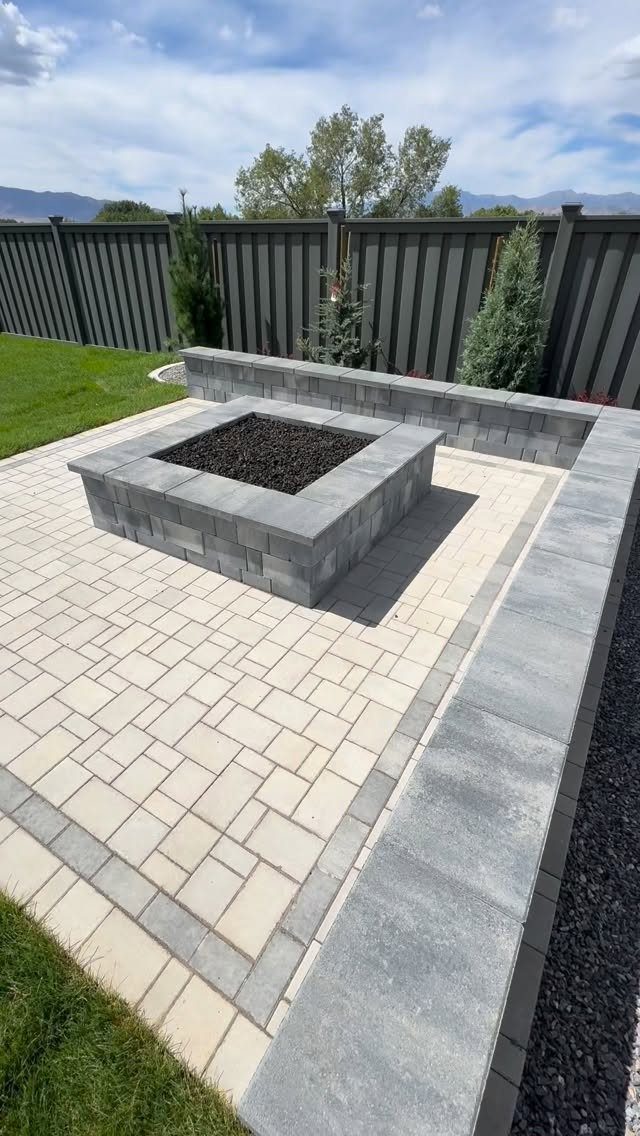
A square grey stone fire pit set into a light paver patio reads as one deliberate plane rather than a pit dropped onto grass.
The paver base kills maintenance, keeps chairs level, and gives you a stable surface for the cooler months when the fire stays off.
Landscape pavers are not all rated for direct flame, so check the block specs against an approved metal insert before you buy.
Dry-fit the ring before you commit anything to adhesive, stagger the joints so they do not line up, and keep every air gap the manufacturer calls for open.
One block color and one gravel tone do the visual work; the restraint is what makes it look planned.

Easy Installation: The 7-piece fire pit ring insertion kit is easy to assemble and can be assembled in just a few minutes.Seamless design allows for easy installation and integration into your DIY fire pit project.Fixed with screws, it will not easily fall off during use. Let you have more time to enjoy the joy brought by flames.

Upgraded Steel Construction: Heavy-duty fire pit ring is made of sturdy and thickened steel, with a black high-temperature and rust resistant powder coating on the surface, which can withstand the hottest flames and harsh weather. The fire ring coating is not easy to peel off and is durable for daily use.

Thick Heat-Resistant Carbon Steel Construction: Crafted from durable carbon steel with an upgraded 1.4mm thickness, this fire pit ring is built to withstand repeated wood-burning use. Its solid structure resists warping under high heat, while the heat-resistant finish ensures long-lasting strength and reliable performance for countless backyard fires year after year
3. Classic Stone Circle
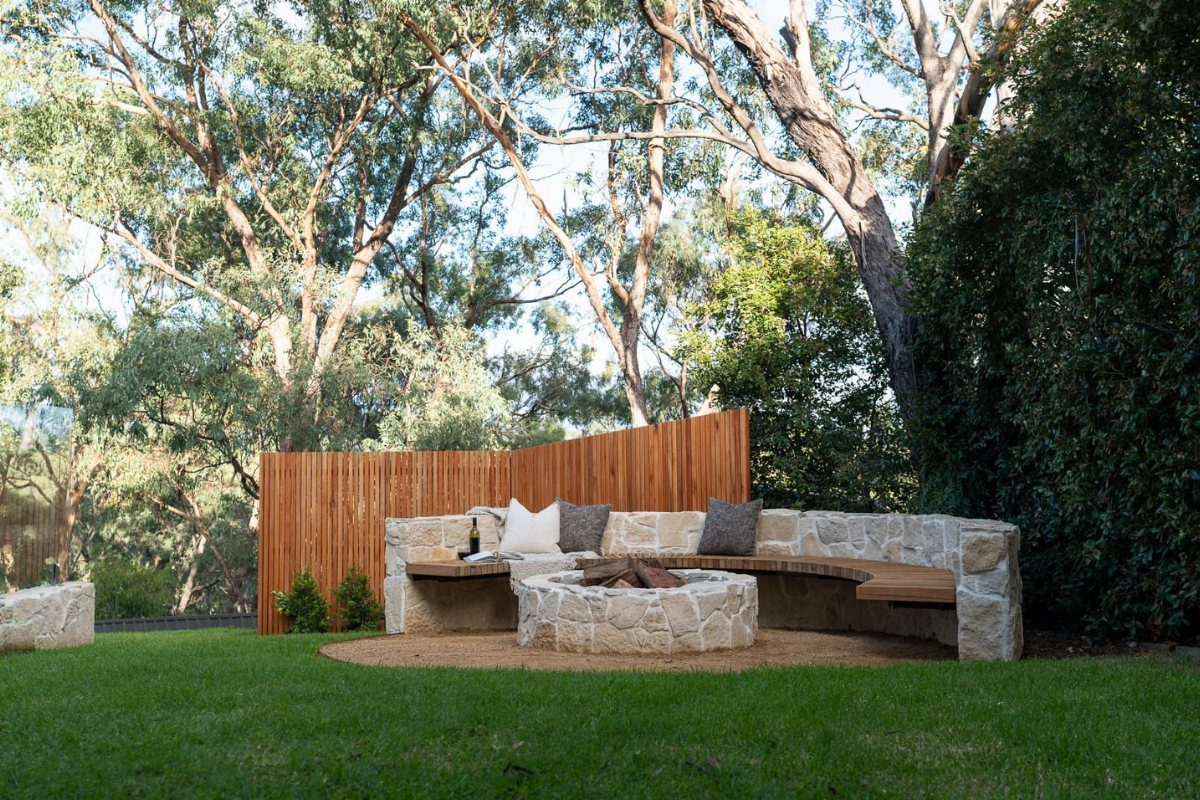
Large stones ringed into a circle is the fire pit your grandfather built, and it still works. The shape naturally pulls chairs inward, no geometry degree required.
A metal fire ring dropped inside buys you structure and airflow; concrete block kits with a stone face speed the build if you do not have a truckbed of fieldstone access.
This version smokes more than gas, and it wants grass or pea gravel underfoot, not a wooden deck.
Stone laid in a circle wears for decades and costs less than most decks; a bench helps, but the ring alone holds the space.
Easy Installation: The 8-piece fire pit ring insertion kit is easy to assemble and can be assembled in just a few minutes.Seamless design allows for easy installation and integration into your DIY fire pit project.Fixed with screws, it will not easily fall off during use. Let you have more time to enjoy the joy brought by flames.

Open Bottom Design – Perfect for DIY Stone/Brick Fire Pits: This is a fire pit liner / insert only, not a complete fire pit. It has no bottom, allowing direct ground contact or placement over sand/gravel. Designed to be surrounded by stones, bricks, or pavers for a custom, professional-looking outdoor fire pit. Ideal for above-ground or in-ground DIY projects.

4. Repurposed Brick Fire Pit
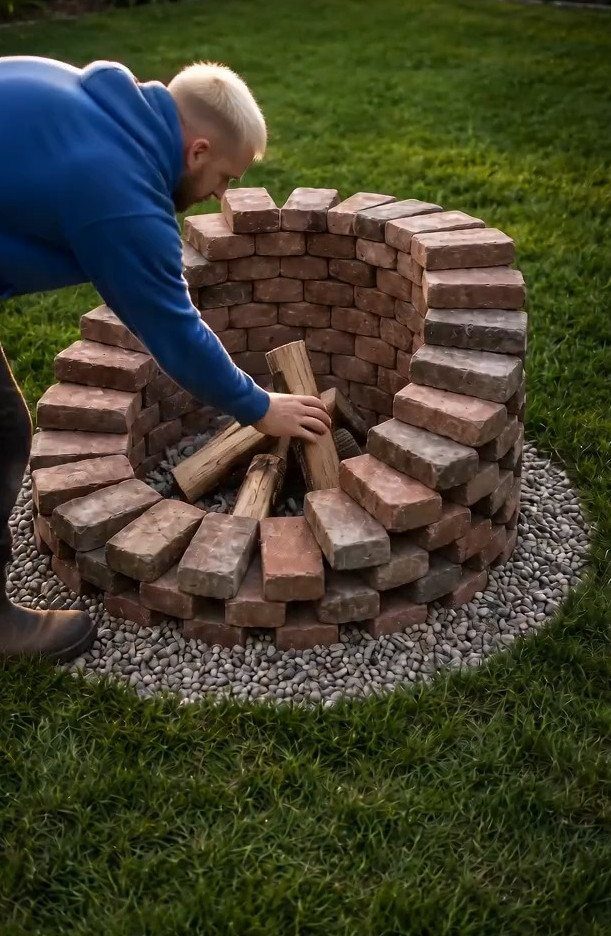
Salvaged brick stacks into a tiered ring for the cost of muscle and an afternoon. A single run to the big-box store covers the outside ring in new concrete pavers if you are not scavenging them.
Square or circular, the shape is yours. Loose pebble around the base is extra work, but it hides the foundation and keeps sparks off the lawn.

RUTLAND Firebox Bricks are a distinct tan color, unlike the competition's pink, which indicate a poor and improper curing process

Crafted for Excellence: GIRtech FORGE Firebricks redefine what durability and performance mean in high-temperature environments. Whether you're setting up a forge, wood stove, grill, kiln, or even a fire pit, these firebricks are your steadfast partners in enduring the most intense heat challenges

PERFECT FOR WOOD STOVES AND FIREPLACES: Our fire bricks are made from high-quality mullite and are designed to withstand high temperatures, making them ideal for use in wood stoves, fireplaces, and other heating applications.
5. Fire Pit Table
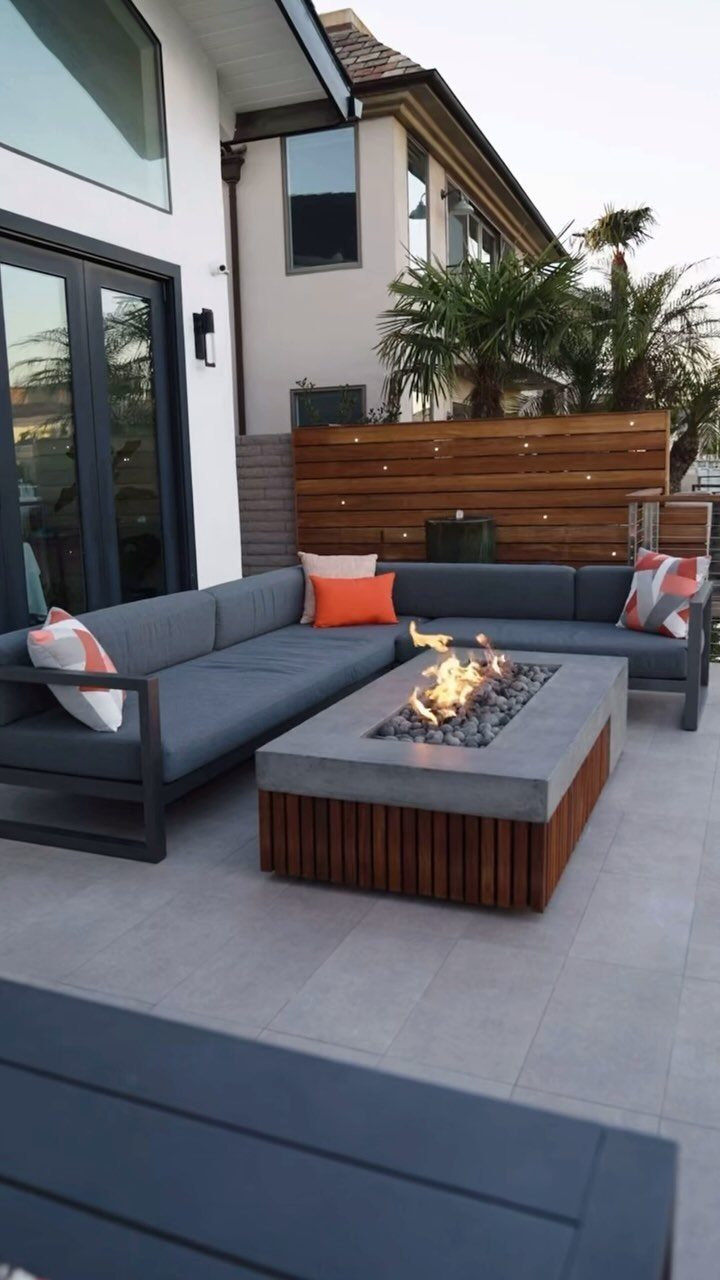
A fire pit table earns its floor space by working when the flame is off.
A concrete and wood rectangle the size of a coffee table drops into an L-shaped sectional the same way, except the flame comes from a gas line and the ash goes nowhere.
Propane or natural gas lines keep smoke out of your eyes and your clothes; the trade is losing the wood-fire sound and the marshmallow stick.
If your seating already wants a rectangular center and you would rather plan a room than pour concrete, this is the direction. Match the table footprint to the seating you already drag outside.

Perfect S'mores Experience: Create magical moments with our tabletop fire pit - ideal for roasting s'mores and marshmallows. Brings cozy warmth to any outdoor space, from garden patios to intimate balcony settings

SIMPLE ASH CLEAN-UP — The stainless steel ash base collects residue beneath the fire bowl. Once fully cooled, twist and lift the bowl off the base, then empty the ash. This smokeless tabletop fire pit ensures you spend the evening enjoying the fire bowl rather than dreading next morning's chore.
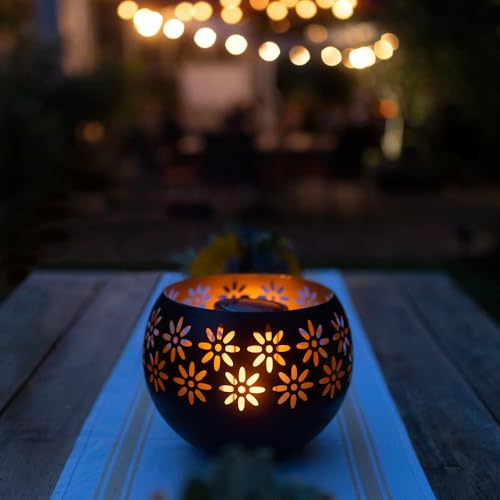
Stunning Solar Lantern Design: Enjoy the warm, imitation fire glow of this solar lantern, enhancing your backyard, landscape, patios, decks, and even indoor spaces with all season use
6. Sunken Conversation Circle
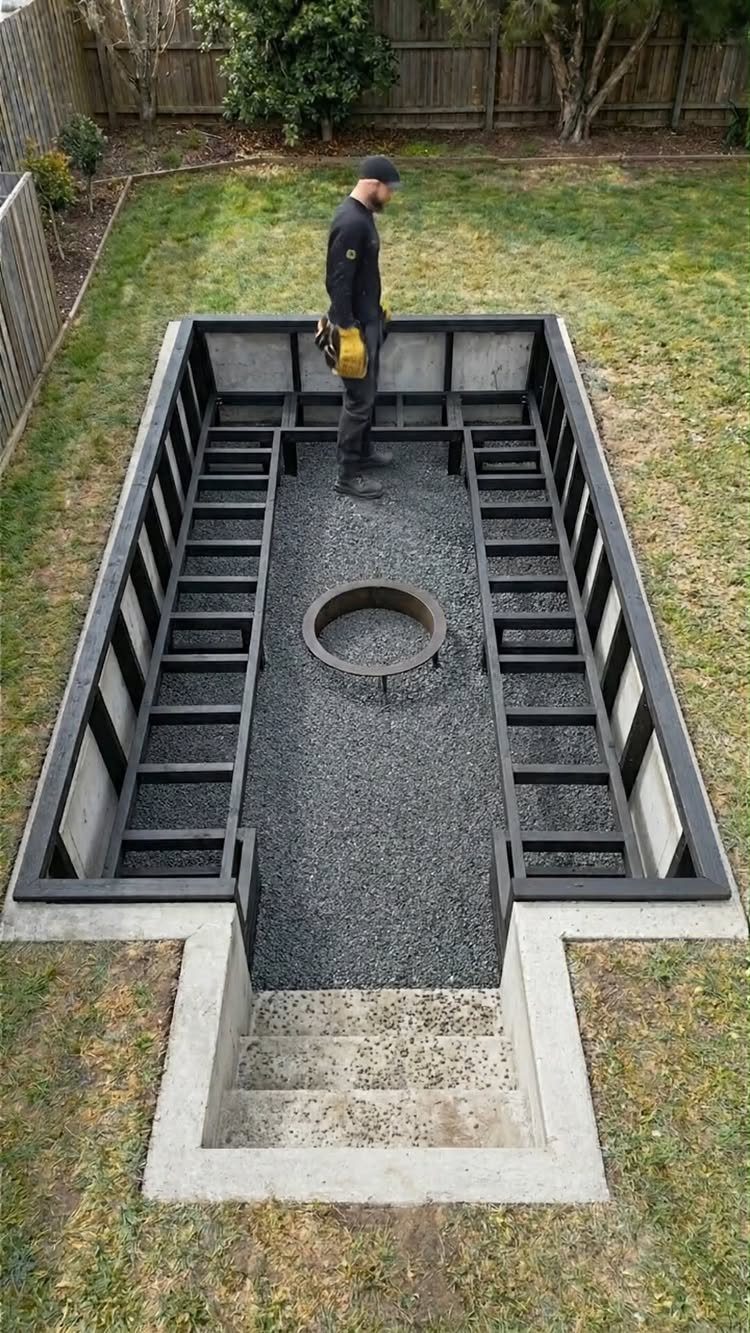
Dropping the floor a step turns a fire pit into something like an outdoor room, except you are moving dirt and solving water first.
Any pit sitting below the yard line will pool water at your feet unless you plan for it.
Get the water out, hold the walls up, light the steps, and mark at least one way up in the dark before you break ground.
Local permits and clearances come first; comfortable sightlines come after. Low-glare step lights and UV-resistant cushion fabric are not decorative flourishes here, they are how you get back to the house without a twisted ankle.
Best suited to a yard with slope to work with and a budget for the structural work.

【EASY ASSEMBLE】Portable and easy to disassemble, made by metal with large usable area but light weight, also easy to transport, allowing you to quickly build a campfire any where in the wild.

Rust-Proof Steel Fire Ring You Can Rely On – Crafted from heavy-gauge steel with a high-temperature powder coating, this metal fire pit ring resists rust and chipping – even after repeated rain and high heat. A durable firepit ring that lasts season after season

High Quality Material: Our outdoor fire pit rings are made of thick steel material that can withstand high temperatures, with a matte black high temperature powder coating on the surface. The combination of these two features ensures that it is durable, not easily worn out, and built to last. With this fire ring for outside fire pit, you can create a bright and even flame in your backyard, allowing for safe and controlled fires that can continue for years
7. Cinder-block Look with Insert
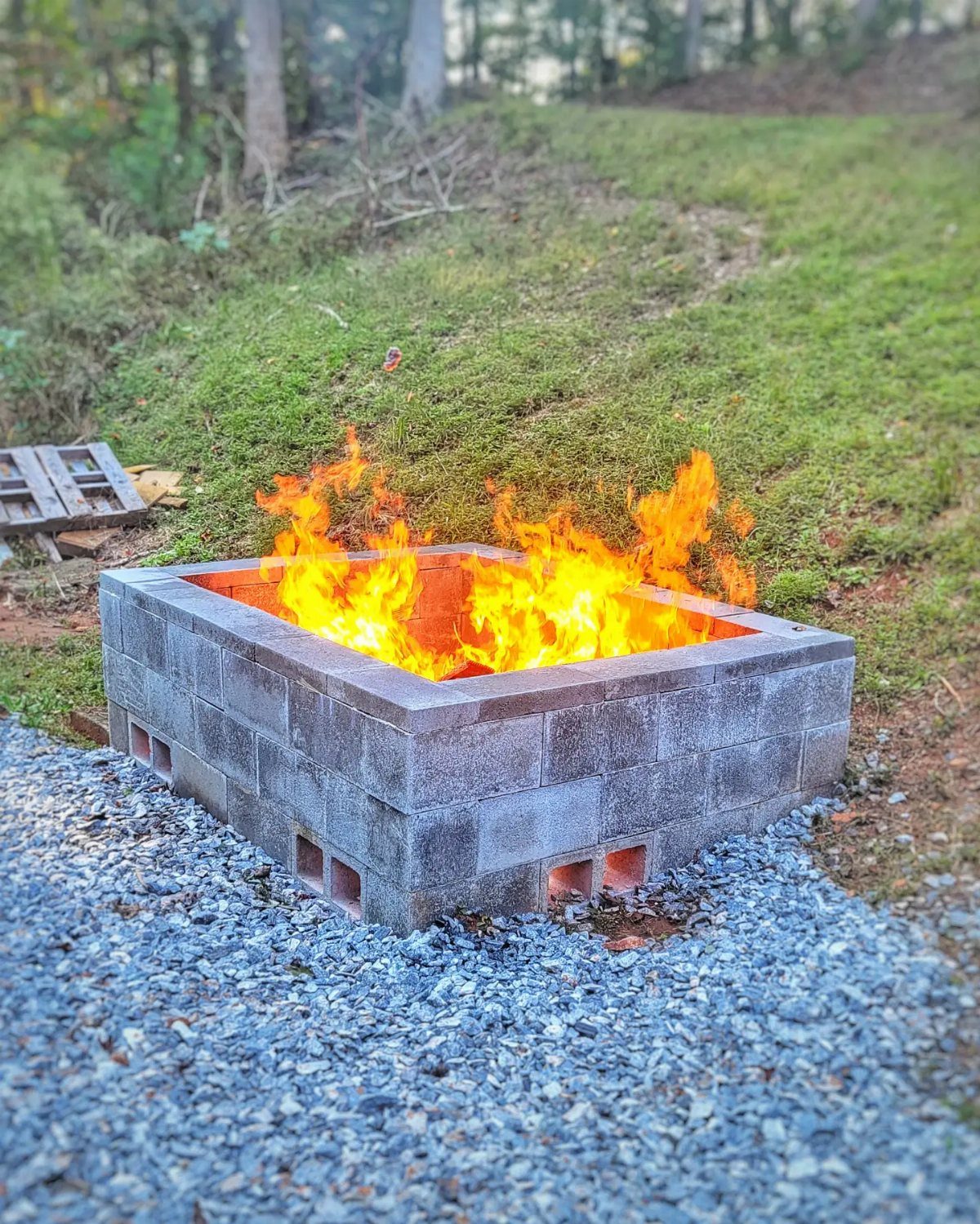
Grey cinder blocks stacked square around a burning insert give a fire pit the plain graphic look of a concrete planter.
The blocks do the visual work; an approved metal insert or heat barrier does the safety work, since ordinary concrete spalls and cracks under direct flame.
Build this for $80 to $275 and half a day. Size the block surround to the insert’s dimensions and clearance specs, not the other way around.
A non-combustible base keeps the ground safe, and dry-stacking the blocks without mortar lets you adjust the ring until it sits true; matching the surrounding ground to one material, gravel or pavers, pulls the whole area together like an outdoor room.

[Ventilation Holes Desgin] Grovellis fire pit has enhancing airflow and oxygen circulation, the addition of a top circle of ventilation holes promotes thorough wood combustion, boosting burning efficiency while minimizing smoke. This design lets you fully engage in joyful gatherings around the fire pit, creating lasting memories and relishing the dancing flames with peace of mind among family and friends.[Attention: There is no bottom]
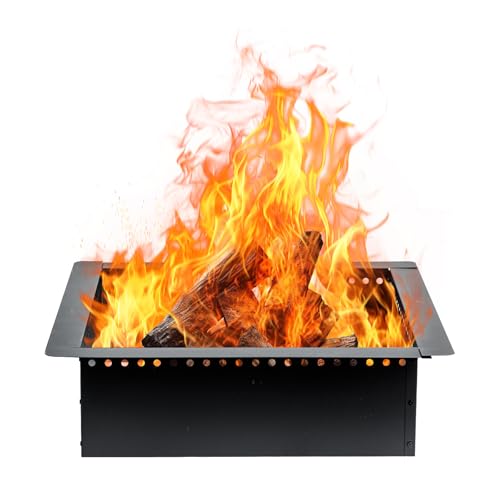
[Ventilation Holes Desgin] Grovellis fire pit has enhancing airflow and oxygen circulation, the addition of a top circle of ventilation holes promotes thorough wood combustion, boosting burning efficiency while minimizing smoke. This design lets you fully engage in joyful gatherings around the fire pit, creating lasting memories and relishing the dancing flames with peace of mind among family and friends.[Attention: There is no bottom]

【Ventilation Holes Design】The smokeless fire pit ring is equipped with ventilation holes, which are arranged in circles at the top. They effectively enhance airflow and oxygen circulation, promoting thorough wood combustion, improving burning efficiency, and significantly reducing smoke. This allows users to enjoy a cleaner and more coamfortable fire experience during gatherings with family and friends.
8. Tabletop Fire Bowl
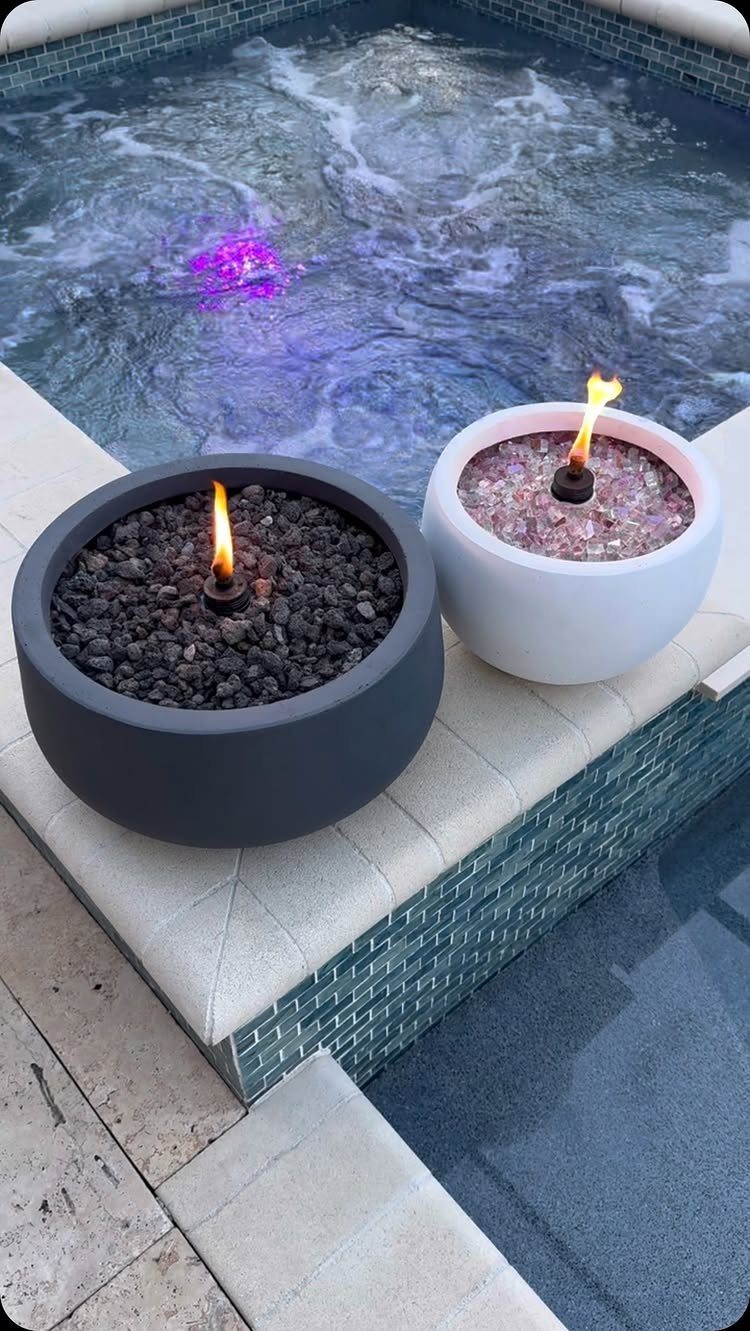
A tabletop fire bowl burns on the edge of a pool or a patio table for the spaces where a dug pit makes no sense.
Purpose-built burners running on propane or gel fuel sit on heat-compatible surfaces; lava rock or glass fills the bowl and tames the flame to something you can talk across.
Costs run $50 to $225. This is not a marshmallow fire, and it will not heat a crowd.
It is a moving focal point: the hot tub ledge, the bistro table, the apartment balcony where nothing else is allowed. Check the fuel type before you buy; some bowl bodies ship without the burner included.

Durable & Safe -- Crafted with durability, our fire rings are constructed using high-quality steel materials that can withstand high temperatures. Additionally, it provides a secure barrier, effectively keeping ash and debris from falling through the gaps, ensuring a tidy and controlled environment. With its robust construction, our firepit liner guarantees long-lasting performance, allowing you to relish countless hours of warmth and relaxation around your fire pit.

GREAT SIZE FOR GATHERINGS: This outdoor fire pit ring is large enough for many people to gather around a fire in the backyard or campground. The inner diameter measures 27". The outer diameter is 31" x 8.5" H and weighs 11 lbs, making it a great size for a DIY fire pit project.

HEAVY-DUTY CONSTRUCTION: Built from durable, high-quality solid iron, this fire pit steel ring insert is both sturdy and long-lasting, providing exceptional durability for your outdoor fire pit, whether used above or below ground. Despite its heavy-duty build, it remains lightweight enough for easy transport, perfect for camping or outdoor gatherings.
9. Portable Fire Pit
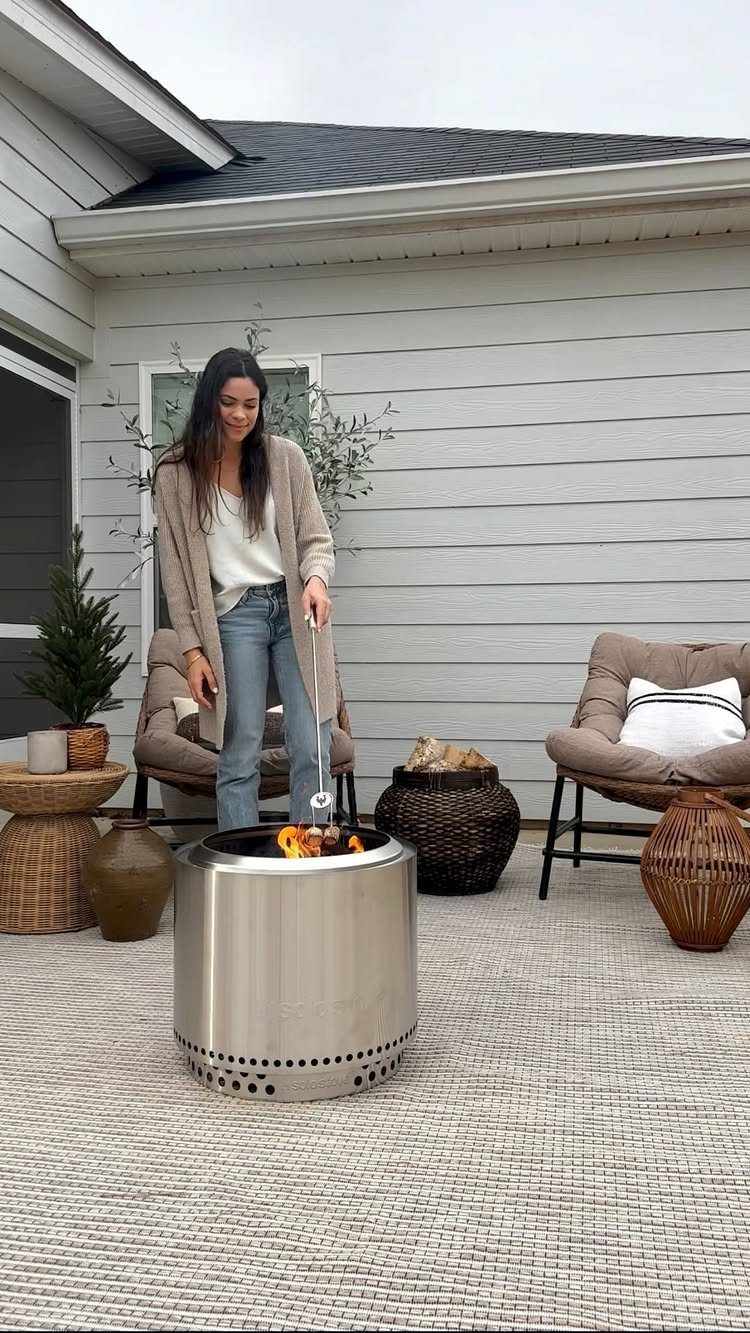
The fire vessel itself can be store-bought; the project is the landing zone you build for it.
A listed portable pit on a level, non-combustible surface, surrounded by lightweight chairs and side tables that move back to lawn or storage when the fire is cold. Budget $100 to $450 plus the pit, half to a full day.
A portable pit is not safe on every surface, and a warm unit never moves. Best for renters or anyone whose yard changes season to season.

Food Safe: Made of clay, it can be in direct contact with food and can be used in pizza ovens and smokers; it has strong thermal insulation properties, helping you save wood and save money.

Vermiculite Material Fire Bricks - Can withstand high temperature of 2200F, has strong thermal insulation performance, help you save woods and money.

PERFECT FOR WOOD STOVES AND FIREPLACES: Our fire bricks are made from high-quality clay and are designed to withstand high temperatures, making them ideal for use in wood stoves, fireplaces, and other heating applications.
10. Chiminea
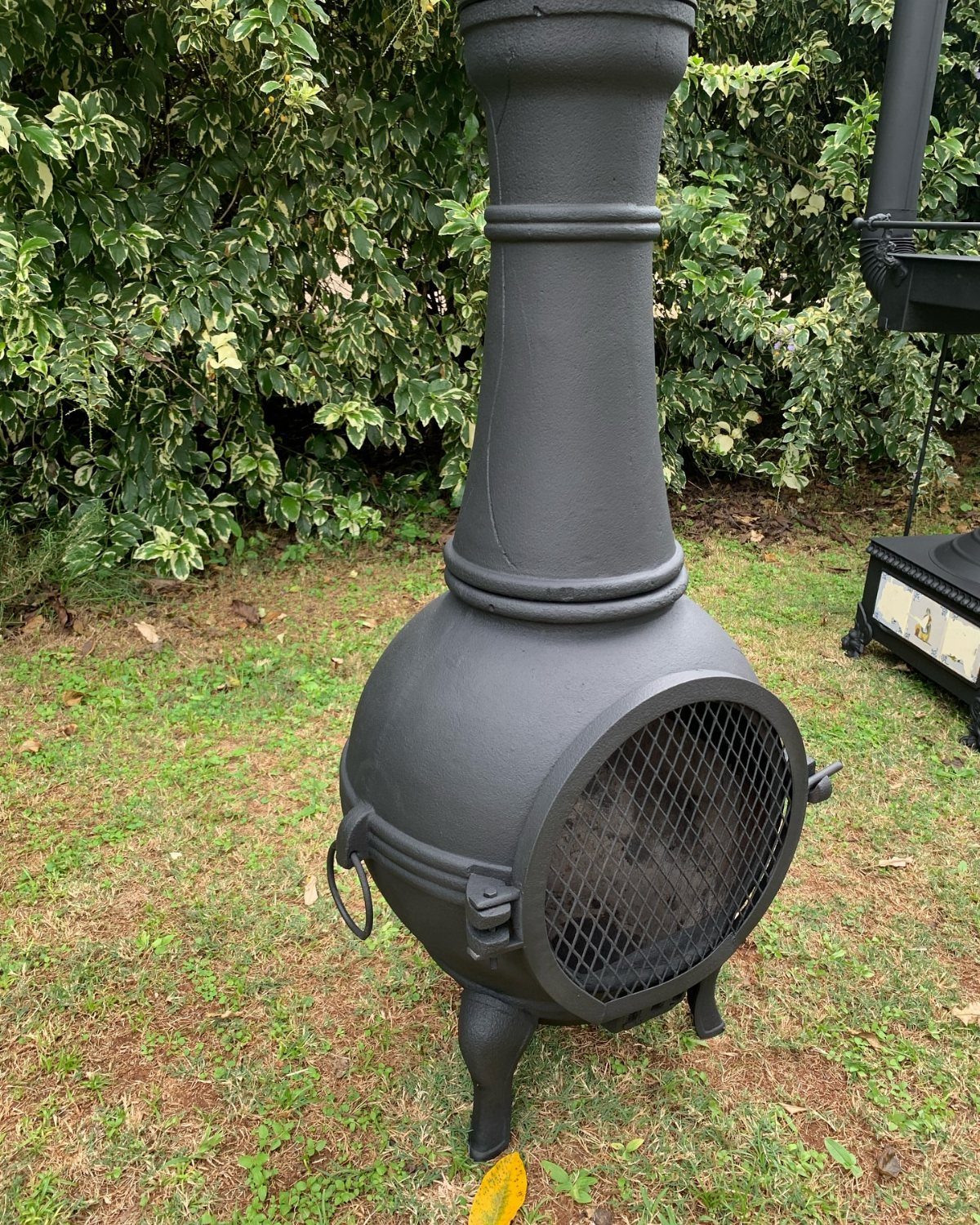
A chiminea is a miniature fireplace with a chimney, usually clay or cast iron, that directs smoke upward instead of into your eyes.
The compact footprint suits small yards where a ring of chairs around an open pit would swallow the space. Clay holds heat longer; metal ships easier and handles a knock.
Either version wants level ground and clearance from anything overhead or alongside. The chimney helps, but it does not make a chiminea smokeless; wind direction still matters.
No installation cost, no dig, no permit in most places. Just set it, learn its draft, and feed it small.

50,000 BTU Powerful Heat Output: Create the perfect ambiance to hone in on the conversation. Our 28-inch propane fire pit can reach up to 50,000 BTU, ensures your patio and deck stays warm and inviting. The modern design and smokeless flame make it the perfect centerpiece for any occasion.

Stunning Solar Lantern Design: Enjoy the warm, imitation fire glow of this solar lantern, enhancing your backyard, landscape, patios, decks, and even indoor spaces with all season use

Natural Stone Texture: Molded concrete body features natural stone finish with copper decorative details and bamboo base.
11. Gabion Stone Cage Fire Pit
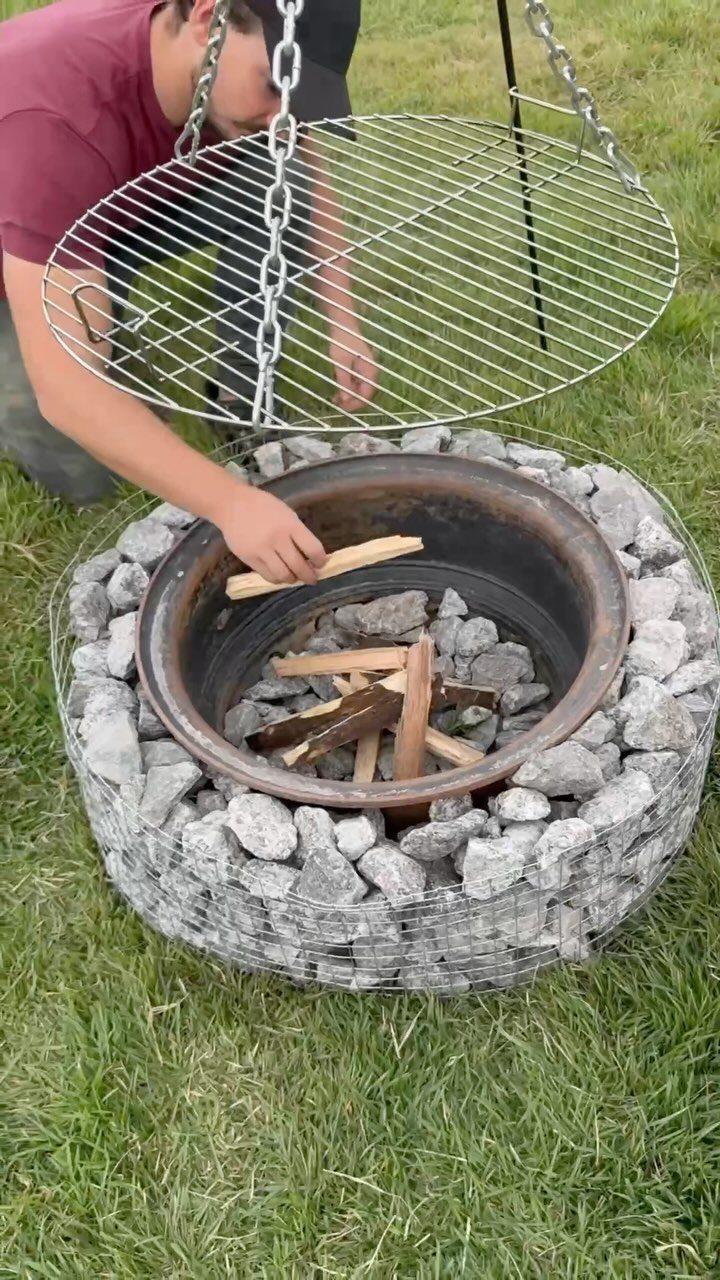
A metal fire ring inside a wire gabion basket stuffed with stone turns industrial mesh and raw rock into something that looks built by hand.
The gabion does not need mortar or perfect leveling; the cage holds the shape, and the stone fills the gaps.
A suspended cooking grate turns the setup into something you cook over. The visible version uses natural grey stone and a round basket, though the shape is flexible.
Build time is a morning, not a weekend. The trade is weight: once filled, the basket stays where you put it.
12. Rusted Steel Bowl Fire Pit
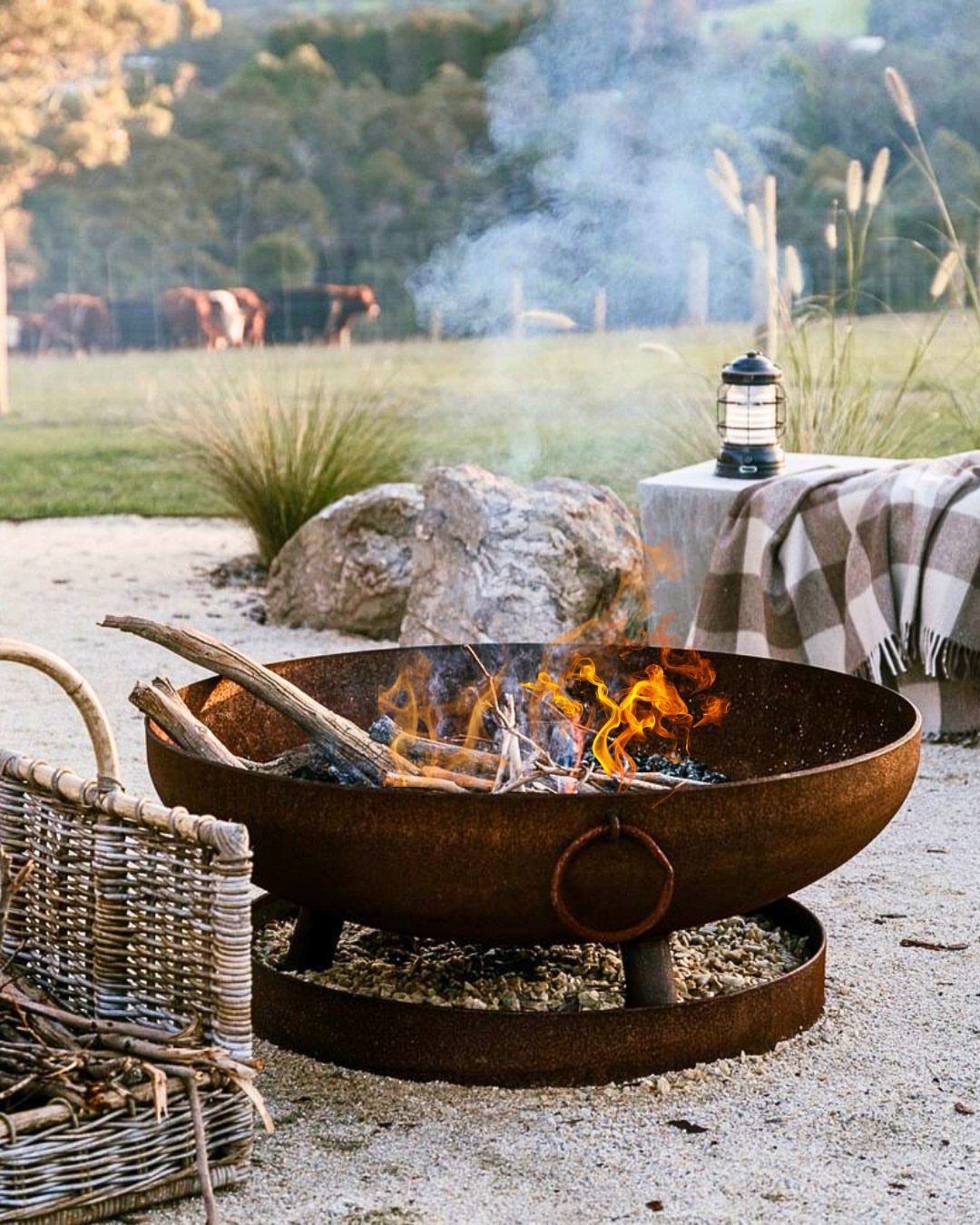
A rusted steel bowl on gravel is the fire pit that admits it will weather. The patina is the finish; no paint to maintain, no polish to keep.
Set the bowl level on crushed stone or gravel, give it airflow underneath, and let the rust stabilize where it sits. The look is specific, western and spare, and it does not try to match siding or patio furniture.
Check local burn rules before you buy; some counties restrict open wood fires regardless of vessel. This one suits the person who wants the fire to look like it has already been there for years.
13. Fire Pit with Glass Rocks
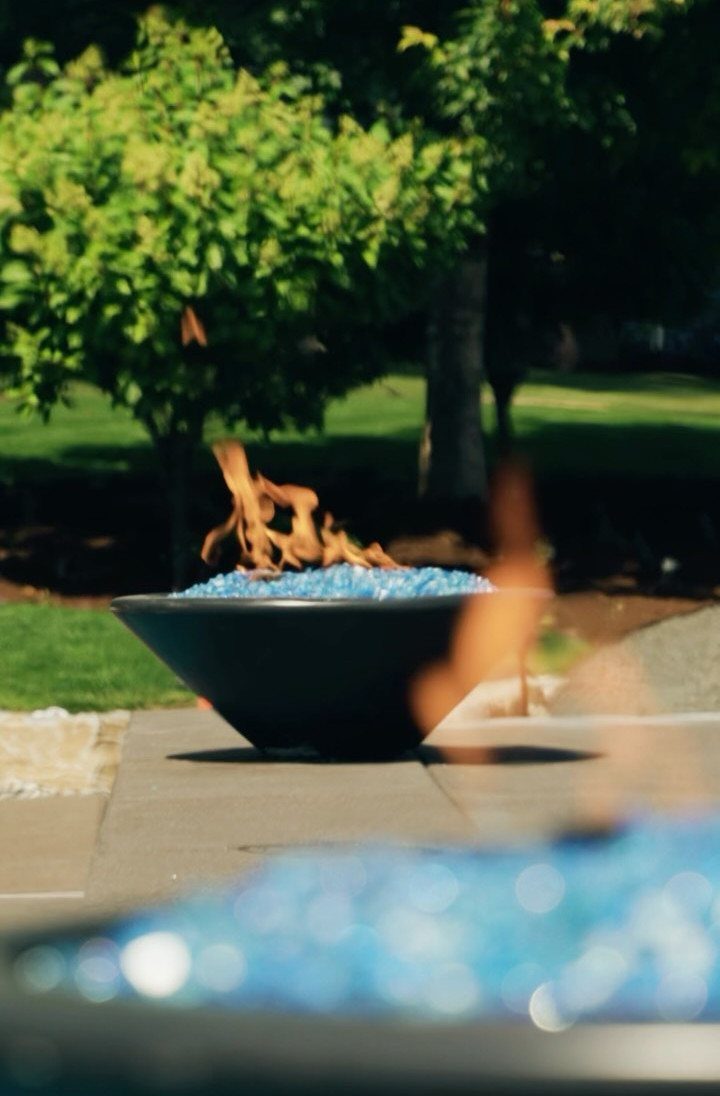
Blue tempered glass sitting in a black metal bowl turns flame into something that reads more lamp than campfire.
The glass beads do not burn; they reflect and shape the light upward, which is why gas fuel, not wood, runs underneath.
That means no smoke, no ash, no marshmallow stick, though the heat still reaches the people seated around it.
The bowl wants a level stone or concrete surface, not grass or deck boards, and the base beneath it needs to be non-combustible the same as any other pit.
Costs run higher than raw stone because you are buying 2 finished materials: the vessel and the glass fill.
Replace the glass gradually as it dulls; a single color reads cleaner than a mix. This suits the person who wants the fire to look deliberate from the first match, not weathered in over seasons.
Budget-friendly Materials
Salvaged stone or brick keeps a classic fire pit under $200 if you are willing to hunt the material.
Fieldstone from a demolished wall, brick from a torn-down chimney, or leftover block from a neighbor’s patio build all work. The cost is mostly time: checking yards, loading, and sorting for size.
New material is not much more for a small ring. Landscape pavers run $75–$250 for a simple circle, with one trip to the store and no hunt.
The trade is character versus speed. Salvaged stone looks settled from day one; new block looks clean and reads as deliberate.
A single color on the walls plus one surface underfoot does the heavy lifting for cheap.
2 tones of stone or a mix of old and new brick fight each other. Pick what you found most of and let it dominate.
Safety Considerations
Call your fire department before you mark the circle. Codes vary by city: 15 feet from the house in one place, a different distance somewhere else, and the pit diameter itself may be capped.
Use the utility-locating service before you dig. Private lines may not show up on the public map, so verify those separately.
Not every block tolerates flame.
Landscape pavers, river rock, and decorative concrete can spall or crack under heat. Match the material to the insert specs, and match both to the fuel you plan to burn.
Clearances come from 2 places: local code and the product instructions.
Use whichever number is larger. Overhead branches, eaves, and furniture all count.
Keep the path to the pit clear after dark.
Seating Arrangements
The pit shape only matters once you know how people will sit.
A conversation circle wants 4 to 6 chairs pulled inward. A sofa-led lounge wants a rectangular table or a long, low bowl at the center.
Before you fix the pit position, walk the space with chairs in hand. Use the same material for every seat and leave open spots for walking in and for a drink to land.
Pathways matter as much as the seats themselves.
A clear route from the house to the fire area keeps people from cutting through the flame zone. Gravel or pavers underfoot signal where to walk.
A 30-gallon fire pit can comfortably seat eight to 10 adults in standard chairs or four to six Adirondack chairs, which have a larger footprint.
Lighting Options
String lights and solar lanterns do the work for cheap.
Run string lights along the route to the pit, not around the open flame, where heat and sparks risk the wire. Solar path lights at ankle height mark the edge of the gravel or paver field.
Spend the light budget on the approach, not the pit itself.
The fire is already the brightest thing in the yard. What you need is enough glow to move around it safely and to find the house when the evening ends.
A clear gravel or paver area, matching chairs, and a couple of small movable tables shape the mood more than any light aimed at the fire.
If the pit is safe and the seating is settled, the lighting is the easy part.
Frequently Asked Questions
What is the cheapest way to build a fire pit?
Salvaged stone or brick keeps a classic fire pit under $200 if you are willing to hunt the material.
What you spend is Saturday morning driving, loading the trunk twice, and an hour sorting flat faces from round ones so the ring stays upright.
If scavenging sounds like too much, a stack of new concrete pavers from the home center runs about $75 for a 36-inch ring; $250 gets you something wide enough for four chairs around it.
What can I use instead of a fire pit?
A chiminea or a portable fire pit works for smaller spaces or stricter setups. A chiminea directs smoke upward through its chimney and needs no dig or permit in most places.