These deck floor design ideas run from snap-together tiles you can lift away in an afternoon to herringbone hardwood that wastes half a day on the math alone.
The one that fits depends on whether you own the structure beneath your feet or answer to a landlord, and whether your weekend budget stretches to a miter saw or a whole second day of layout.
[link-whisper-related-posts]1. Picture Frame
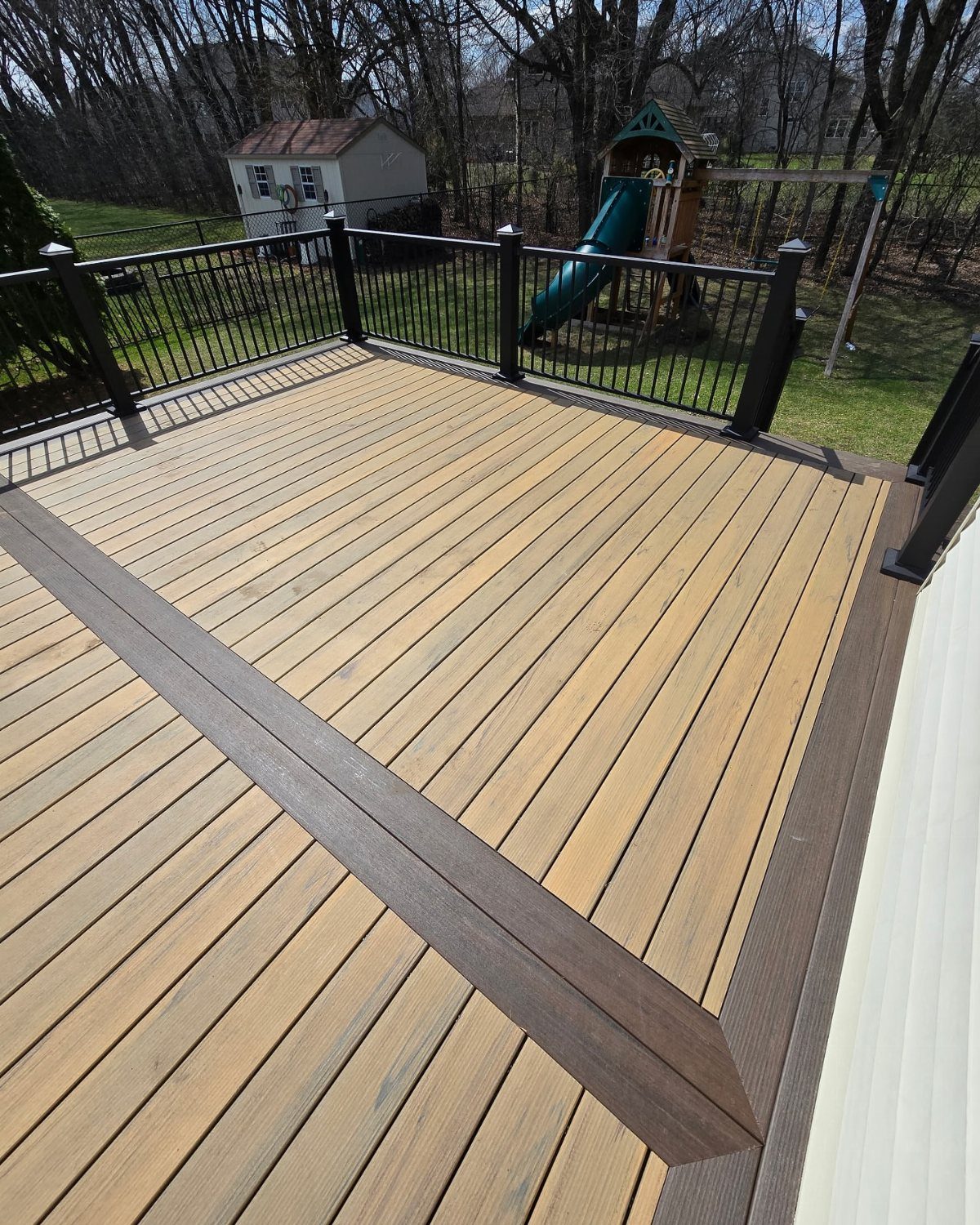
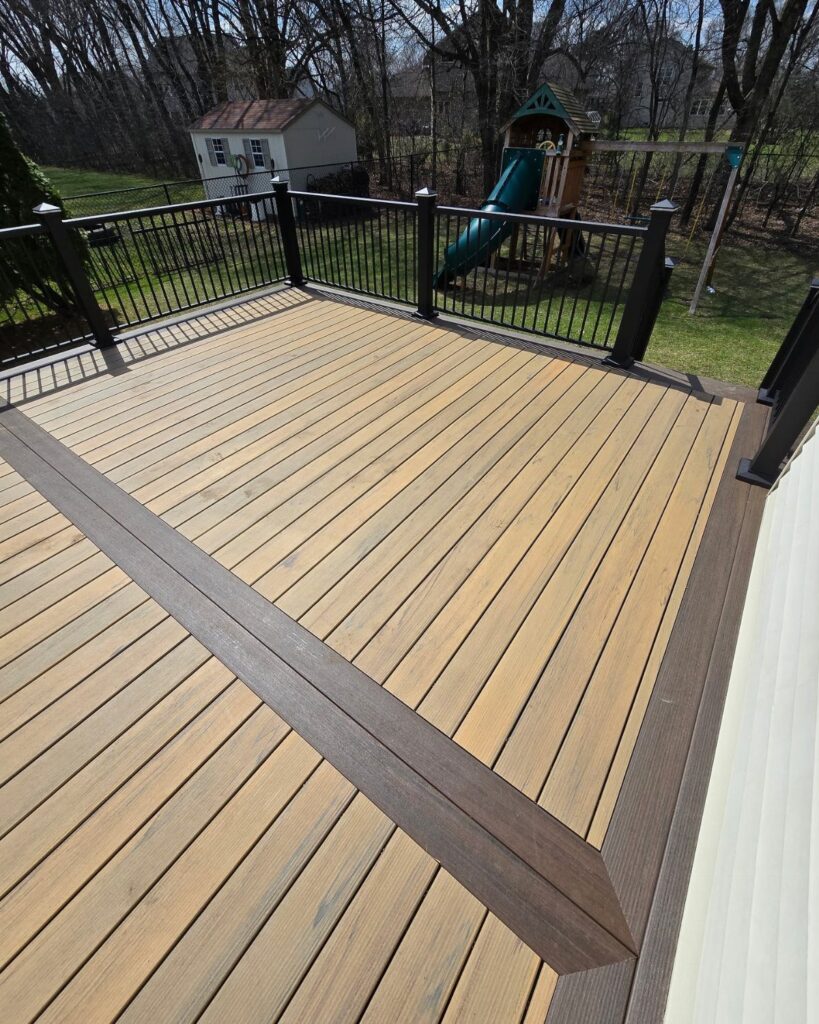
A picture-frame border turns the deck’s edge into its own finish carpentry moment.
The outer boards run perpendicular to the field, or in a contrasting tone, and the corner joints need 45-degree miters with extra blocking underneath so seasonal movement does not open a gap.
I have seen this done with a second species of hardwood or just a darker stain on the same board, and the effect is the same: the deck reads as built-in furniture rather than a platform bolted to the house.
Composite manufacturers often require specific fastening at exposed ends, so check that before you cut. 2 transition boards inside the frame make the border read even more deliberately, though that adds material cost and a second day of layout.

What You Will Receive: the package comes with 1 roll of frame bulletin board border, which is an eye catching decoration for your bulletin board or artwork. Please note that...
2. Deck Lighting
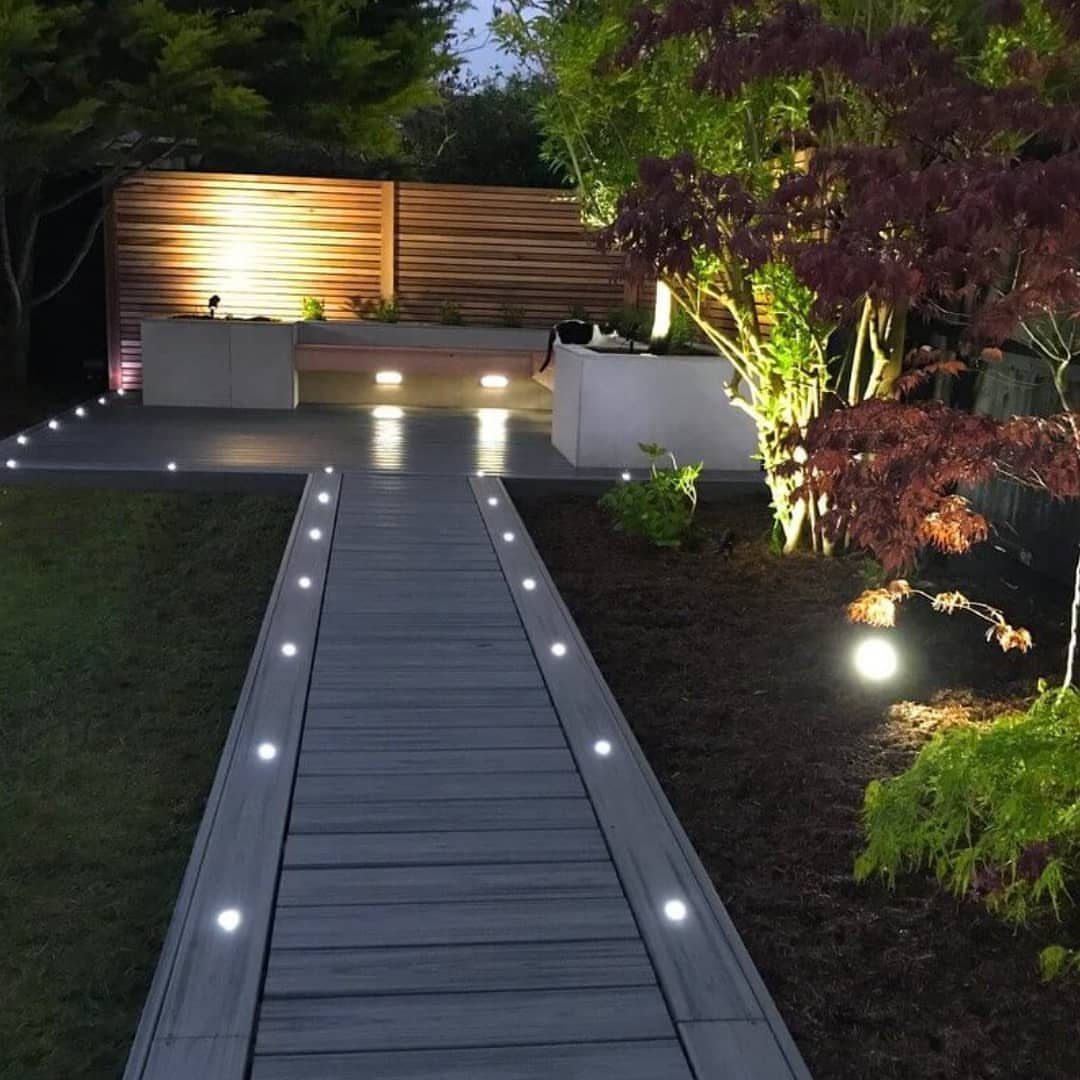
Riser lights, post caps, and recessed edge fixtures each solve a different problem.
Risers illuminate where the step is; post caps cast a pool downward for conversation areas; recessed lights along the deck perimeter mark the boundary without calling attention to themselves.
Solar options exist, but in my experience they dim out well before midnight on anything but a full charge.
Low-voltage systems wired to a transformer give consistent output and most allow dimming, which matters more than people expect, once they have eaten dinner under a glare that felt romantic in the store.
Plan the circuit before you build; retrofitting wire channels through finished decking is slow work and the filler never quite matches.

𝐏𝐑𝐄𝐌𝐈𝐔𝐌 & 𝐃𝐔𝐑𝐀𝐁𝐋𝐄 𝐀𝐂𝐀𝐂𝐈𝐀 𝐖𝐎𝐎𝐃: Made from 100% natural acacia wood with a deep-oil finish, these interlocking decktiles are sturdy, water-resistant, and built for outdoor conditions. Sanded smooth for a premium wood grain look, a smooth-finished surface, and a noticeably smoother barefoot feel - comfortable for families and pets.

Durable Acacia Hardwood Construction: These floor tiles are made from Acacia wood, known for its durability and natural resistance to outdoor elements. Our herringbone tiles not only provide strength and longevity but also bring a warm, elegant wooden finish that instantly enhances the look of patios, balconies, walkways, and more.

Wet-Area Ready, No Sealing Required: Pre-finished with cured linseed oil — a natural plant-based wood finish — these tiles install straight from the box — no sealant, no prep, no waiting. Raised base channels water underneath for patios, balconies, pool surrounds, and shower floors
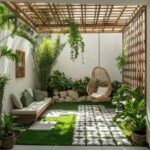
3. Deck Around a Pergola
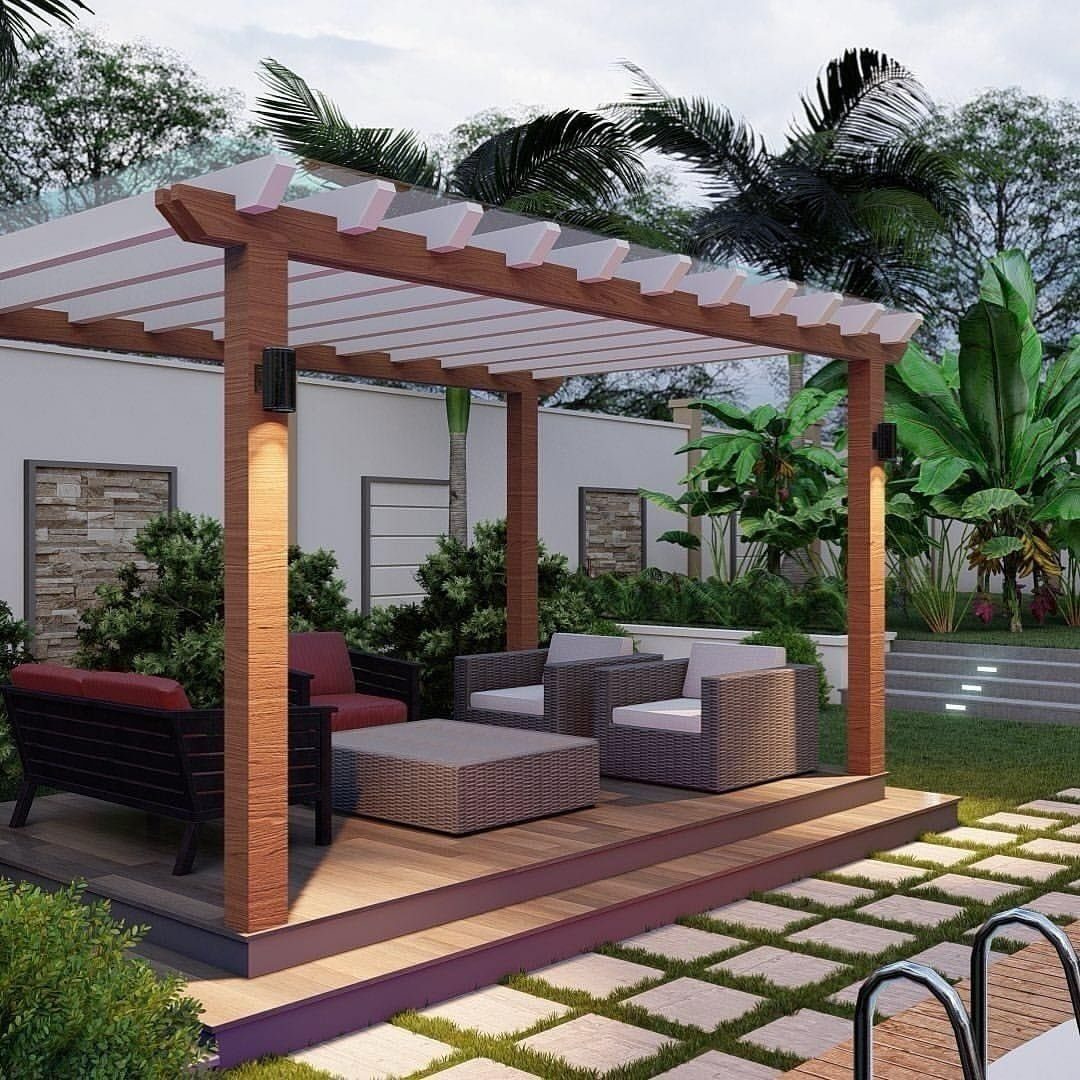
The pergola does the work of a room’s ceiling without stopping the breeze. Over a deck, it gives climbing vines something to grip and gives human occupants a reason to stay out through a light rain.
A manually retractable canopy, like the ones Trex offers, adds the option of full shade on August afternoons without committing to a fixed roof that blocks winter sun.
Composite pergolas resist rot where wood eventually checks, though they cost more upfront and the color range is narrower than stainable cedar.

【30 Degree Tilt on LED Board】The 1 Inch Recessed Step Light is a clean, modern lighting solution for stair and deck lighting applications, with no unwanted glare. A 30° tilt to the internal LED board creates a natural downward beam that eliminates the need for a visor and allows for a sleek, flat design.

【Light Sensor & Timer Outdoor Stair Lights】Built-in dusk-to-dawn sensor turns your low voltage deck lighting on at dusk and off at dawn automatically. Set the auto-off timer from 2 to 12 hours to match your schedule. No daily switching required.

Precise Focus, Glare-Free: The 30° beam angle focuses light where it's needed, reducing glare. Perfect for highlighting steps surfaces, deck surfaces, and more, ensuring safe and comfortable walking at night. As a recessed deck light, it provides precise outdoor lighting
4. Sunken Deck
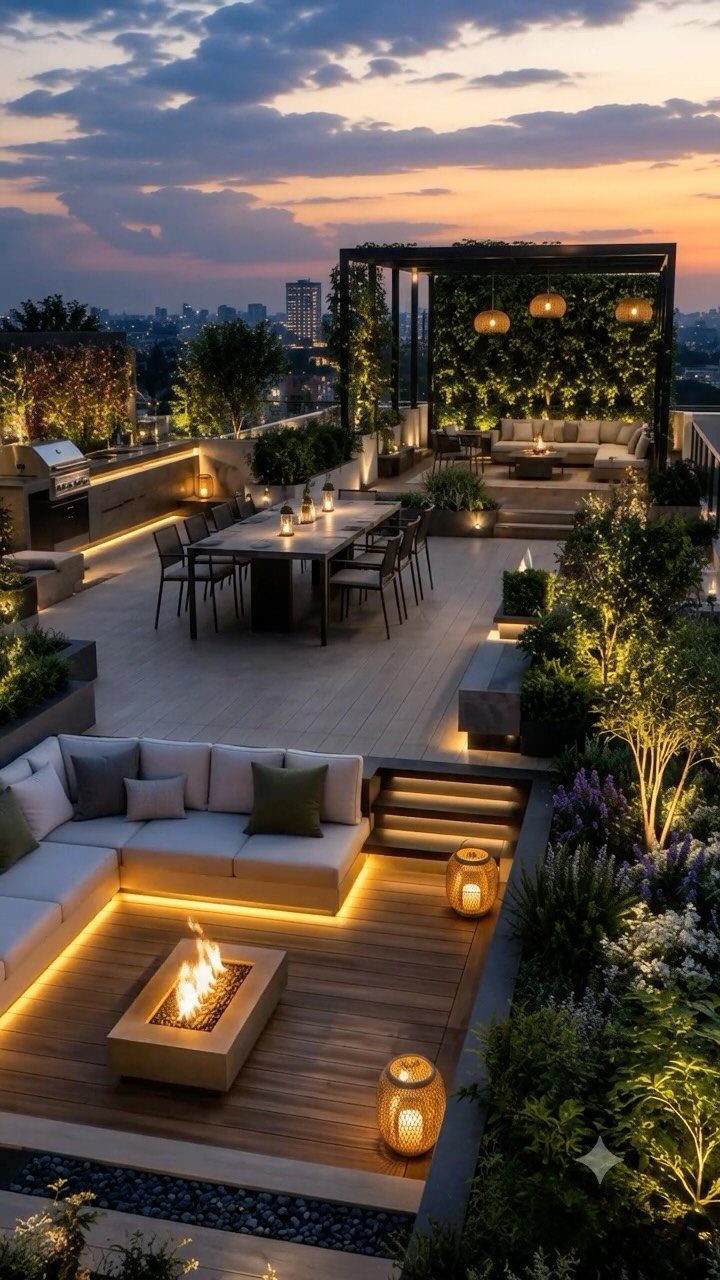
Lowering the deck surface even a foot and a half below grade changes how enclosed it feels without adding walls. The surrounding grade becomes your visual boundary, and the retaining structure required becomes an opportunity for built-in seating or planters.
Drainage is the part people underestimate: water that would sheet across a surface deck now pools at the lowest point unless you pitch to a daylight drain or sump.
A rooftop version works the same way as a yard where the lawn slopes enough to excavate. I would not attempt this on a site with a high water table or clay soil that holds moisture against the framing.

【High Bright &More Safe】Bright warm white LED deck lighting bring impressive starry effect, making you feel sweet and comfortable in your house. Add the black protecting shell for embedded installed on floor/stone stairs will be safer for led deck lights kit.

Effortless Surface Mount Installation: No need to cut into your deck or walls. These low voltage step lights mount directly onto any flat surface using the included screws and anchors. Perfect for DIY homeowners and contractors alike. Works with standard 12V AC/DC landscape lighting systems

✔THREE COLOR TEMPERATURE IN ONE FIXTURE: Cloudy Bay designed the step light with 2700K/4000K/6000K selectable LED to give off the right amount of light in the dark.
5. Poolside Wooden Deck Flooring
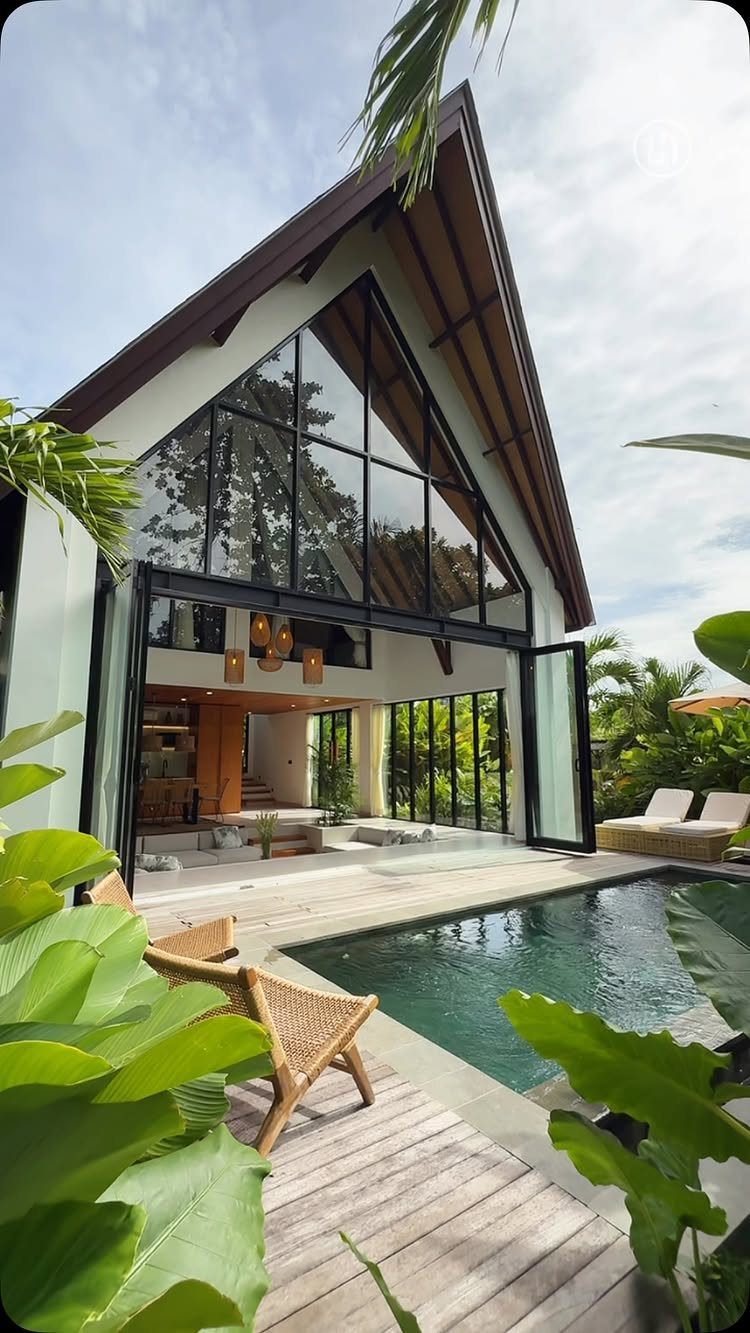
Wood decking around a pool trades the institutional look of concrete for something that belongs to a house.
Sustainable hardwoods like Kebony handle the wet-dry cycle better than pressure-treated pine, though any wood will gray unless you commit to annual oiling.
Composite decking eliminates that maintenance and adds slip resistance, which matters when kids run dripping from the deep end.
Expansion gaps need to be wider than on a dry deck, and the boards closest to the water take the most abuse from splashed chemicals and UV reflection.
Plan to replace the first board or two every decade, or choose composite and accept that the surface temperature on the hottest days will send you toward the pool faster.

🌱 Grow Your Own Climbing Jade Vine – Mucuna sempervirens produces vigorous, fast-growing climbing vines with lush green foliage.

Satisfactory Service: If you have any questions or concerns, our dedicated team is here to assist you

This versatile plant finds its place in zones with cool to moderate temperatures, making it adaptable to a range of climates.
6. Multi-toned Composite Deck Design
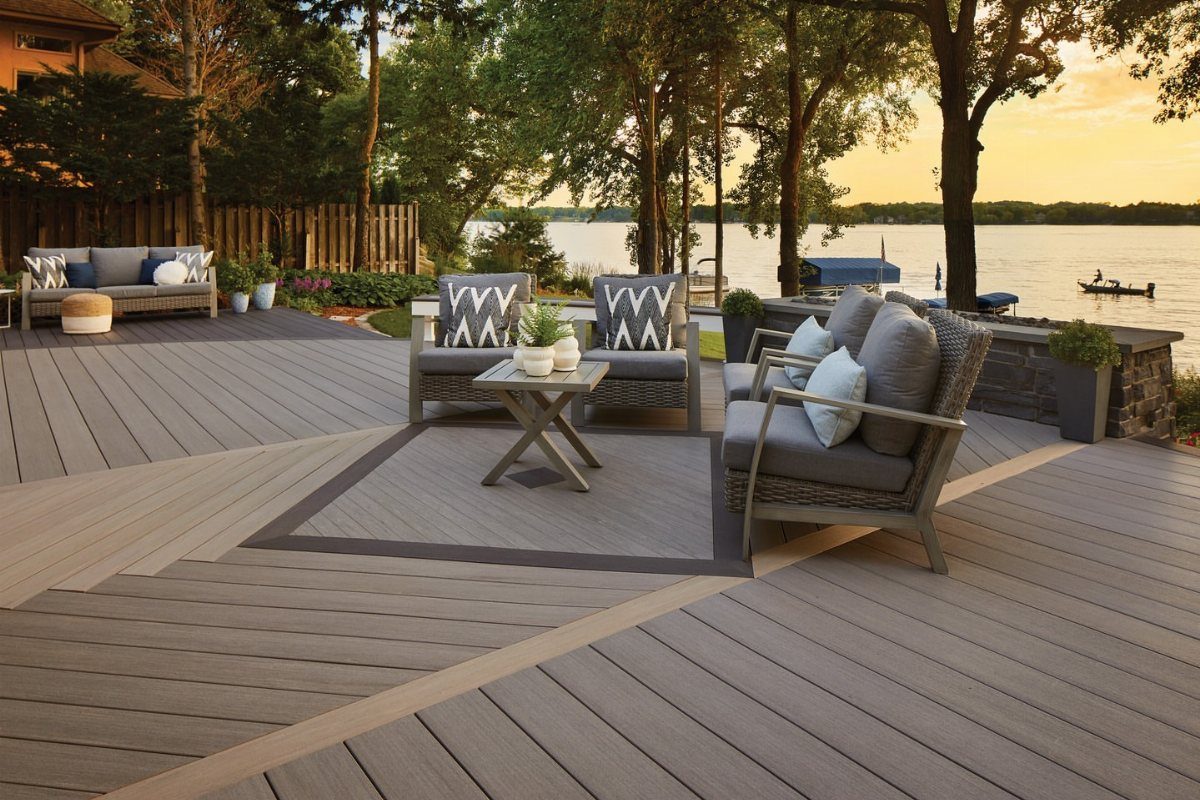
Composite decking comes in enough colors now that you can treat the surface like inlaid woodwork. The simplest move is a perimeter band in a darker shade, which reads as shadow line and hides the field joints.
For more ambition, alternating light and dark boards in a checkerboard or geometric field pattern turns the deck into the visual event of the yard.
Direction changes break up long runs that would otherwise telegraph every imperfection in the substructure, though they demand more careful joist layout since every board end needs solid blocking.
Trex Transcend in Rope Swing and Spiced Rum is one pairing that shows up often in published examples; I would order samples in afternoon light before committing, since colors shift between shade and sun more than wood does.

What You Will Receive: the package comes with 1 roll of frame bulletin board border, which is an eye catching decoration for your bulletin board or artwork. Please note that this product has no self-adhesive backing

What You Will Receive: the package comes with 1 roll of frame bulletin board border, which is an eye catching decoration for your bulletin board or artwork. Please note that this product has no self-adhesive backing

* ( Worth-the-money Pack ) * This pack of photo frame decor paper set includes 4 packs assorted in 4 themes basing on different design and color styles. Additionally, the paper set also comes with a sheet of sticky pearls and a piece of beige paper string.
7. Decorative Rectangular Board Inlay
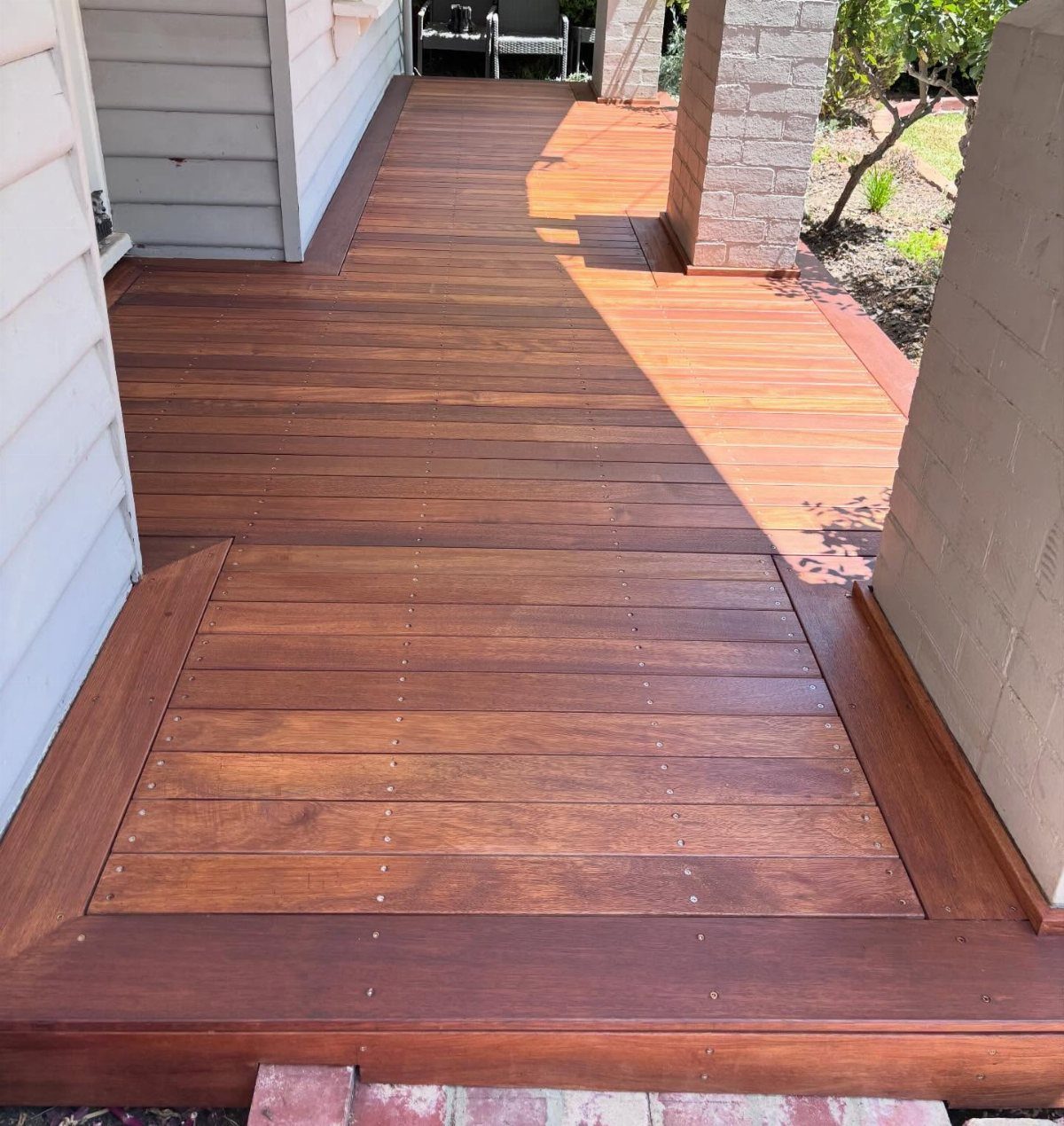
A transition board running perpendicular to the field boards breaks the deck into framed sections without changing elevation.
Rectangular zones of planking bordered by a single board in the same species read as intentional detail when the screws stay visible and uniform. The color match is close enough that the border reads as shadow line, not stripe.
A subtler look keeps the border and field the same width and species; for more contrast, switch species or run the border wider.
Blocking underneath every joint matters more here than on a straight run, since the border boards catch ends from 2 directions.

Wet-Area Ready, No Sealing Required: Pre-finished with cured linseed oil — a natural plant-based wood finish — these tiles install straight from the box — no sealant, no prep, no waiting. Raised base channels water underneath for patios, balconies, pool surrounds, and shower floors

Chic Design & Wood Texture - Classic herringbone pattern with realistic wood grain texture, combining classic charm with the rustic beauty of natural wood, add a touch of earthy warmth to your interiors.

𝐏𝐑𝐄𝐌𝐈𝐔𝐌 & 𝐃𝐔𝐑𝐀𝐁𝐋𝐄 𝐀𝐂𝐀𝐂𝐈𝐀 𝐖𝐎𝐎𝐃: Made from 100% natural acacia wood with a deep-oil finish, these interlocking decktiles are sturdy, water-resistant, and built for outdoor conditions. Sanded smooth for a premium wood grain look, a smooth-finished surface, and a noticeably smoother barefoot feel - comfortable for families and pets.
8. Multi-level Deck Platform
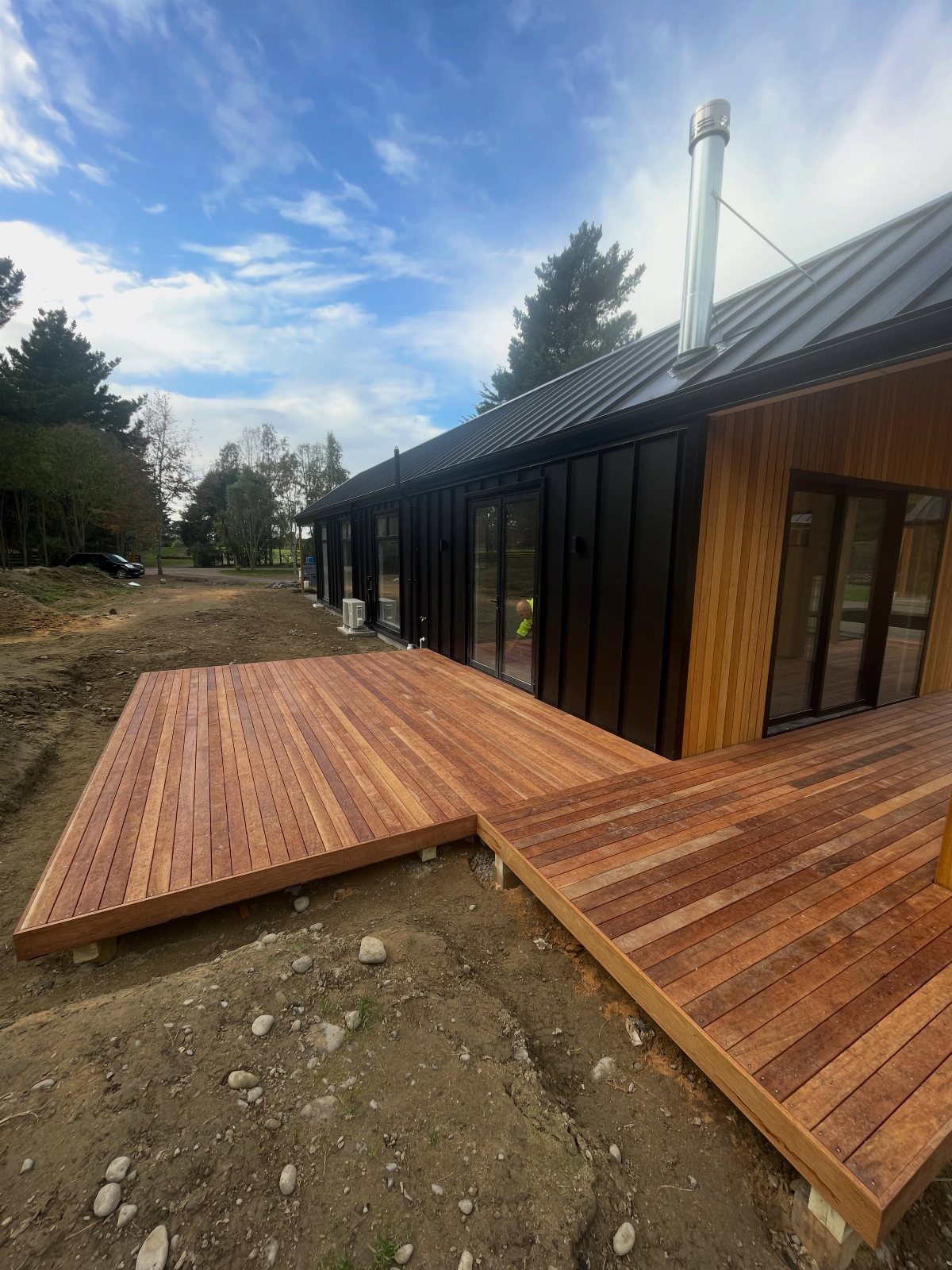
Stepping the deck in two or three levels lets you assign each plane to a different use without buying the furniture to divide one big rectangle.
Each level steps down along the black facade as a separate timber platform that meets the grade where the slope allows.
Activity zones make the most of the levels: a cooking level near the kitchen door, a lower one for seating, a third for sun or shade depending on the hour.
What costs the money is the stair structure between levels and the railing each change in elevation triggers by code.
A single-level deck avoids both; each added level adds a day of framing and a line of posts that interrupt the view. I would not build more levels than the site demands.

All-in-one Complete Kit: 16 Packs 0.6W warm white recessed deck lights, DC12V low voltage power supply, 16 protective shells. Durable copper 2 pin connector with 2.3 ft cable...
9. Herringbone Pattern Deck Floor
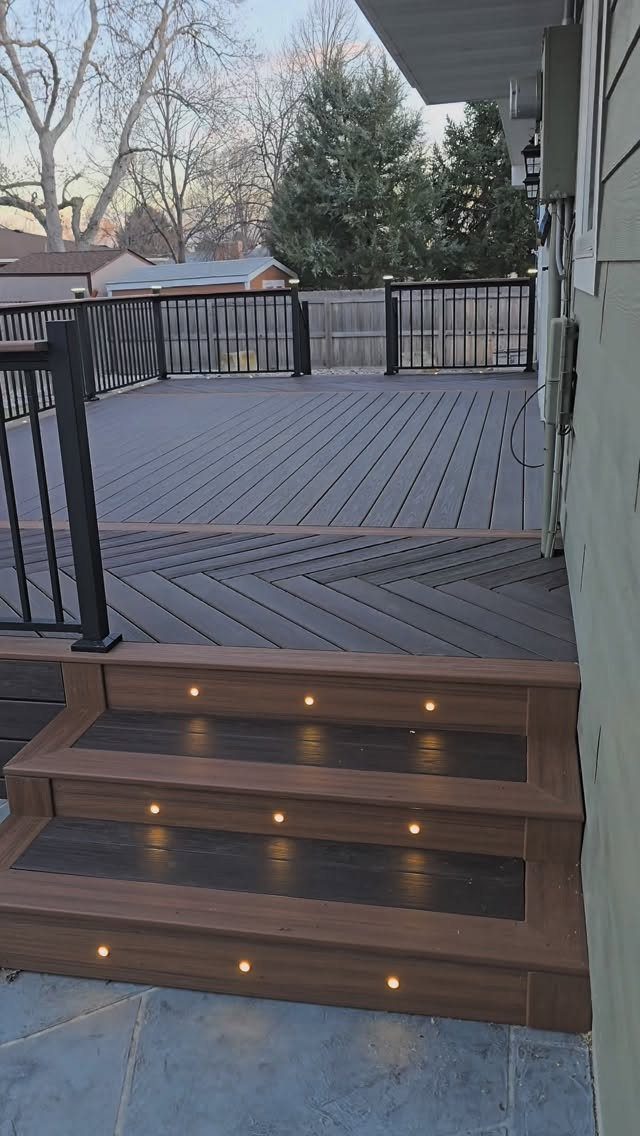
Herringbone reads as woven fabric translated into decking, each pair of boards meeting at 45 degrees to form a broken zigzag across the field.
Keeping the pattern to one section, bordered by straight planking, makes the herringbone read as deliberate inset rather than entire surface.
This pattern earns its advanced rating on the math alone: every board end meets another at an angle, so the substructure needs solid blocking at every intersection and the cuts waste more material than a straight run.
A contractor who has done it before is worth the price; my own angled cuts on a first try left gaps that opened by fall.
Integrated riser lights are a separate decision, but they do prove the point that this pattern suits a deck already getting the full treatment.

【More Comfortable Performance】: GKOLED low voltage LED deck lights feature screw-free surface with minimalist and stylish design, blending seamlessly into your outdoor...
10. Chevron Pattern Wood Floor
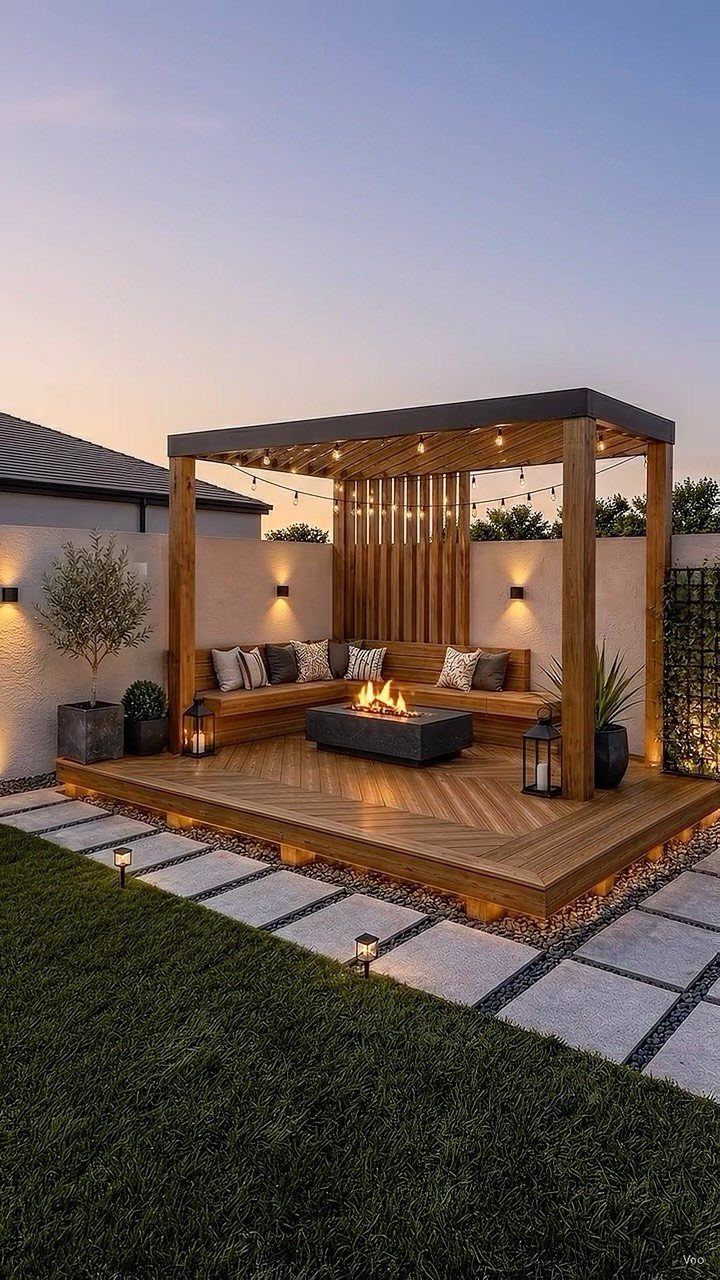
Chevron is herringbone simplified: boards meet at an angle along a single center line, all cuts identical, no interlocking ends to align.
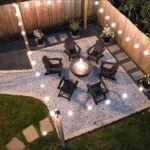
Angled boards under a pergola draw the eye toward the fire pit at the center of the built-in seating.
Anyone comfortable with a miter saw and a consistent setup will find this pattern manageable.
A shallower angle reads as longer and calmer than the standard diagonal. What chevron trades away is the woven density of herringbone; what it gains is speed and fewer failure points where joints might open.
A transition board down the center seam hides the board ends and gives the eye a place to rest.

Size and Package: 4pcs of artificial Creeper vine are bend and shipped with box. Total length from end to end is abut 110cm/43 inches, Each faux Vine has 45 creeper leaves, 3 vines twisted together for the main branch, and from end to end, all stems can be bendable.

Solid Material -This Arbor is made by solid wood. It's sturdy and solid for long time and durable usage.Moisture Resistant,Maintain beauty and performance.
11. Geometric Composite Deck Floor
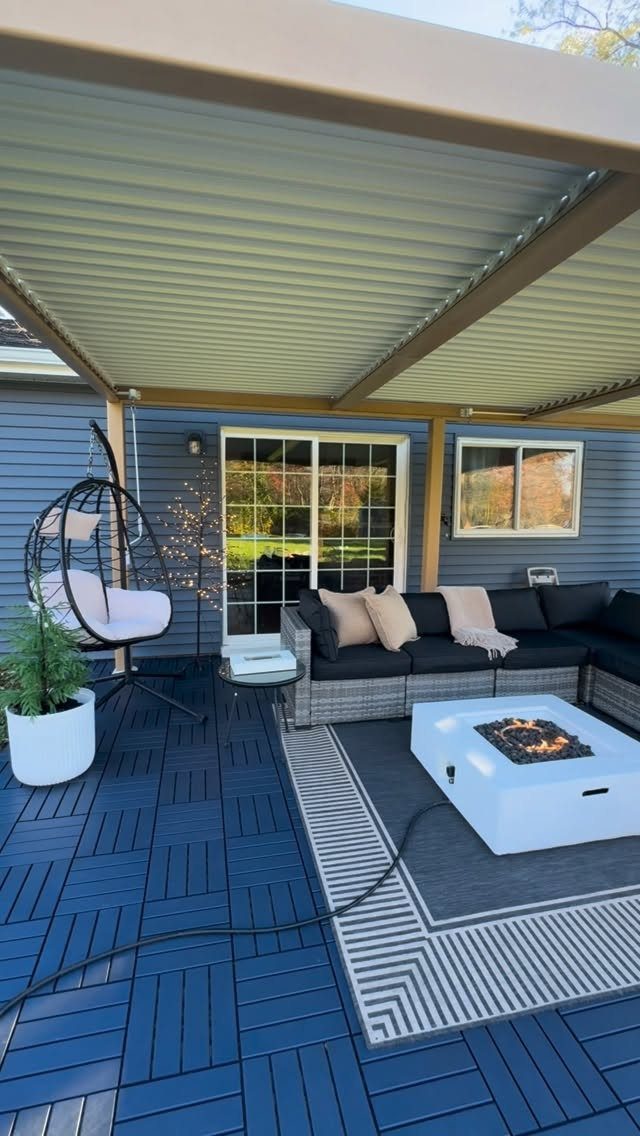
Geometric decking treats the surface as tile work, with rectangular sections set perpendicular to each other in a patchwork of direction changes. The color itself announces that this is manufactured material doing what wood cannot.
Contrasting colors and perpendicular inlays work together: the geometry is the pattern, the blue is the choice that makes it visible from across the yard.
Composite is the right material here, since tight color match across batches matters and wood would check at the short joints.
The crisp right angles read as precision, which means the framing underneath has to be equally exact; a joist even half an inch out of square telegraphs through the finished surface.
12. Checkered Interlocking Deck Tiles
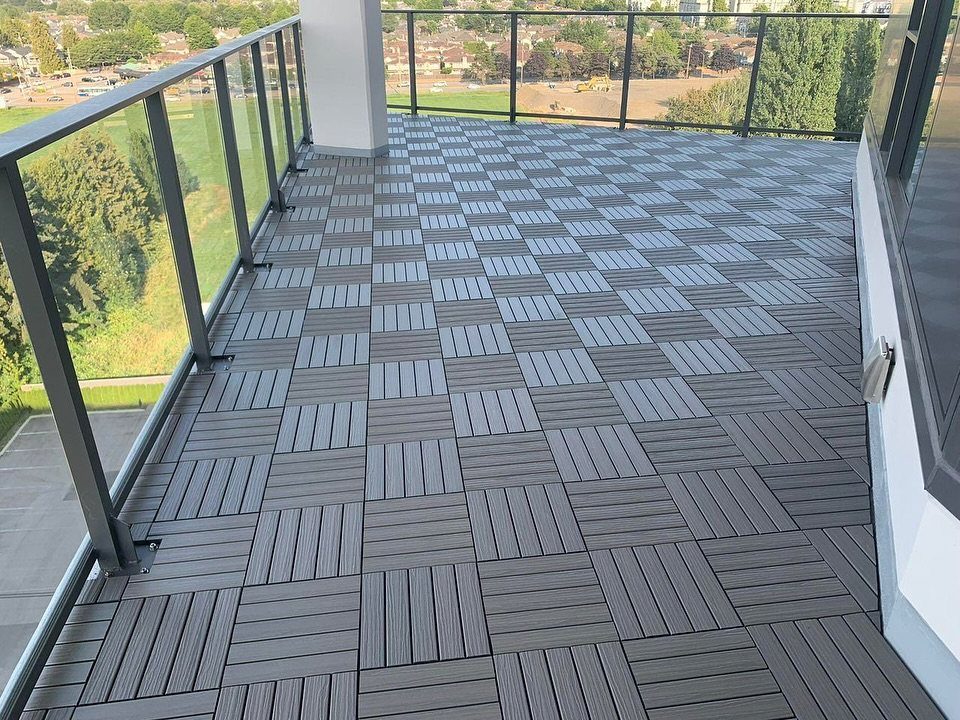
Interlocking tiles snap together over a flat surface without fastening through to a substructure, which makes them the one option on this list a renter can take with them at move-out.
Square composite tiles in alternating grain directions read as a checkerboard of light and shadow rather than color.
Framed geometric inlays are one approach, but the visible tiles achieve a similar effect with a system that sits on existing concrete or membrane roofing.
Weight is the limit: these are not structural, and the surface underneath needs to drain or the trapped moisture grows film.
For a balcony with glass railings and a view, the speed matters most: one afternoon to install, one afternoon to lift away, no sawdust and no permit.
Choosing Materials
Hardwood and composite each demand a compatible fastening system across the whole project, so the material choice locks in before you pick a pattern.
Installation Complexity
Some patterns earn their rating on the math alone. Herringbone needs solid blocking at every angled intersection and wastes more material than a straight run; my own first try at angled cuts left gaps that opened by fall.
Chevron simplifies the interlocking ends but still rewards a contractor who has done it before.
Picture-frame miters need extra blocking underneath to handle seasonal movement. Assess whether your skill level matches the pattern before you commit.
Color Customization
Mixing colors works best when you have a reason.
Order samples in afternoon light before committing. For consistency, a monochromatic run across the full width can connect interior and exterior space.
Consider existing or planned garden furniture when choosing what to contrast or match; the color of a table set you already own may settle the decision.
A low-maintenance manufactured surface sits on one side, a hardwood that will gray without annual oiling on the other.
Frequently Asked Questions
What is the 3/4/5 rule for decks?
The 3/4/5 rule is a carpenter’s shortcut for checking that a corner is square. Measure 3 ft along one edge, 4 ft along the adjacent edge, and the diagonal between those two points should read exactly 5 ft.
Any deck layout that starts out of square will telegraph through every pattern, especially geometric or herringbone designs where angled cuts compound the error.
What type of flooring is best for a deck?
Hardwood and composite each suit different priorities. Composite boards skip the yearly oiling and won’t rot, though they bake your feet on July afternoons and you can’t stain them to match the house trim the way you can with cedar.
Sustainable hardwoods such as Kebony handle wet-dry cycles well and stay cooler, but any wood will gray without regular oiling and may need replacement sooner in harsh conditions.
How much would a 20×20 deck cost?
A 20×20 deck runs anywhere from $4,000 in pressure-treated pine you frame yourself to $20,000 in composite with hired labor, so pinning down a number before you choose your material and pattern is impossible.
A picture-frame border or herringbone pattern adds material waste and a second day of layout; multi-level designs trigger stair structure and code-required railing that single-level decks avoid.
Order samples and price out lumber or composite in your area before committing to a design.
What are the latest deck design trends?
Splitting the deck into two or three levels, each with its own job, saves you from dragging sectionals around to carve out separate spaces; just know every added plane means another day of posts, joists, and railings breaking up the sight line.
Geometric composite patterns using perpendicular inlays and contrasting colors treat the surface like tile work. Integrated low-voltage lighting, manual retractable canopies over pergolas, and picture-frame borders with deliberate transition bands are also common in current projects.